Mindblown: a blog about philosophy.
-
Mycophagist
One who explores and forages for fungi to be used as food.
-
Mycology
The science of studying fungal biology. The study of fungi and fungus-caused diseases. The branch of biology that studies fungi. Mycology in medicine is the specialized study of fungi that are involved in causing disease in humans. These fungi are microorganisms that can be divided into two basic groups — yeasts and molds. Yeasts are…
-
Mycologist
A scientist who studies fungi.
-
Mycoflora
The fungi characteristic of an area.
-
Mycelioid
Resembling fluffy mycelium, often differently colored than the stem. Moldlike; resembling mold colonies in which filaments radiate from a center, said of bacterial colonies.
-
Melzer’s reagent
An iodine solution used to test spores and tissue for amyloid or dextrinoid reactions.
-
Lined
Having visible lines, ridges, or grooves on the margin; striate; if translucent-lined, then the margin is smooth and the gills from below the cap surface show through.
-
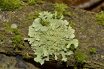
Lichen
A dual organism whose body is made of a fungus, usually an ascomycete, and a blue-green alga or cyanobacterium. A type of skin disease with thick skin and small lesions. Any of several skin disorders characterized by thickened, hardened lesions grouped closely together. Any of several types of skin disease in which small round hard…
-
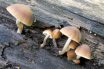
Little brown mushroom
A term denoting small, brownish, hard-to-differentiate mushrooms.
-
Lamellula
Shortened gill that reaches only partway to the stem; often arranged in distinct tiers with one lamella in the first tier, two lamellulae in the second, shorter tier, and three even shorter lamellulae in the third tier, forming a triangular shape between lamellae with the shortest lamellulae on the outsides of the triangle.
Got any book recommendations?