Mindblown: a blog about philosophy.
-
Medication errors
Mistakes, negligence, or miscalculations committed in the process of prescribing and administering a drug to a patient, or in monitoring the effects of a drug. Medication errors can involve the type of drug or its dosage, the prescription, the method of dispensing, or the lack of communication between health professionals. A failure of some kind…
-
Local
Pertaining to a small, circumscribed area of the body; not general or systemic. Referring to a separate place. Confined to one part.
-
Indications
What the medicine is for. A situation or sign which suggests that a specific treatment should be given or that a condition has a particular cause. In medicine, reason to prescribe a drug or perform a procedure; for example, the presence of a bacterial infection is an indication for the use of a specific antibiotic.…
-
Inactive ingredients
The ingredients in a medicine that provide the “delivery system,” as opposed to those that produce the therapeutic effect. Among other necessary functions, inactive ingredients serve as flavors, colors, binders, lubricants, and preservatives.
-
Half-life
The time required for one half of a given drug to be eliminated from the body. The time in which radioactivity originally associated with an isotope will be reduced by one-half through radioactive decay. A measurement of the period of time taken before the concentration of a drug has reached half of what it was…
-
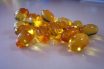
Gelcap
Any capsule or tablet coated with gelatin.
-
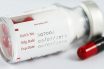
Expiration date
The date beyond which the product should not be used. The last day on which a drug or other therapeutic agent is still considered potent.
-
Drug-food interactions
Result from medicines reacting with foods or beverages. Foods can interact with drugs in a variety of ways: by either slowing down or speeding up the time the medication takes to travel to the part of the body where it’s needed, or by preventing a drug from being absorbed properly. In addition, the natural and…
-
Drug-condition interactions
May take place when an existing medical condition makes certain medicines potentially harmful. If a person has diabetes or asthma, for example, unwanted reactions may occur with nasal decongestants.
-
Dosage
The therapeutic regimen governing the size, frequency, and number of doses, or amounts, of a medicine to be administered. A specific, calculated amount of a drug to be taken or administered at a particular time, dose. A measured quantity of a drug calculated to be necessary for someone. The amount of medication that is appropriate…
Got any book recommendations?