Mindblown: a blog about philosophy.
-
Hydragogue
Producing watery discharge, especially from the bowels or a cathartic that causes watery purgation. A laxative or substance which produces watery faeces. An agent that produces a watery discharge, particularly a laxative that produces watery stools. A medication that enhances the release of water from the kidneys. It is also referred to as a diuretic.…
-
Hepatotoxic
An agent that is toxic to liver cells. An agent that ca uses liver toxicity. Poisonous to liver cells. Damaging to the liver, e.g., certain drugs or alcohol. Damaging or destroying liver cells. Drugs such as paracetamol and phenacemide can cause liver damage at high doses or with prolonged use. Hepatotoxic substances, including certain drugs,…
-
Haemiplegia
Paralysis of one side of the body.
-
Haemaglutination
Agglutination of red blood cells.
-
Glucosidase
An enzyme of the hydrolase class that breaks down a glucoside.
-
Glottal
Pertaining to the vocal apparatus of the larynx, consisting of the true vocal cords and the opening between them.
-
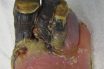
Gangrenous
Characterised by the decay of body tissues, which become black and smelly. Referring to, or affected by, gangrene.
-
Galactorrhoea
Excessive or spontaneous milk flow; persistent secretion of milk irrespective of nursing. The excessive production of milk. Unusually copious secretion of breast milk when a mother is feeding her baby. It is also used to describe secretion of milk after the mother has stopped breast feeding. The condition is occasionally seen in women without babies…
-
Fluxes
Excessive flow or discharge.
-
Fistulae
Abnormal connections between an organ, vessel or intestine and another structure, usually due to injury, surgery or result from infection or inflammation.
Got any book recommendations?