Mindblown: a blog about philosophy.
-
Epicure
The Greek philosopher Epicurus, from whose name the word epicure is derived, is remembered for two doctrines. First, he asserted that the gods did not give a hoot about what humans did; and, second, he insisted that pleasure was the highest good a person could pursue, so long as that pleasure was temperate and allied…
-
Entremets
In French, the name of any dish prepared for the table is mets; the fish of the first course, the entree of the second, and the roast of the third are all mets. Between these courses—and the French word for between is entre—are served the entremets, or what in English are more commonly called side…
-

Engastration
The art of stuffing one animal inside another before bringing it to the dinner table is called engastration, a word that derives from the Greek en, meaning in, and gaster, meaning belly. Engastration may involve a mere two creatures, or dozens, so long as each is smaller than the previous. Although slaying the beasts before…
-

Enchilada
A tortilla stuffed with meat, cheese, and sauce made from chilies is called an enchilada; the Spanish name of this Mexican dish might be literally translated into English as in-chillied, but—since no such term exists in English—it is better translated idiomatically as filled with chili. The word did not enter English until the end of…
-
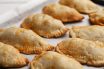
Empanada
The Spanish pastry called the empanada has a name that literally means in bread: it is essentially a pastry-shell filled with meat. Although empanada did not appear in English until the 1930s, a closely related Spanish word, panada, was adopted in the late sixteenth century as the name of a dish made by boiling bread…
-

Emmental
Emmental, a hard Swiss cheese riddled with more holes than a phony alibi, has a name closely related to the word dollar. What connects the two words is the German word taler, meaning valley, a word that long ago joined up with the personal name Emme to form Emmentaler, meaning Emme’s valley. It was in…
-

Eggnog
Made from eggs, sugar, cream, and rum, eggnog is a traditional Christmas drink, first referred to in the early nineteenth century. Originally, however, the refreshment was made with ale instead of rum, as suggested by the nog part of its name, nog being an archaic English word meaning strong ale (eggnog is sometimes still made…
-

Egg
Until the sixteenth century, the yolk-containing ovoid produced by a hen was commonly called an eye, a word in no way related to the eye that refers to the organ of sight. This eye—the one meaning egg—was the direct descendent of the Old English aeg, meaning egg, first recorded more than a thousand years ago.…
-

Edam
Before being sold, Edam cheese is usually pressed into a ball and coated with a layer of red wax, a process inspiring its French nickname tete de mart, meaning dead man’s head, the idea being that the wax-coated ball of cheese resembles the hooded head of an executed prisoner. Edam, however, is its real name,…
-
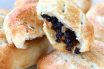
Eccles cake
The sweet, flaky currant-filled pastry known as Eccles cake takes its name from Eccles, the town in northwest England where it originated. The town’s name derives through Celtic from the Latin ecclesia, meaning assembly or, in ecclesiastical Latin, church; in turn, the Latin ecclesia developed from the Greek ekkalein, meaning to call out, citizens having…
Got any book recommendations?