Mindblown: a blog about philosophy.
-
Eat
Foreign words have sometimes contributed more to English than their native English counterparts. For example, the Old English etan, meaning to eat, contributed a mere two words to Modern English: it evolved into eat and gave rise to art, an almost defunct word that literally means not eaten. In contrast, the Latin edere is the…
-
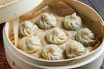
Dumpling
Gastronomically, a dumpling is a little ball of poached dough accompanying a meat dish; etymologically, a dumpling is a little dump, just as a duckling is a little duck. The dump in dumpling is not related to the dump in down in the dumps (that dump probably comes from the Dutch damp, meaning haze); neither…
-

Duck
Many animals have names that inspire a verb form: because of hounds, I can hound my brother-in-law for money; because of rats, I can rat on my nefarious neighbor; and because of geese (and their tendency to pinch with their beaks), I can goose my delectable wife. The opposite occurred with ducks: they take their…
-
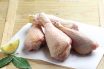
Drumstick
The lower legs of poultry have been called drumsticks since the mid eighteenth century, but the word really gained currency during the mid nineteenth century: prudish Victorians used it in place of leg, a word avoided at the supper table for fear its suggestive overtones would reduce the dinner guests to paroxysms of sexual frenzy.…
-
Dove’s dung
In the Old Testament (2 Kings 6:24—29) a famine so devastates Samaria that the king encounters a woman who tells him that she and a neighbour made a bargain to eat her son one day and the neighbour’s son the next; now, however, the woman is upset because they did indeed eat her own son,…
-

Doughnut
Although doughnuts no longer resemble nuts, they once did: the earliest references to doughnuts—in the early nineteenth century—reveal that the pastry was originally just a ball of sweetened dough fried in oil. Not until the mid nineteenth century did doughnuts acquire their hole, an innovation that solved a problem afflicting the original doughnuts: uncooked centres.…
-
Done to a turn
The microwave oven, a culinary innovation not even as old as some extant Christmas fruitcakes, has one thing in common with the spit, a cooking utensil dating back to the invention of the stick: both microwave ovens and spits rotate the food being cooked so that the heat is distributed evenly. With a spit, these…
-
Dollop
Although the volume or weight of a dollop has never been precisely established, it is roughly the amount of warm butter that you can scoop onto the end of a spatula before dropping it into your frying pan. This culinary sense of dollop is a fairly recent development, apparently having originated in the nineteenth century;…
-
Doed-koek
When the Dutch founded New York in the seventeenth century, one of the customs they brought with them from Holland was that of the doed-koek. Literally meaning dead-cake, a doed-koek was a funeral biscuit, marked with the initials of the person in the coffin and given to each pallbearer. The custom is likely related to…
-

Dobos torte
Made by alternating layers of cake with layers of chocolate cream and then covering the top with caramel, the Dobos torte takes its name from its inventor, Joseph Dobos, a Hungarian pastry chef who introduced his creation to the world at an 1885 exhibition of tortes and cakes. Within thirty years, recipes for the Dobos…
Got any book recommendations?