Mindblown: a blog about philosophy.
-

Coleslaw
The need to change the peculiar into the familiar is powerful, as is demonstrated by the repeated attempts since the eighteenth century to turn cole slaw into cold slaw. The cole in coleslaw, however, has nothing to do with the word cold, even though this cabbage salad is indeed chilled before being served; instead, cole…
-

Colcannon
Colcannon is an Irish dish made by pounding together cabbage and potatoes and then stewing them in butter. The name is a compound formed by combining cole—an old name for cabbage that also survives in coleslaw—and cannon, the name of a weapon used to blow one’s godless enemies to smithereens. The compound arose when Irish…
-
Colby
First produced at the end of the nineteenth century, Colby cheese takes its name from the city where it originated, Colby, Wisconsin. The city in turn, takes is name from the surname Colby, which derives from an Old English source meaning by the coal mine.
-
Coffin
Until about two hundred years ago, it was common for cookbooks to instruct aspiring chefs to pour their stewed beef or sliced apples into a coffin. By coffin, however, they did not mean a burial casket but rather a pastry crust or a pie tin. This culinary use of coffin is, in fact, the original…
-
Coffee
Not surprisingly, the linguistic history of the word coffee parallels the trade route coffee followed as it was introduced to Europe in the sixteenth century. The French, Spanish, and Portuguese word for the beverage, cafe, the German kaffee, the Swedish and Danish kaffe, the Dutch koffie, and the Russian kophe all derive from the Italian…
-
Cod
Although a piece of cod is tasty, a codpiece is not, a surprising difference considering that these two cods derive from the same source. The word cod can be traced back a thousand years to the Old English codd, a word referring both to a sack in which items could be carried and to the…
-
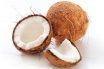
Coconut
Although often confused with coca (the shrub whose leaves yield cocaine) and with cocoa (the bean that yields chocolate), the word coco as in coconut is related to neither. Both coca and cocoa developed from words native to the Americas, the former word from South America, the latter from North America; in contrast, coco is…
-
Cockle
Cockles are heart-shaped candies with phrases like / Love You and You’re Mine embossed on their sugary surfaces. Cockles are also edible bivalve molluscs that may be eaten raw but are usually cooked like mussels. The connection between these two cockles is a bit circuitous. In the seventeenth century, anatomists dissecting human cadavers noticed that…
-
Cock-a-leekie
Several dishes get their names because they contain a cock cooked with something else. Cock-a-leekie, as its name suggests, is made by boiling a cock with leeks, a dish first referred to by name in the mid eighteenth century. Likewise, cock-ale, a dish invented in the mid seventeenth century, is made by mixing beer with…
-

Cock
Although cock is the original English name for a male fowl, this sense of the word has been almost completely overtaken by rooster, a shift that occurred over the last three hundred years as cock came more and more to mean penis. First recorded in the ninth century, cock probably arose as an imitation of…
Got any book recommendations?