Mindblown: a blog about philosophy.
-
Cleaver
Used by butchers to hack joints of meat in two, cleavers ultimately derive their name from an Indo-European source, pronounced something like gleubh, meaning to cut apart or to carve. This ancient source evolved into the Germanic word kleuban, which then developed into the English word cleave in the eleventh century; it was from this…
-
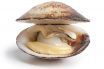
Clam
The word dam appeared in English in the tenth century, but at that time it did not refer to the edible, bivalve mollusc that is an essential ingredient in chowder. Instead, dam referred to a device used to hold two things together, a device such as a chain or a clamp—the word damp, in fact,…
-
Chow
According to the Oxford English Dictionary, the word chow—meaning/ood, as in chow time—derives from the name of a Chinese dog, the chow, once eaten as a delicacy in China. This suspicious etymology may have been inspired by an anecdote involving Charles George Gordon, the famous British General who suppressed several rebellions in China in the…
-

Chopstick
The original and ancient Chinese name for chopsticks was tsze, meaning help, since the utensils assisted in getting the food from your dish to your mouth. However, the Chinese eventually replaced this name with a term that sounded similar, but seemed to better describe the motion of the chopsticks: k’waitsze, meaning the quick ones. British…
-
Choke-priest
Perhaps in return for making gluttony a sin, gastronomes have often made men of the cloth their target when it comes to naming dishes. The Italians, for example, named a soup made with short pieces of pasta strozzapreti, which was translated literally and then adopted into English as choke-priest in the mid nineteenth century. Priests…
-

Chocolate
Montezuma, the King of the Aztecs when Hernando Corte”s and his conquistadors first encountered them, so believed in chocolate as an aphrodisiac that he reportedly drank fifty large cups of chocolate beverage each day. If this is true, then the lusty Montezuma must have imbibed about five cups of chocolate every waking hour, a quantity…
-

Chive
The Latin name for the onion—caepa—is not the source of the word onion, but it is the source of the word chive, a small bulb-plant related to the onion. The Latin caepa became the French cive, which was adopted into English at the beginning of the fifteenth century. Pronounced like shive, the word cive remained…
-
Chili
A short form of both chili pepper and chili con came, the word chili derives from the Nahuatl language, spoken by the peoples of southern Mexico and Central America. At the end of the fifteenth century, Christopher Columbus returned to Europe after contacting these people and reported that they used the hot fruit of a…
-

Chickpea
The chickpea has nothing to do with young chickens, but it does have something to do with an old lawyer. These small, round legumes have been known as chick-peas or chich-peas since the mid sixteenth century, although before that, dating back to the late fourteenth century, they were known simply as chick, a name borrowed…
-

Chicken tetrazzini
Luisa Tetrazzini was a famous opera diva at the beginning of the twentieth century. In the 1920s she gave her surname, which appears to mean four teeth in Italian, to her favourite dish: diced chicken in cream sauce, baked in a casserole with spaghetti and mushrooms.
Got any book recommendations?