Mindblown: a blog about philosophy.
-
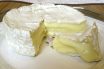
Camembert
Camembert cheese was invented during the French Revolution when a certain Marie Harel combined a cheese-making technique used in Normandy with one used in the Brie region. Harel’s daughter began selling this new cheese in the village of Camembert, whose name was bestowed upon the dairy product when Napoleon rode through the village, tried some…
-
Calzone
The Latin calx, meaning heel, became the Latin calceus, meaning shoe, which became the Italian calza, meaning stocking, which became the Italian calzone, meaning trouser leg, which was bestowed upon a kind of baked or fried turnover stuffed with cheese and other fillings because of its resemblance to the billowing leg of a trouser. Another…
-
Caesar salad
Caesar salad takes its name from Julius Caesar, the most famous Roman emperor, but does so only indirectly. For twenty centuries after his death, the legacy of the emperor inspired thousands of Italian parents to name their sons Caesar. One of those sons was Caesar Cardini, an Italian who immigrated to Tijuana, Mexico where he…
-
Caddy
Material abundance breeds linguistic abundance: well-heeled individuals with time on their hands and possessions galore often invent words that are, strictly speaking, both needless and redundant. One might, for example, simply store tea in a box, but one doesn’t, at least not if one wants to impress one’s dinner guests. Instead, one stores tea in…
-
Caboose
Since the mid eighteenth century, the kitchen of a war ship has been called the galley, while that of a merchant ship has been called the caboose. The origin of the word galley is unknown, but caboose derives from the Dutch kabuis, a shortened form of kaban huis, meaning cabin house. In the mid nineteenth…
-

Cabbage
Considering that we buy cabbages in heads, it’s hardly surprising that the word cabbage literally means swollen head: the name derives from the Old French caboce, which in turn may have developed from a compound formed from the Latin caput, meaning head, and the Old French boce, meaning a swelling. Words related to cabbage therefore…
-
Butter-boat
Since the late seventeenth century, boat has been used as a name for an oval dish in which sauces are brought to the table. Butter-boat, used for melted butter, appeared in the late eighteenth century and gravy boat in the late nineteenth.
-

Butter
According to the Greek historian Herodotus, the ancient Scythians—a nomadic people of Asia and Eastern Europe—so loved butter that they used only blind slaves to churn it, ones who would not be distracted from their work by the outside world. The word butter, as befits the world’s first edible oil product, can be traced back…
-
Butcher
Although the French could not legally consume horseflesh until 1811 (when they realized that eating horsemeat had saved many lives during the Napoleonic campaigns), they have long eaten goat, not just because they liked the pungent flavour of its flesh but because goats were able to survive weather and blights that killed less hardy animals.…
-
Bus
In the food service industry, the lowest job on the totem poll is surely that of the busboy, whose sole purpose for eight hours a day is to clear—or bus—the tables of dirty plates, crumpled napkins, and cracker wrappers, often without sharing in the tip. Originally, back in the late nineteenth century, such a person…
Got any book recommendations?