Mindblown: a blog about philosophy.
-
Bain-marie
A bain-marie is a pan full of water into which a vessel containing a sauce is placed; the water in the outer pan is then brought to a near boil, which heats the sauce without danger of burning it—a double boiler is therefore a kind of bain-marie. The name of this device, which appeared in…
-
Bagel
Going back at least to the early seventeenth century in Poland, bagels were given as presents to women who had just given birth; this doughy gift nourished the exhausted mother, but the shape of the bagel—a yonic ring—may also have represented the cycle of life newly embodied by mother and child. The name of this…
-
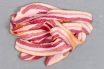
Bacon
The term back bacon is redundant in that bacon derives from the Old German bach, meaning back; bacon, after all, is cut from the back of the pig, although the sides, which contain more fat, can also be used to produce this cured meat. The word bacon did not appear until the early fourteenth century;…
-
Backsplash
A backsplash is a panel placed behind a stove top to protect the wall from being splashed by the soup-spoon of an exuberant or gesticulating chef. The name of this panel appeared in the early 1950s in imitation of the word dashboard: dashboards were invented, or at least named, in the mid nineteenth century as…
-
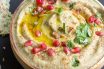
Baba ganoush
This dish of mashed eggplant and sesame seed paste has an Arabic name that means spoiled father, according to Middle Eastern food lore, it alludes to an elderly, toothless father—or baba—whose daughter had to mash his food because he wasn’t able to chew it.
-
Baba
In the early eighteenth century the Polish king Stanislaw Leszczynski was exiled from his country, whereupon he took up residence in Lorraine, France. There he encountered a cake known as kugelhopf, which he enjoyed but found a bit dry, and accordingly began steeping it in rum before eating it. So delicious was the king’s innovation…
-
Azyme
The unleavened bread that Jews eat at Passover is called the azyme; in contrast, the leavened bread that members of the Greek Orthodox Church eat at communion is called the enzyme. The final syllable that these two words share derives from a Greek word meaning leaven, leaven being an ancient agent of fermentation. The two…
-
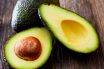
Avocado
Not only is the Nahuatl language, spoken by the Aztecs, the source of the words chili, chocolate, and chicle (the latter refers to a substance used to make chewing gum, such as Chiclets), it also gave English the word avocado, the fruit from which guacamole is made. Perhaps in an attempt to impress or frighten…
-
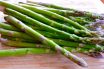
Asparagus
The word asparagus derives from two Greek words: ana, meaning up, and spargan, meaning to swell, a reference to the prominent shoots of the plant that “swell up” as it grows. Oddly, the word was used in English at the beginning of the eleventh century but then vanished until the middle of the sixteenth century,…
-
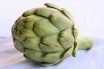
Artichoke
Anyone who has fondled her way through a boiled, buttered artichoke knows that this vegetable is made up of an edible, fleshy base called the heart and an inedible, hairy core called the choke. In fact, most people suppose that the socalled heart and choke of the plant gave the artichoke its name. Actually, the…
Got any book recommendations?