Mindblown: a blog about philosophy.
-
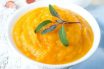
Puree
A smooth paste, usually of vegetables or fruit, made by sieving, milling or beating in a blender. Before blenders and food processors were invented, purees were made by repeatedly pressing cooked vegetables through a sieve until they acquired a texture like that of mashed potatoes. Although this process does indeed reduce carrots or peas or…
-
Pulping
Process of forcing food materials through a screen resulting in a puree.
-
Pull date
The last day a retail store may offer an item for sale.
-
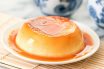
Pudding
A dessert, usually baked or boiled. It is based on bread, rice, fruit together with milk, flour, sugar and flavoring. The original puddings were not made by mixing milk and sugar with rice, tapioca, or chocolate; instead, they were made by stuffing minced meat and oatmeal into a pig’s intestine and then boiling it till…
-
Psychrophilic bacteria
Bacteria that grow at low temperature (refrigerated temperatures). Micro-organisms growing best at temperatures ranging from below 20° C, to less than 0°C; as such, a hazard in cold-stored food.
-
Psychrometer
An instrument for measuring the humidity (water-vapor) content of air. A device for measuring relative humidity of the atmosphere. Calculations are made using the readings of two thermometers, one with a dry bulb and one with a wet bulb.
-
Pseudoplastic
Materials the viscosity of which decreases as the rate of shear to which the material is subjected increases.
-
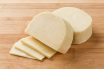
Provolone
Hard cheese of Italian origin, rich, smoky and somewhat sharp flavor.
-
Propylene glycol
A solvent, wetting agent and humectant. A demulcent agent used as a solvent for medicines, and in cosmetics.
-
Propionates
A food additive having the property of inhibiting the growth of molds.
Got any book recommendations?