Mindblown: a blog about philosophy.
-
Body composition
The body’s relative percentage of fat as compared to lean tissue (bones, muscles, and organs). The partitioning of body mass into fat- free mass (weight or percentage) and fat mass (weight or percentage). The relative amount of body weight that is fat and nonfat. The major structural components of the human body such as muscle,…
-

Binge eating disorder
A condition characterized by eating unusually large amounts of food and, often, feeling guilty or secretive about it. A proposed disorder (listed in dsm-iv-tr appendix b, “criteria sets and axes provided for further study”) characterized by recurrent episodes of binge eating associated with subjective and behavioral indicators of impaired control over, and significant distress about,…
-
Belief
A state of mind in which trust or confidence is placed in a person or a thing. A statement or sense, declared or implied, intellectually and/or emotionally accepted as true by a person or group. The cognitive filters through which the activating event is perceived in Ellis’s ABC model.
-
Beats
Regular pulsations having an even rhythm. To stir thoroughly and vigorously. In audition, the tendency for two tones of similar pitch to be heard as a single tone that waxes and wanes in intensity, summation tone. Single pulse or throb, especially of the heart; the apical (apex) beat is heard over the left side of…
-
Basic transition
A transition in which the next move begins where the previous move ended, or a transition that passes through neutral alignment.
-
Basal metabolism
The amount of energy needed by the body for maintenance of life when the person is at digestive, physical, and emotional rest. The amount of energy required to maintain cellular activity and vital functions of respiration and circulation in a resting, fasting body. The minimum amount of energy needed to keep the body functioning and…
-
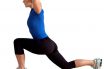
Ballistic stretching
Bouncing, tugging, or overstretching a muscle that can actually cause the muscle to tighten instead of relax. Elicits the stretch reflex arc. A form of stretching, characterized by an action-reaction bouncing motion, in which the involved joints are placed into an extreme range of motion by fast, active contractions of agonistic muscle groups. Involves jerking…
-
Balance
Controlling the position of the body’s center of gravity, or maintenance of equilibrium while stationary (static balance) or moving (dynamic balance). The act of staying upright, not falling. The proportions of substances in a mixture, e.g. in the diet. The ability to remain upright, maintain a position, or move without falling over. Balance depends on…
-
Axial skeleton
Consists of the bones found around the axis, or imaginary midline of the body, including the skull, vertebral column, sternum, and the ribs. The bones of the head and the trunk: skull, vertebral column, thorax, and sternum. The bones that make up the vertebral column and the skull. The portion of the skeleton that includes…
-
Autonomic nervous system (ANS)
Part of the efferent nervous system; consists of efferent neurons that transmit impulses to involuntary muscles and glands. A structure that regulates the involuntary functions of the body’s internal organs, including the heart, stomach, and intestines; also controls some muscle function. The part of the nervous system that controls the cardiovascular, digestive, reproductive, and respiratory…
Got any book recommendations?