Mindblown: a blog about philosophy.
-
Hebepetalous
With pubescent petals [unusual term, not recommended].
-
Hebegynous
With pubescent pistil [unusual term, not recommended].
-
Hebecladous
With pubescent branches [unusual term, not recommended].
-
Hebecarpous
With pubescent fruit [unusual term, not recommended].
-
Heath
Community of low woody shrubs with small, narrow leaves. An area of vegetation covered with dwarf shrubs of the Heath family, such as Heather (Calluna) or Heath (Erica), on poor, acid, Gland (1) Gland (2) Glandular hairs usually sandy and well-drained soil, or it may be damp (wet-heath). Any plant of the genus Erica, or…
-
Heartwood
The innermost and oldest dead wood in a tree, usually distinct in colour and properties from the outer sapwood. The dense, hard, innermost wood of a tree trunk.
-
Head
Short dense inflorescence, capitulum. A cluster of flowers crowded closely together at the tip of a floral stem. A cluster of tiny flowers densely packed on a single receptacle. The cluster may resemble a single flower. A globose cluster of sessile flowers, collected at the same point of the peduncle. Capitulum, a dense spherical or…
-
Haustorium (plural haustoria)
The sucker of a parasitic plant by which the parasite anchors itself into the host plant. Roots or suckers found in parasitic plants. A structure by which a parasitic plant anchors itself to and extracts nutrition from its host. In parasitic vascular plants, a specialized outgrowth from the stem or root that penetrates the living…
-
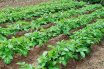
Haulm
The stem in beans, peas, potatoes and grasses [old-fashioned term].
-
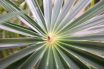
Hastula
A small flange of tissue found on the abaxial and/or adaxial face where the lamina joins the petiole in most palmate and costapalmate leaves (specialist term used in Palmae, 1986). A flange of tissue where a palmate or costapalmate leaf joins the petiole in Arecaceae.
Got any book recommendations?