Mindblown: a blog about philosophy.
-
Hepatitis C
An infection of the liver dependent on the presence of the hepatitis B virus for clinical expression. It may occur as a co‐infection with acute hepatitis B or as a superinfection in a hepatitis B carrier. A form of viral hepatitis that is transmitted by contact with infected blood or other body fluids but is…
-
Hepatitis B (HBV)
An infectious inflammatory disease of the liver caused by the hepatitis B virus. It can be transmitted in the healthcare environment. Has an insidious onset. Features include anorexia, malaise, nausea, vomiting, abdominal pain, and jaundice. A severe form of viral hepatitis that is transmitted by contact with infected blood or other body fluids. Inflammation of…
-
Hepatitis
Inflammation of the liver caused by various disease states, drug reactions, and viruses. Common systemic signs include fever, jaundice, and an enlarged liver. Inflammation of the liver and liver disease involving degenerative or necrotic alterations of hepatocytes. Inflammatory liver disease, characterised by jaundice, abdominal pain, and anorexia. May be due to bacterial or viral infection,…
-
Heparin sulfate
A glycosaminoglycan found on the surface of most mammalian cells and in the extracellular matrix. A sulfurated mucopolysaccharide that accumulates in the connective tissue in abnormal amounts in some mucopolysaccharidoses.
-
Heparin
A glycosaminoglycan that is attached to a core protein found in mast cells; anticoagulant activity; serves as a catalyst for antithrombin attachment to thrombin. A polysaccharide sulfuric acid ester found in liver, lung, and other tissues that prolongs the clotting time of blood by preventing the formation of fibrin. Used in vascular surgery and in…
-
Hemostatic agent
Any compound, such as aluminum chloride or ferric sulfate, that stops or decreases hemorrhage. Oftentimes, these agents are used to control bleeding during impression taking, restoration delivery, and surgical procedures.
-
Hemostat
An agent, apparatus, or instrument that may be used to stop hemorrhage. Any agent that arrests, chemically or mechanically, the flow of blood from an open vessel. Pliers-like instrument used to compress blood vessels to stop the bleeding. A device or medicine that arrests the flow of blood.
-
Hemostasis
The arrest of bleeding, either physiologically, surgically, or mechanically. The process which spontaneously arrests the flow of blood from vessels carrying blood under pressure. It is accomplished by contraction of the vessels, adhesion and aggregation of formed blood elements, and the process of blood or plasma coagulation. The condition of controlled bleeding. Stopping hemorrhage. Naturally…
-
Hemorrhage
Escape of blood from the circulatory system; often excessive and may be uncontrollable. Bleeding or escape of blood from a vessel. The escape of large volumes of blood from a blood vessel. May be external bleeding or internal bleeding. Abnormal internal or external discharge of blood. Bleeding from the blood vessels, often as the result…
-
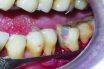
Hemisection
The surgical separation of a multirooted tooth, especially a mandibular molar, through the furcation in such a way that a root and the associated portion of the crown may be removed. Cutting an organ or tissue in half.
Got any book recommendations?