Mindblown: a blog about philosophy.
-
Primordial c
An odontogenic cyst resulting from degeneration of the enamel organ of a developing tooth bud. The vast majority of all primordial cysts are odontogenic keratocysts upon histopathologic examination.
-
Odontogenic c
A class of cysts derived from odontogenic epithelium, such as primordial, dentigerous, and lateral periodontal cysts.
-
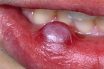
Mucocele
A cyst or cyst‐like structure that contains mucous glycoproteins. A mucocele is an extraductal extravasation of mucus into surrounding stroma. “Epithelium‐lined sac containing mucus. Mucous cysts in the sinus may appear as spherical, radiopaque areas.” A cavity containing an accumulation of mucus. A swollen sac or cavity filled with mucus secreted from cells in its…
-
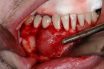
Keratocystic odontogenic tumor
Developmental odontogenic cyst of the dental lamina in which the epithelial cells produce keratin, known for its aggressive nature and high recurrence rate.
-
Gingival c
Found within the gingiva, most commonly in the mandibular canine‐premolar region. Believed to be derived from epithelial rests of the dental lamina.
-
Dentigerous c
Forms around the crown of an unerupted tooth or odontoma.
-
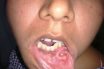
Calcifying cystic odontogenic tumor
An odontogenic cyst found most often in the mandibular canine and premolar region; has distinct microscopic features including basal epithelial cells that resemble ameloblasts.
-
Apical periodontal c
The most common odontogenic cyst, involving the apex of a root and resulting from the inflammatory reaction to a nonvital pulp.
-
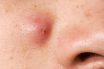
Cyst
A pathologic cavity lined by epithelium and usually containing fluid or semi‐solid material. A membrane-enclosed sac containing fluid, pus, or other soft material that develops as an abnormal growth. Cysts can develop just under the skin (so-called epidermal cysts) or inside the body in organs such as the ovaries or kidneys. A closed cavity or…
-
Cylindrical implant
An endosseous, rootform dental implant, with parallel‐sided nonthreaded walls. One such design, determined either in cross‐section or three‐dimension, follows the shape of a cylinder for an endosteal implant.
Got any book recommendations?