Mindblown: a blog about philosophy.
-
Bone fracture
Break in bone, usually the result of trauma. It can also be caused by an acquired disease of bone or by abnormal formation associated with bone disease. Fractures are further classified by their character and location: greenstick, spiral, comminuted, transverse, compound, and compression.
-
Bone fill
Clinical restoration of bone tissue in a treated osseous defect. It addresses neither the presence nor absence of histologic evidence of new connective tissue attachment nor formation of a new periodontal ligament in the case of tooth‐supporting bone. Measurement can be accomplished radiographically, clinically (by reentry), or histologically.
-
Bone factor
Relative response of alveolar bone to positive or negative stimulations; the ratio of osteogenesis to osteolysis.
-
Bone expansion
Manipulation of a bony ridge with flat and rounded osteotomes for recontouring the cortical ridge to gain more bone width than originally present, usually to accommodate placement of a dental implant.
-
Bone derivative
A substance extracted from bone, such as bone morphogenetic proteins.
-
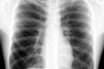
Radiographic
An estimate of the total amount of bone tissue (as bone mineral) in the path of one or more X‐ray beams, as measured by Hounsfield units. When in quotes, “density” is as defined in absorptiometry, and does not mean density as used in physics. Other classifications exist.
-
Histological
The “density” is calculated from the percentage of all bone tissue that is constituted by mineralized bone. Pertaining to the cellular makeup of a particular tissue.
-
Clinical
Tactile assessment of bone quality reflecting the percentage of calcified bone to marrow, determined during osteotomy preparation. Usually classified from D1 (dense) to D4 (porous). Of or related to or conducted in or as if within a clinic. Analytical or detached – clinically. Evidence or controlled trials include the “gold standard,” which are randomized doubleblind…
-
Bone curettage
Removal of soft tissue either from a bony surface by scraping with a curette in preparation for implant placement and/or alveolar ridge augmentation, or from a bony cavity following the removal of pathology.
-
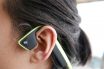
Bone conduction
The transmission of sound from the skull bones to the inner ear. Also known as cranial conduction, osteotympanic conduction, and tissue conduction. Sound conduction through the cranial bones. An assessment technique employed to investigate the underlying cause of hearing impairment is a method of sound transmission testing. A vibrating tuning fork is utilized in a…
Got any book recommendations?