

Fluoride use is widely recommended as a critical habit, as it strengthens enamel and prevents decay. (5) Similarly, regular flossing removes plaque buildup between teeth, significantly reducing the risk of periodontal disease. (6) Nutrition also plays a vital role—foods high in calcium and phosphorus help maintain enamel strength, while excessive sugar intake increases bacterial activity and acid production, leading to cavities. (7) Hydration and saliva production also contribute to oral health by neutralizing acids and flushing out bacteria. (8) Moreover, avoiding harmful habits such as smoking and excessive alcohol consumption significantly decreases the risk of oral cancer and gum disease. (9) Additionally, using mouthwash effectively helps to eliminate bacteria that cause bad breath and plaque buildup. (10)
10 Daily Habits for Stronger Teeth and Healthier Gums
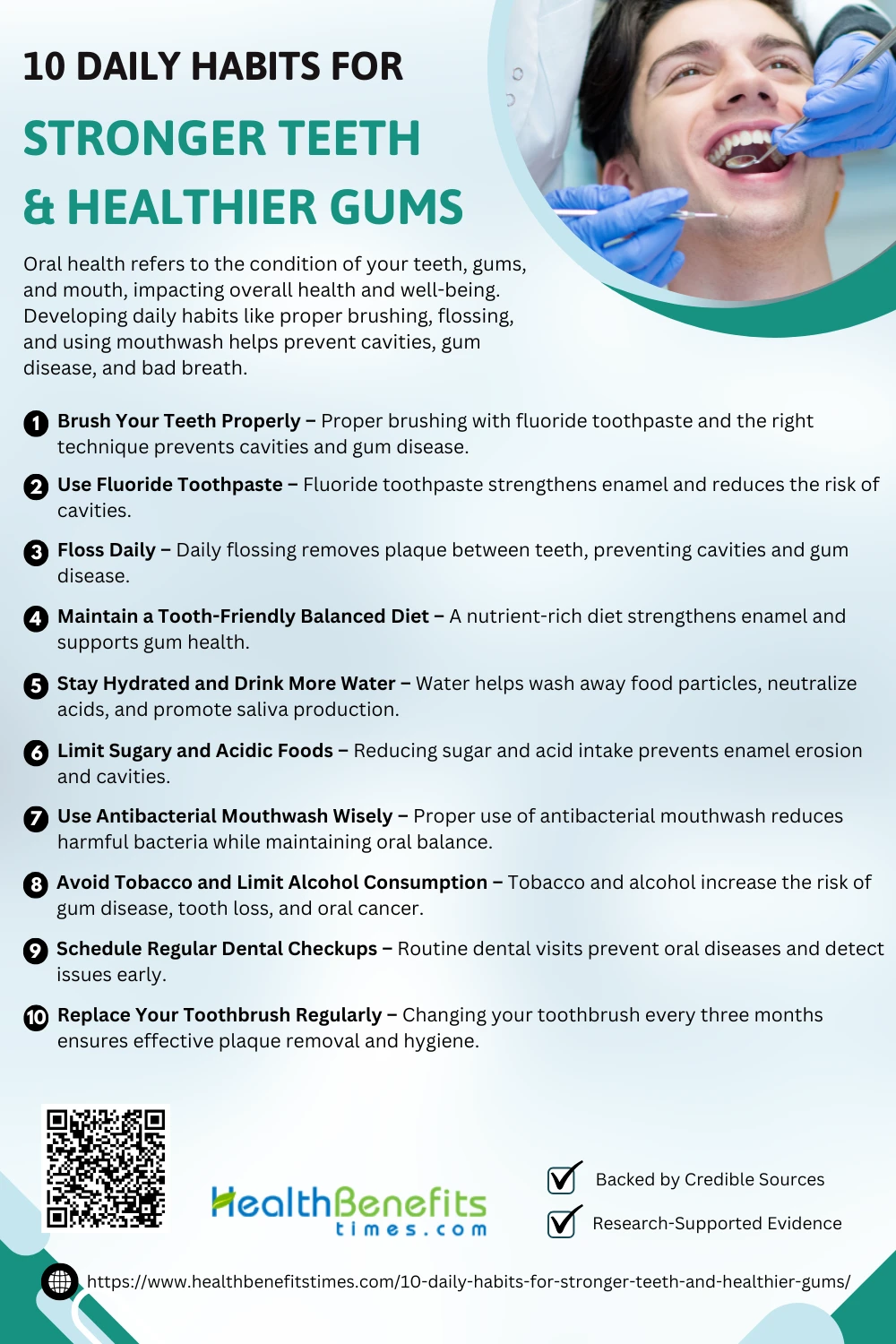
A healthy smile starts with daily habits. Strong teeth and healthy gums prevent cavities, bad breath, and gum disease. Follow these ten simple habits to maintain optimal oral health and a confident smile.
1. Brush Your Teeth Properly
Brushing your teeth properly is the foundation of good oral health, helping to remove plaque and prevent cavities and gum disease. Studies emphasize that brushing twice a day using the correct technique, such as the Bass method, significantly improves oral hygiene. (11) Research also supports the effectiveness of electric toothbrushes in reducing plaque buildup compared to manual brushing. (12) Using fluoride toothpaste further strengthens enamel and prevents decay. (13) Additionally, studies show that proper toothbrush care, such as replacing it every three months, enhances cleaning effectiveness. Finally, brushing duration plays a crucial role, with evidence suggesting that brushing for at least two minutes ensures thorough plaque removal. (14)
2. Use Fluoride Toothpaste
Using fluoride toothpaste is one of the most effective ways to prevent cavities and strengthen enamel. Fluoride plays a crucial role in remineralizing teeth and reducing the risk of decay. (15) Research confirms that fluoride toothpaste significantly lowers cavity rates in children and adults, especially in high-risk populations. (16) Increasing fluoride concentrations in toothpaste has been linked to enhanced caries prevention. (17) Additionally, fluoride use in dental products helps prevent early childhood caries. (18) A systematic review further supports fluoride toothpaste as a cost-effective method for maintaining oral health and preventing decay. (19)
3. Floss Daily
Flossing daily is essential for removing plaque and food debris from areas that brushing alone cannot reach, reducing the risk of cavities and gum disease. (20) Research has demonstrated that adding flossing to regular brushing significantly improves gingival health and reduces inflammation. (21) Flossing is particularly beneficial for orthodontic patients with fixed appliances, ensuring better plaque control. (22) Studies also suggest that flossing helps lower the risk of interproximal caries. (23) Furthermore, older adults who floss regularly experience improved long-term oral health outcomes. (24)
4. Maintain a Tooth-Friendly Balanced Diet
A tooth-friendly diet plays a crucial role in maintaining oral health, as nutrition influences enamel strength, gum health, and cavity prevention. (25) Foods rich in calcium, such as dairy products and leafy greens, help strengthen teeth and bones. (26) Xylitol-containing foods and sugar-free chewing gum have been proven to reduce plaque formation and neutralize acids. (27) Furthermore, a balanced diet with adequate vitamins and minerals supports healthy gum tissues and fights inflammation. (28)
5. Stay Hydrated and Drink More Water
Proper hydration is essential for oral health, as water helps wash away food particles and bacteria, reducing plaque buildup and the risk of cavities. (29) Drinking sufficient water also stimulates saliva production, which naturally neutralizes harmful acids and prevents dry mouth. (30) Studies highlight that well-hydrated individuals experience better gum health and reduced inflammation. (31) Additionally, hydration plays a role in maintaining overall immune function, further protecting against oral infections. (32) Research also suggests that drinking fluoridated water can enhance enamel strength and prevent tooth decay. (33)
6. Limit Sugary and Acidic Foods
Limiting sugary and acidic foods is essential for maintaining strong teeth and preventing dental erosion. Excessive sugar consumption feeds harmful bacteria in the mouth, leading to acid production that weakens enamel and promotes cavities. (34) Acidic foods and beverages, such as citrus fruits and sodas, accelerate enamel demineralization and increase tooth sensitivity. (35) Research highlights that frequent snacking on sugary foods without proper oral hygiene significantly raises the risk of tooth decay. (36) Studies also indicate that limiting sugary beverages and opting for water can reduce plaque acidogenicity and maintain a neutral oral pH. (37) Furthermore, incorporating protective foods like dairy products and fibrous vegetables can help counteract acid damage and promote remineralization. (38)
7. Use Antibacterial Mouthwash Wisely
Using antibacterial mouthwash correctly can significantly improve oral health by reducing harmful bacteria and plaque formation. (39) Research highlights that mouthwashes containing essential oils effectively combat gingivitis and maintain gum health. (40) However, excessive or improper use may disrupt the oral microbiome, affecting long-term oral health balance. (41) Studies also indicate that chlorhexidine-based mouthwashes provide short-term antimicrobial benefits but may lead to staining with prolonged use. (42) Proper usage, such as rinsing for 30 seconds after brushing but not immediately after fluoride toothpaste, ensures maximum benefits. (43)
8. Avoid Tobacco and Limit Alcohol Consumption
Tobacco and alcohol consumption have detrimental effects on oral health, increasing the risk of gum disease, tooth loss, and oral cancer. (44) Studies indicate that smoking weakens the immune response in the gums, making it harder to fight infections. (45) Excessive alcohol intake exacerbates oral issues by dehydrating tissues and reducing saliva production, increasing bacterial growth. (46) Combined tobacco and alcohol use significantly elevates the risk of oral cancer. (47) However, research shows that quitting smoking and moderating alcohol consumption leads to substantial oral health improvements over time. (48)
9. Schedule Regular Dental Checkups
Regular dental checkups are essential for preventing oral diseases and maintaining long-term oral health. (49) Early detection of oral issues, such as cavities and gum inflammation, through routine examinations helps prevent costly and invasive treatments. (50) Additionally, regular dental visits are linked to better self-reported oral health and improved quality of life. (51) Research also suggests that preventive dental care reduces the risk of systemic conditions, such as cardiovascular disease and diabetes, by controlling oral inflammation. (52)
10. Replace Your Toothbrush Regularly
Regularly replacing your toothbrush is essential for maintaining good oral hygiene and preventing bacterial buildup. Research shows that toothbrush bristles wear down over time, reducing their effectiveness in removing plaque and debris. (53) Studies recommend replacing toothbrushes every three months to maintain optimal cleaning efficiency. (11) Additionally, toothbrushes can harbor bacteria and fungi, increasing the risk of oral infections if not replaced regularly. (54) Worn-out bristles are also less effective in reaching between teeth and along the gumline, leading to plaque accumulation. (55) Furthermore, studies suggest that using a fresh toothbrush can improve overall gum health and reduce inflammation. (56)
Conclusion
Maintaining strong teeth and healthy gums is all about consistency. By adopting these ten daily habits—brushing properly, flossing, using mouthwash, staying hydrated, eating a balanced diet, limiting sugar, chewing sugar-free gum, avoiding tobacco, replacing your toothbrush, and scheduling regular dental checkups—you can prevent cavities, gum disease, and other oral health issues. Good oral hygiene not only improves your smile but also supports overall well-being. Small changes in your daily routine can lead to long-term benefits, keeping your teeth strong and gums healthy for life. Start today, and enjoy a brighter, healthier smile for years to come!
Comments
comments