


Causes of Huntington’s Disease
- Genetic Mutation (HTT Gene): Huntington’s disease is exclusively caused by a specific inherited defect on chromosome 4, specifically involving a mutation within the huntingtin (HTT) gene 2.
- CAG Trinucleotide Repeat Expansion: The fundamental genetic error involves an abnormal elongation of a DNA sequence made of cytosine, adenine, and guanine (CAG) building blocks, where possessing 36 or more of these repeats inevitably triggers the condition 2.
- Autosomal Dominant Inheritance: The disorder follows an autosomal dominant inheritance pattern, meaning an individual only needs to inherit one single defective copy of the HTT gene from either parent to eventually develop the disease 2.
- Toxic Protein Accumulation: The genetic mutation instructs the body to produce an abnormally long version of the huntingtin protein that misfolds, clumps together into toxic clusters inside cells, and gradually destroys vital brain tissue 2.
- Genetic Anticipation: When the mutated gene is passed down to children, particularly through the father during sperm production, the genetic sequence becomes unstable and often expands, causing the disease symptoms to appear at younger ages in each subsequent generation 2.
Symptoms of Huntington’s Disease
- Involuntary Movements: Individuals frequently develop chorea, which consists of unpredictable, dance-like jerking movements in the face, fingers, feet, and torso that typically worsen over time or during periods of stress 1.
- Muscle Rigidity and Posture Issues: Many people experience dystonia, a physical condition where muscles tighten uncontrollably, causing severe stiffness and forcing the body into unusual or fixed positions 1.
- Speech and Swallowing Difficulties: As voluntary muscle control progressively declines, affected individuals often develop slurred speech and struggle to chew or swallow food, which frequently leads to unintended weight loss and an increased risk of lung infections from choking 1.
- Impaired Balance and Coordination: The gradual deterioration of the brain’s motor networks leads to general clumsiness, an unsteady walking gait, and a significantly increased risk of frequent falls 2.
- Executive Dysfunction: The disease severely impairs cognitive function, causing individuals to lose the ability to plan, organize daily tasks, prioritize effectively, and make sound decisions 1.
- Memory and Processing Delays: Affected individuals experience significant trouble paying attention, processing thoughts quickly, finding the right words, and learning or retaining new information 1.
- Apathy and Depression: Severe depression is one of the most widely reported psychiatric symptoms, often accompanied by a profound lack of interest in life, emotional bluntness, severe fatigue, and sudden social withdrawal 2.
- Irritability and Behavioral Changes: The underlying brain degeneration frequently causes severe irritability, impulsive behavior, sudden outbursts of anger, and a distinct lack of self-awareness regarding the person’s own physical and mental decline 2.
Alternative Therapies for Huntington’s Disease
1. Physical Therapy and Supervised Exercise Programs
How it may help
Physical therapy uses targeted exercises to improve muscle strength, balance, and coordination. This helps individuals maintain their physical independence, walk safely, and reduce the frequency of falls as the disease gradually impairs their motor control 3.
What research says
Clinical studies confirm that supervised exercise programs significantly improve motor function, walking speed, and posture in patients with early to mid-stage Huntington’s disease. Research concludes that consistent physical therapy effectively delays the loss of overall mobility and enhances the quality of life for affected individuals 3.
How to use it safely
You should consult a licensed physical therapist who specializes in neurological disorders to create a personalized, safe exercise plan. Start with low-impact activities, such as walking or stationary cycling, and always ensure a caregiver is present to assist you if balance becomes an issue 3.
Potential precautions or side effects
Overexertion can cause severe muscle fatigue and significantly increase the risk of dangerous falls. You must immediately stop exercising if you experience physical pain, sudden dizziness, or extreme tiredness 3.
2. Speech and Language Therapy
How it may help
Speech and language therapy strengthens the muscles used for speaking and swallowing. This helps individuals speak clearly for as long as possible and teaches them specific swallowing techniques to prevent choking and difficulty eating as the disease progresses 1.
What research says
Clinical research demonstrates that speech therapy significantly improves a patient’s ability to communicate effectively. Furthermore, studies conclude that implementing professional swallowing strategies drastically reduces the risk of dangerous lung infections caused by accidentally inhaling food or liquid 3.
How to use it safely
You should collaborate with a certified speech-language pathologist to develop a customized therapy plan. Practice the recommended vocal exercises daily in short sessions, and closely follow all prescribed eating strategies, such as altering food textures or changing your posture while swallowing 3.
Potential precautions or side effects
Overworking the throat muscles can cause vocal fatigue or soreness. You must strictly follow swallowing instructions, as using incorrect physical techniques can suddenly increase the risk of choking 1.
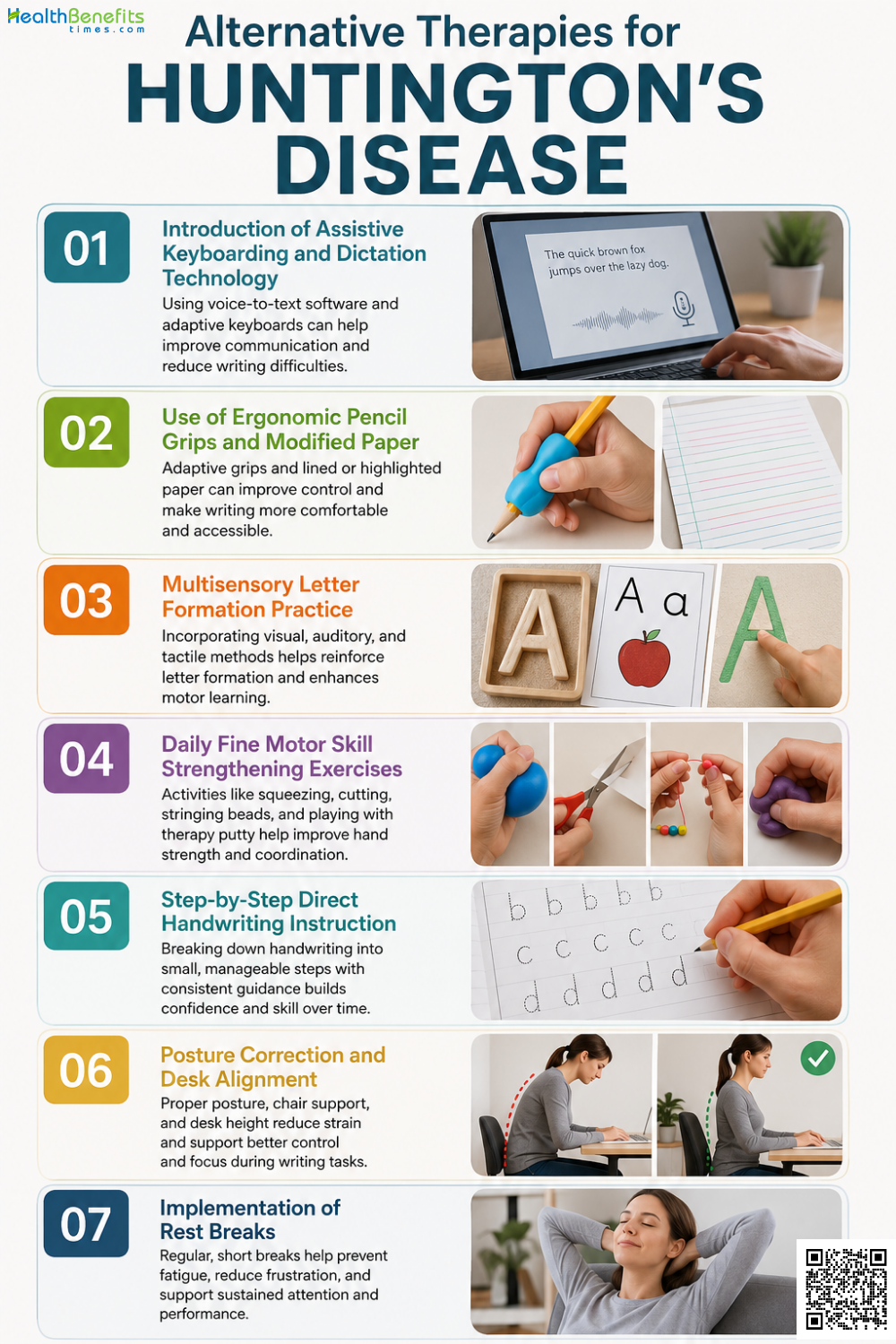
3. Occupational Therapy
How it may help
Occupational therapy helps individuals with Huntington’s disease maintain their daily independence by providing practical strategies to manage personal care, dressing, and eating. It introduces helpful assistive devices, such as specialized utensils and shower chairs, and suggests specific home modifications to make living spaces safer and easier to navigate 1.
What research says
Clinical research demonstrates that occupational therapy significantly prolongs a patient’s ability to perform daily routines independently. Studies conclude that implementing recommended home modifications and utilizing adaptive equipment drastically reduces the risk of home accidents and measurably improves the overall quality of life for affected individuals 3.
How to use it safely
You should collaborate with a licensed occupational therapist to conduct a thorough safety evaluation of your home. Carefully follow all instructions when using newly prescribed assistive devices, and regularly schedule follow-up appointments to adjust these tools as physical abilities gradually change 4.
Potential precautions or side effects
Using incorrectly fitted adaptive equipment can lead to dangerous falls or physical injuries. You must ensure all home modifications are professionally installed and routinely checked for safety 1.
4. Psychological Counseling and Behavioral Therapy
How it may help
Psychological counseling provides essential support for the severe emotional and behavioral changes caused by Huntington’s disease. Behavioral therapy helps individuals manage depression, uncontrollable anger, and severe anxiety by teaching practical coping strategies and emotional regulation techniques to navigate the progressive loss of physical and mental abilities 1.
What research says
Clinical research demonstrates that structured psychotherapy, particularly cognitive behavioral therapy, effectively reduces symptoms of depression and anxiety in Huntington’s patients. Studies conclude that integrating regular psychological support into medical care significantly improves emotional stability and reduces the heavy burden of behavioral outbursts on both patients and caregivers 5.
How to use it safely
You should seek a licensed mental health professional who specializes in progressive neurological disorders. Begin therapy sessions early after diagnosis to establish strong coping skills. Always involve your family members or caregivers in behavioral training to ensure consistent emotional support at home 4.
Potential precautions or side effects
Discussing the disease may initially trigger temporary emotional distress. You must recognize that standard talk therapy becomes less effective as severe cognitive decline occurs during the later stages 1.
5. Nutritional Therapy and Specialized Dietary Management
How it may help
Individuals with Huntington’s disease often experience severe, unintended weight loss due to continuous involuntary movements and chewing difficulties. Nutritional therapy provides high-calorie, nutrient-dense meal plans and altered food textures to prevent malnutrition, maintain body weight, and support overall physical energy as the disease progresses 1.
What research says
Clinical studies indicate that proactive dietary management significantly improves patient survival rates and stabilizes physical health. Research concludes that implementing high-caloric diets early in the disease process helps counteract the extreme energy burned by constant muscle activity, effectively slowing the rate of severe physical decline 6.
How to use it safely
You should consult a registered dietitian who understands neurological conditions to create a high-calorie meal plan. As swallowing becomes difficult, you must transition to puréed foods or thickened liquids to prevent choking, and eat multiple small meals daily to maximize your nutrient intake 6.
Potential precautions or side effects
Without professional guidance, altering food textures incorrectly can severely increase your risk of choking or inhaling food into the lungs, which frequently leads to life-threatening respiratory infections 1.
6. Music Therapy and Rhythmic Auditory Cueing
How it may help
Music therapy and rhythmic auditory cueing use external musical beats to bypass damaged timing networks in the brain’s basal ganglia. By providing a steady external rhythm, these therapies act as an artificial pacemaker for the brain, helping individuals better synchronize and control their physical movements 7.
What research says
Clinical reviews conclude that neurologic music interventions and rhythmic training offer potential benefits for motor functions, specifically aiding the timing of upper extremity movements 7. However, recent studies also conclude that highly complex musical cues can become overly cognitively demanding, occasionally worsening gait variability rather than improving it 8.
How to use it safely
You should work directly with a certified neurologic music therapist who can tailor rhythmic beats to your natural walking pace. Start with simple metronome clicks rather than complex songs, and always practice in a clear, safe environment to prevent falls if the rhythm initially distracts you 8.
Potential precautions or side effects
Using incorrect tempos or excessively complex music can cause sensory overload. This cognitive distraction may increase gait variability, subsequently heightening your risk of dangerous falls 8.
7. Dance and Movement Therapy
How it may help
Dance and movement therapy engages the brain’s remaining motor networks by combining physical exercise with rhythmic, creative expression. This combination helps individuals improve their balance, coordination, and body awareness, offering a unique way to manage involuntary movements while simultaneously boosting their mood and emotional well-being 9.
What research says
Systematic reviews indicate that dance-based interventions can positively impact motor functions and improve overall quality of life in patients with Huntington’s disease. While clinical evidence is still preliminary, research concludes that structured, contemporary dance programs are safe, feasible, and effectively target both the physical and emotional challenges of the disease 10.
How to use it safely
You should participate in classes led by a certified dance movement therapist who has experience with neurological disorders. Always start slowly in a safe, clear environment, and ensure a support person or physical aid is available if you experience severe balance issues or an increased risk of falling 10.
Potential precautions or side effects
Vigorous movements can increase muscle fatigue or trigger a sudden loss of balance. You must stop immediately if you feel dizzy or physically exhausted to prevent dangerous falls 10.
8. Patient and Family Support Group Therapy
How it may help
Patient and family support groups provide a safe, confidential environment to share emotional burdens and practical caregiving experiences. By connecting with others facing the same diagnosis, individuals exchange practical coping strategies, learn to manage family dynamics, and significantly reduce the profound sense of isolation accompanying this progressive disease 11.
What research says
Clinical guidelines highly recommend structured support groups for chronic neurological conditions. Research indicates that regular participation in these groups significantly improves emotional resilience, decreases caregiver burnout, and provides families with critical education on navigating the complex medical and behavioral challenges that occur as Huntington’s disease advances 12.
How to use it safely
You should seek support groups facilitated by licensed professionals or established organizations like the Huntington’s Disease Society of America. Attend meetings regularly, but ensure that the specific group matches your current stage of the disease to avoid unnecessary anxiety about future symptoms 12.
Potential precautions or side effects
Hearing detailed accounts of severe advanced stages from other members can cause significant anxiety and emotional distress for newly diagnosed patients or their younger family members 11.
Foods to Avoid When You suffer from Huntington’s Disease
There are no specific foods that directly worsen the genetic mutation responsible for Huntington’s disease. However, as the disorder progresses, severe chewing and swallowing difficulties, clinically known as dysphagia, become highly prevalent. To prevent life-threatening choking episodes, lung infections, and severe weight loss, specific food textures and items must be strictly avoided.
1. Thin, Unthickened Liquids
As swallowing muscle control deteriorates, thin liquids move too quickly down the throat, frequently causing dangerous aspiration into the lungs 1.
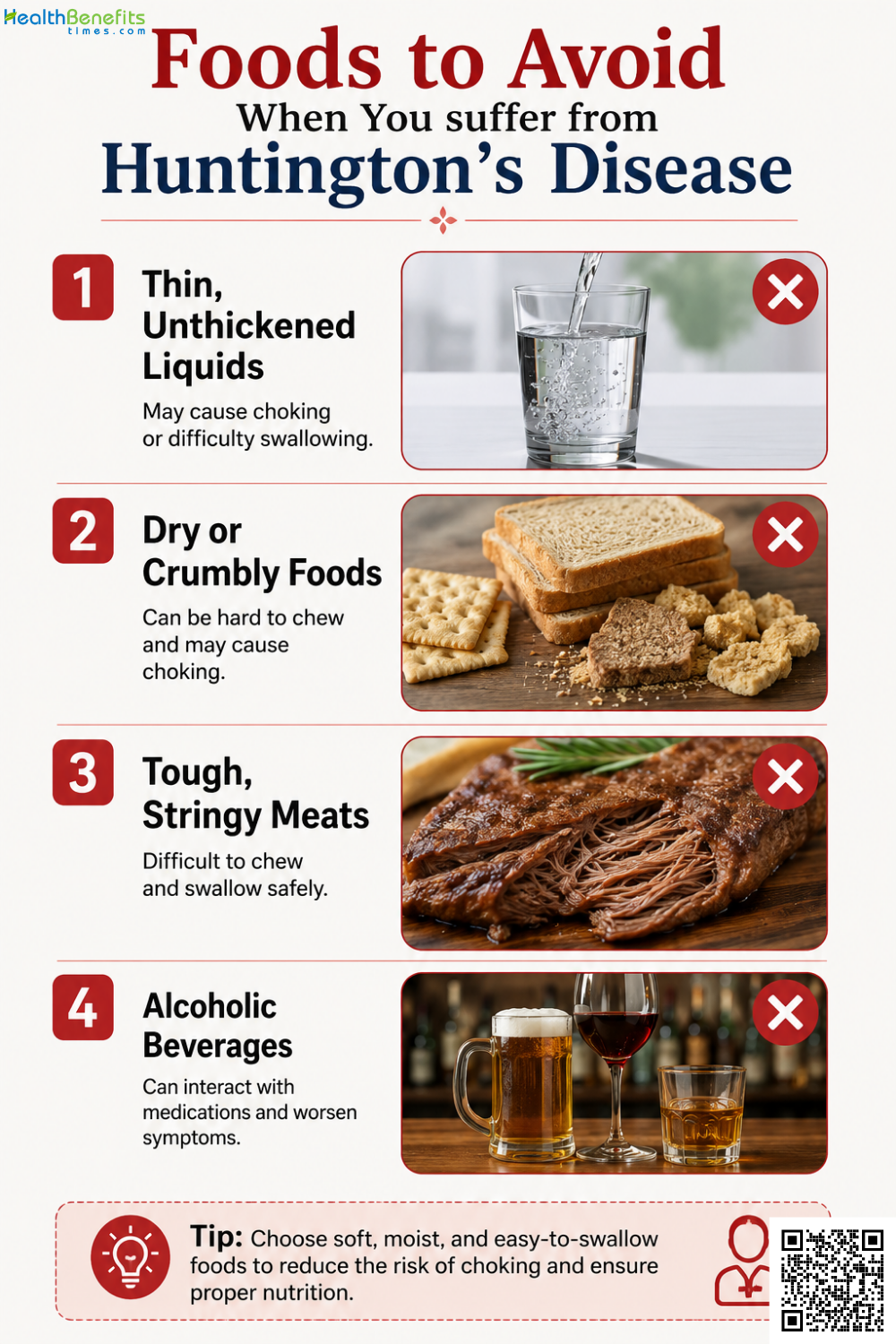
2. Dry or Crumbly Foods
Items like crackers, chips, or dry rice easily scatter in the mouth, significantly increasing the risk of choking and subsequent respiratory infections 6.
3. Tough, Stringy Meats
Weakened jaw muscles struggle to break down tough textures, meaning unchewed food pieces can easily obstruct the airway and cause choking emergencies 6.
4. Alcoholic Beverages
Alcohol further exacerbates poor physical coordination, impairs cognitive judgment, and negatively interacts with many prescribed medications used to control involuntary movements 2.
When to see Doctor when you struggle from Huntington’s Disease
Huntington’s disease is a complex, progressive neurological disorder that requires continuous monitoring by a specialized medical team. While the disease causes an expected gradual decline in physical and cognitive abilities, you should promptly consult a healthcare provider when specific complications arise that threaten personal safety, require immediate medication adjustments, or indicate secondary health emergencies.
1. Sudden Behavioral or Psychiatric Changes
You must contact a doctor immediately if severe depression, sudden aggression, or suicidal thoughts emerge, as these psychiatric complications require urgent medical intervention 1.
2. New Involuntary Movements or Falls
Consult a neurologist if you experience worsening uncontrollable jerking movements, significant clumsiness, or unexplained falls, as prescription medication adjustments are likely necessary 2.
3. Choking or Swallowing Difficulties
Seek immediate evaluation if coughing or choking occurs during meals, because impaired swallowing significantly increases the risk of life-threatening respiratory infections and pneumonia 1.
4. Significant or Unexplained Weight Loss
You should see a physician if rapid, unintended weight loss occurs, indicating that increased metabolic demands and feeding difficulties require urgent nutritional and medical intervention 6.
Comments
comments