

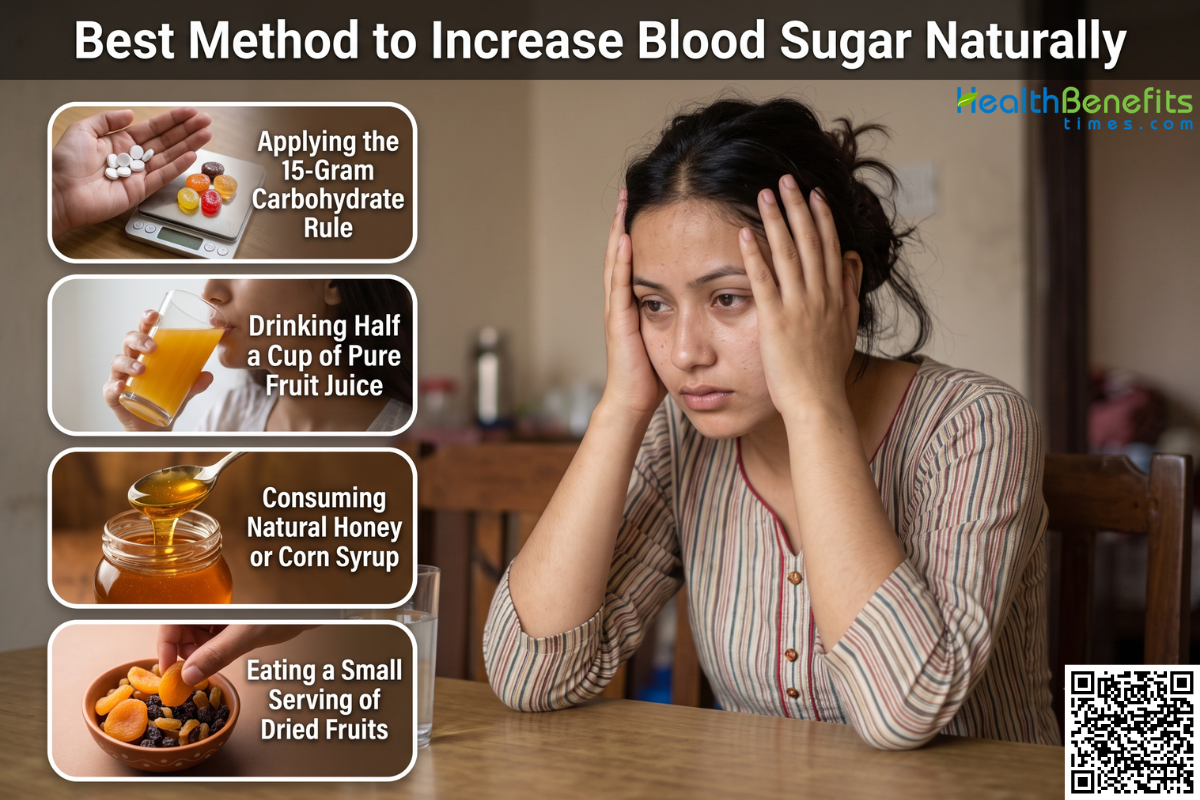
Best Method to Increase Blood Sugar Naturally
1. Applying the 15-Gram Carbohydrate Rule
How It May Help
The 15-gram carbohydrate rule provides a measured dose of simple sugars to rapidly elevate low blood glucose levels. This approach supplies the body with fast-acting energy, allowing blood sugar to stabilize quickly without causing an excessively high rebound spike, which resolves symptoms of mild hypoglycemia.
What Research Says
Clinical guidelines endorse the 15-15 rule as the standard initial treatment for conscious individuals experiencing blood glucose below 70 mg/dL. Evidence confirms that consuming 15 grams of simple carbohydrates effectively restores normal glucose levels within 15 minutes 3.
How to Use It Safely
To use this rule safely, consume exactly 15 grams of fast-acting carbohydrates, such as half a cup of fruit juice 4. Wait exactly 15 minutes, then check your blood sugar. If your levels remain below 70 mg/dL, repeat this process until stabilized.
Potential Precautions or Side Effects
Avoid consuming carbohydrates containing fat or protein, such as chocolate, because they delay sugar absorption. Additionally, eating more than 15 grams can cause an unwanted high blood sugar spike.
2. Drinking Half a Cup of Pure Fruit Juice
How It May Help
Pure fruit juice contains liquid simple sugars, such as fructose and glucose, which require minimal digestion. This allows the carbohydrates to absorb rapidly into the bloodstream, providing an immediate increase in blood sugar levels to quickly reverse the effects of mild hypoglycemia.
What Research Says
Clinical guidelines endorse consuming 4 ounces, or half a cup, of pure fruit juice as an effective emergency treatment for low blood sugar. Medical authorities confirm this specific portion provides the recommended 15 grams of fast-acting carbohydrates necessary to restore normal glucose levels safely within 15 minutes 4.
How to Use It Safely
Drink exactly half a cup of 100% pure fruit juice, such as orange or apple juice. Wait exactly 15 minutes, then check your blood sugar levels. If your reading remains below 70 mg/dL, consume another half cup to ensure your blood glucose stabilizes safely.
Potential Precautions or Side Effects
Avoid adding extra sugar, as this can cause an unsafe spike in blood glucose. Ensure you use regular fruit juice, not diet or low-calorie versions, which lack sufficient carbohydrates.
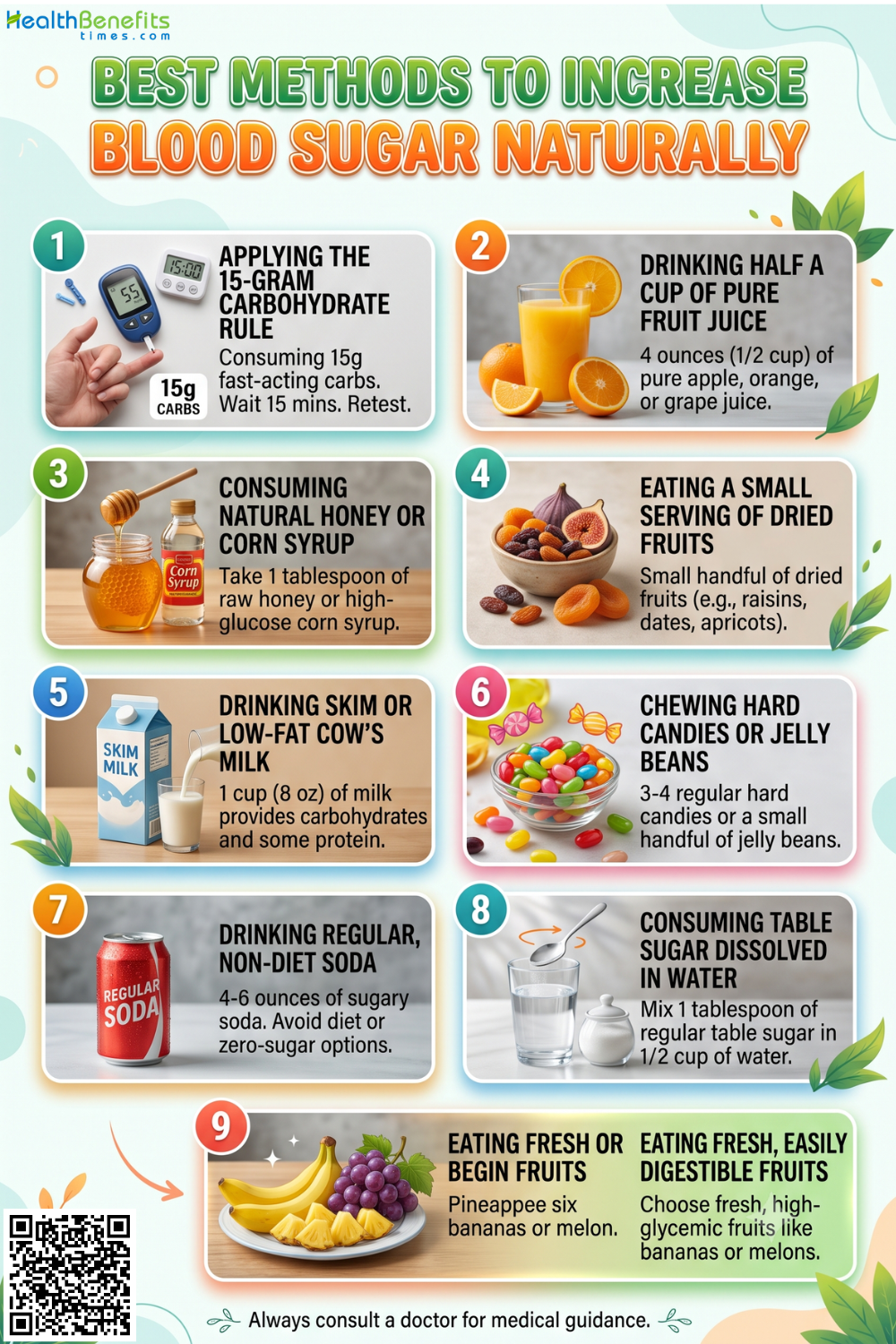
3. Consuming Natural Honey or Corn Syrup
How It May Help
Natural honey and corn syrup are dense sources of simple carbohydrates, primarily glucose and fructose. Because they lack fat or protein to slow digestion, the body absorbs them almost instantly. This provides a rapid infusion of energy directly into the bloodstream to quickly correct low blood glucose.
What Research Says
Medical guidelines recommend consuming exactly one tablespoon of honey or corn syrup as an effective rescue treatment for mild hypoglycemia. Health authorities confirm this specific measurement delivers the necessary 15 grams of fast-acting carbohydrates required to elevate blood sugar back to a safe range within 15 minutes 3.
How to Use It Safely
Swallow exactly one tablespoon of natural honey or light corn syrup. Wait 15 minutes, then test your blood sugar levels. If your reading remains below 70 mg/dL, consume another tablespoon. Once your levels stabilize, eat a small snack to prevent another drop.
Potential Precautions or Side Effects
Never give honey to infants under one year old due to the severe risk of infant botulism 5. Avoid consuming excess amounts to prevent unwanted blood sugar spikes.
4. Eating a Small Serving of Dried Fruits
How It May Help
Because their water content is removed, dried fruits contain highly concentrated natural sugars. This makes them a dense, fast-acting carbohydrate source. When consumed, these simple sugars are rapidly broken down and absorbed into the bloodstream, quickly raising blood glucose levels to resolve symptoms of low blood sugar.
What Research Says
Clinical guidelines approve specific quantities of dried fruits as a fast-acting treatment for hypoglycemia. Medical authorities state that consuming exactly two tablespoons of raisins provides the necessary 15 grams of simple carbohydrates required to effectively correct low blood sugar within 15 minutes 6.
How to Use It Safely
Consume exactly two tablespoons of raisins or a similarly small portion of dried fruit. Wait exactly 15 minutes, then check your blood sugar levels. If your reading is still below 70 mg/dL, eat another two tablespoons. Once your levels stabilize, consume a small meal.
Potential Precautions or Side Effects
Avoid overeating, as the dense, concentrated sugars can rapidly cause high blood sugar. Chew dried fruits thoroughly to prevent choking and ensure quick digestion.
5. Drinking Skim or Low-Fat Cow’s Milk
How It May Help
Cow’s milk contains a natural sugar called lactose, which the body quickly breaks down into glucose. Choosing skim or low-fat milk ensures rapid digestion. Because fat delays stomach emptying, avoiding whole milk allows the carbohydrates to enter the bloodstream faster to effectively treat low blood sugar.
What Research Says
Medical guidelines recognize nonfat and low-fat milk as effective treatments for mild hypoglycemia. Health authorities state that consuming exactly one cup, or eight ounces, of skim milk provides the recommended 15 grams of simple carbohydrates needed to elevate blood glucose safely within 15 minutes 3.
How to Use It Safely
Drink exactly one cup (eight ounces) of skim or low-fat milk. Wait 15 minutes, then test your blood sugar levels. If your reading remains below 70 mg/dL, drink another cup. Once your blood glucose stabilizes, eat a small snack to maintain safe levels.
Potential Precautions or Side Effects
Avoid whole milk, as its high fat content delays sugar absorption. Individuals with lactose intolerance should use alternative fast-acting carbohydrate sources to prevent adverse gastrointestinal distress.
6. Chewing Hard Candies or Jelly Beans
How It May Help
Hard candies and jelly beans are almost entirely made of simple sugars like sucrose and corn syrup. Because they contain no fat or protein to slow digestion, these sugars dissolve and digest rapidly. This allows the body to absorb the carbohydrates immediately, providing a fast-acting spike in blood glucose to reverse low blood sugar.
What Research Says
Medical authorities recommend fat-free sugary candies as an effective treatment for mild hypoglycemia. Clinical guidelines confirm that consuming exactly five to six hard candies or jelly beans delivers the required 15 grams of simple carbohydrates necessary to safely elevate blood glucose levels within 15 minutes 6.
How to Use It Safely
Chew and swallow five to six jelly beans or hard candies. Wait exactly 15 minutes, then test your blood sugar. If your reading remains below 70 mg/dL, eat another serving. Once your glucose levels stabilize, consume a small snack to maintain them.
Potential Precautions or Side Effects
Avoid chocolates or candies containing nuts and fat, which delay sugar absorption. Hard candies pose a dangerous choking hazard for young children or anyone experiencing altered consciousness.
7. Drinking Regular, Non-Diet Soda
How It May Help
Regular soda contains high amounts of simple, fast-acting sugars. Because it is a liquid and lacks complex carbohydrates, fat, or protein, the body absorbs these sugars instantly. This immediate digestion delivers a rapid surge of glucose into the bloodstream, making it an effective liquid treatment to quickly reverse dropping blood sugar.
What Research Says
Medical guidelines approve regular, sugar-sweetened soda as a standard emergency treatment for hypoglycemia. Clinical authorities confirm that drinking exactly half a cup, or four ounces, of non-diet soda delivers the recommended 15 grams of simple carbohydrates necessary to successfully restore normal blood glucose levels within 15 minutes 4.
How to Use It Safely
Drink exactly half a cup (four ounces) of regular soda. Wait 15 minutes, then check your blood sugar. If your reading is still below 70 mg/dL, consume another half cup. Once your blood glucose returns to a stable range, eat a small snack to maintain it.
Potential Precautions or Side Effects
Strictly avoid diet or zero-sugar sodas, as they lack the carbohydrates needed to raise blood sugar. Drinking more than half a cup may cause unwanted glucose spikes.
8. Consuming Table Sugar Dissolved in Water
How It May Help
Dissolving standard table sugar in water creates a fast-acting liquid carbohydrate solution. Because the sugar is already broken down in the fluid and lacks digestion-slowing fats or proteins, the body absorbs it immediately. This allows glucose to enter the bloodstream rapidly, providing a quick energy surge to reverse mild hypoglycemia.
What Research Says
Clinical guidelines support using standard table sugar as a quick rescue treatment for low blood sugar. Medical authorities state that consuming exactly one tablespoon of sugar dissolved in water provides the 15 grams of simple carbohydrates necessary to safely and effectively elevate blood glucose levels within 15 minutes 6.
How to Use It Safely
Dissolve exactly one tablespoon of sugar in a small glass of water and drink the entire mixture. Wait 15 minutes, then test your blood sugar. If your reading remains below 70 mg/dL, repeat this process. Once stabilized, eat a small snack to maintain your levels.
Potential Precautions or Side Effects
Do not consume more than one tablespoon at a time to prevent high blood sugar spikes. Never pour liquids into the mouth of an unconscious person due to choking risks.
9. Eating Fresh, Easily Digestible Fruits
How It May Help
Fresh, easily digestible fruits provide a direct source of natural simple sugars, such as fructose and glucose. Because they are naturally low in fat and protein, the digestive system breaks them down rapidly. This quick digestion allows the carbohydrates to enter the bloodstream efficiently, gently raising blood sugar to counteract mild hypoglycemia.
What Research Says
Medical guidelines endorse specific portions of fresh fruit to effectively treat mild hypoglycemia. Clinical authorities confirm that consuming half of a large banana or one small apple provides the precise 15 grams of fast-acting carbohydrates needed to safely elevate and stabilize low blood glucose levels within 15 minutes 3.
How to Use It Safely
Eat exactly one small apple, half of a banana, or a small orange. Wait exactly 15 minutes, then test your blood sugar levels. If your reading remains below 70 mg/dL, consume another equivalent serving. Once stabilized, eat a balanced snack to maintain your blood glucose.
Potential Precautions or Side Effects
Avoid combining the fruit with fats, such as peanut butter, during a hypoglycemic event because fats delay sugar absorption. Eating excessively large portions can cause unwanted high blood sugar spikes.
Comments
comments