

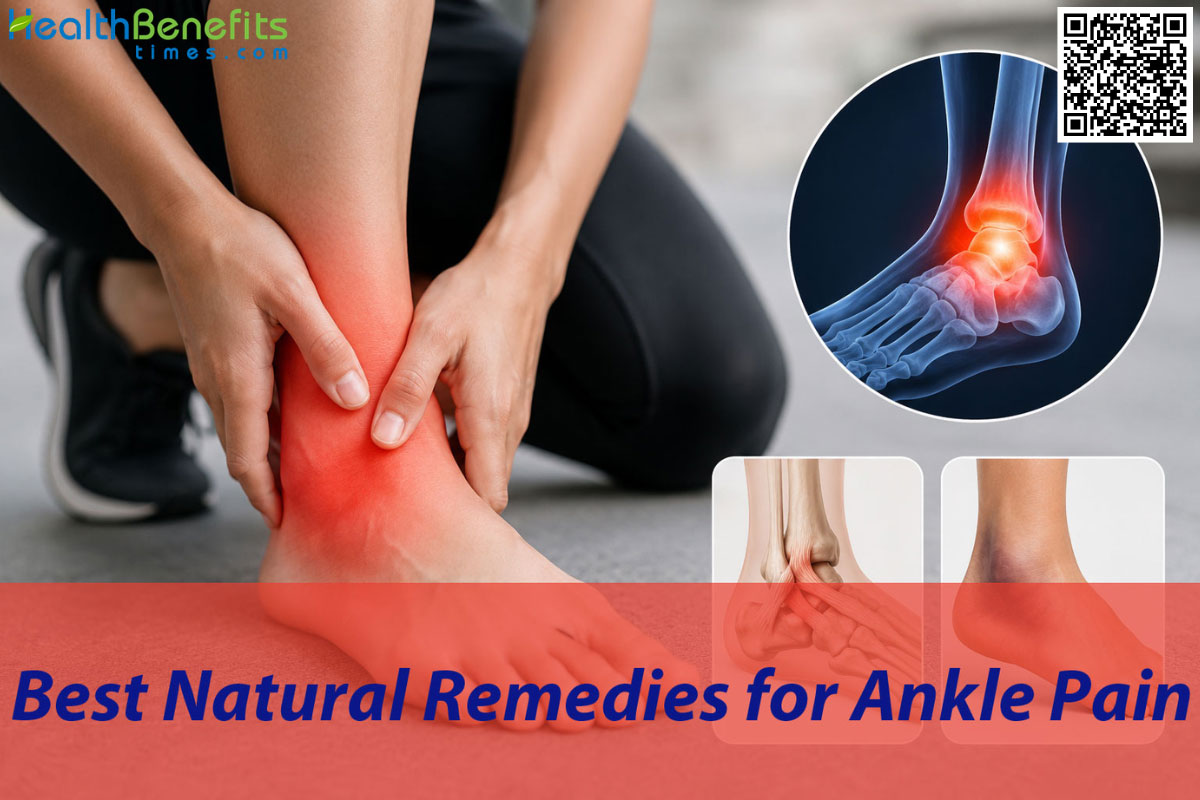
Looking at the sheer volume of cases helps us understand just how widespread this issue really is. Over a span of fourteen years, an estimated 7.4 million ankle sprains were treated in emergency departments across the United States alone 2. The pain you feel can range from a very mild, temporary ache after a long walk to a severe, sharp sensation that makes it entirely impossible to bear any weight on your foot. By taking the time to understand the root cause of your discomfort, you can select the safest and most effective natural healing strategies.
Causes of Ankle Pain
Figuring out exactly why your joint hurts is the very first step on your journey to feeling better. The foot and ankle work hard every single day, making them vulnerable to a wide variety of injuries and underlying health conditions.
1. Acute Ankle Sprains
Twisting or rolling the foot inward is the most frequent reason people experience sudden pain. This awkward movement causes tiny tears in the tough bands of tissue, known as ligaments, that keep your bones stable 3.
2. Achilles Tendinopathy
Overworking the thick tendon that connects your calf muscle to your heel bone can lead to frustrating tightness and pain. This happens slowly over time when the tendon gets tired from too much running or jumping 4.
3. Osteoarthritis
Growing older brings natural wear and tear to the smooth cartilage that cushions the bones. When this soft cushion wears away, the bones rub together, causing a dull ache and lasting stiffness 5.
4. Gout Attacks
Sudden, burning agony in the lower joints is a classic sign of gout. This happens when the body has too much uric acid in the blood, which eventually forms tiny, sharp crystals inside the joint space 6.
5. Tendon and Bursa Inflammation
Little fluid-filled sacs called bursae act as shock absorbers between your bones and tendons. If you wear shoes that squeeze your foot too tightly or walk too much, these sacs and tendons can become red, swollen, and quite tender 7.
6. Bone Fractures
Tripping, falling, or experiencing a hard bump can actually break one of the bones in the lower leg or foot. A broken bone causes instant, sharp pain and makes the ankle look twisted or bent at a strange angle 8.
7. Valley Fever (Desert Rheumatism)
Breathing in certain fungal spores found in dry, desert soils can sometimes lead to a surprising side effect. Some people develop a rare condition where the fungus triggers severe, spreading joint pain known as desert rheumatism 9.
Symptoms of Ankle Pain
Listening closely to the signals your body sends is the best way to figure out what type of injury you are dealing with. Different problems create different feelings in the foot.
- Swelling that puffs up around the outside or inside of the joint, making your ankle look noticeably larger than the other one 10.
- Skin discoloration, such as dark blue or purple bruising, that spreads down into your toes or up into your calf over a few days 11.
- A steady, boring ache that feels worse first thing in the morning but gets a little better after you walk around for a few minutes 12.
- Sharp, biting pain that strikes only when you try to stand on your tiptoes or climb a flight of stairs 13.
- A loud popping or snapping noise that you actually hear at the exact moment you twist your foot 14.
- Heat and warmth radiating from the skin, which can indicate that there is a lot of inflammation or perhaps even an active infection inside 15.
- A strange feeling of weakness or wobbliness, as if the joint might simply give out and cause you to fall over 16.
Ankle Pain Facts
| Feature | Details |
| Symptoms
17. |
|
| Causes |
|
| Types of Ankle Pain
18. |
|
| How does spread
19. |
|
| Age Group |
|
| You might be at a higher risk for exposure of this disease if you: 20. |
|
| How doctors diagnose
21. |
|
| Other facts |
|
Best Natural Remedies for Ankle Pain
Healing a sore ankle at home is entirely possible when you use gentle, nature-based approaches. You can take charge of your own recovery by following these simple, soothing remedies that help reduce swelling and calm irritated nerves.
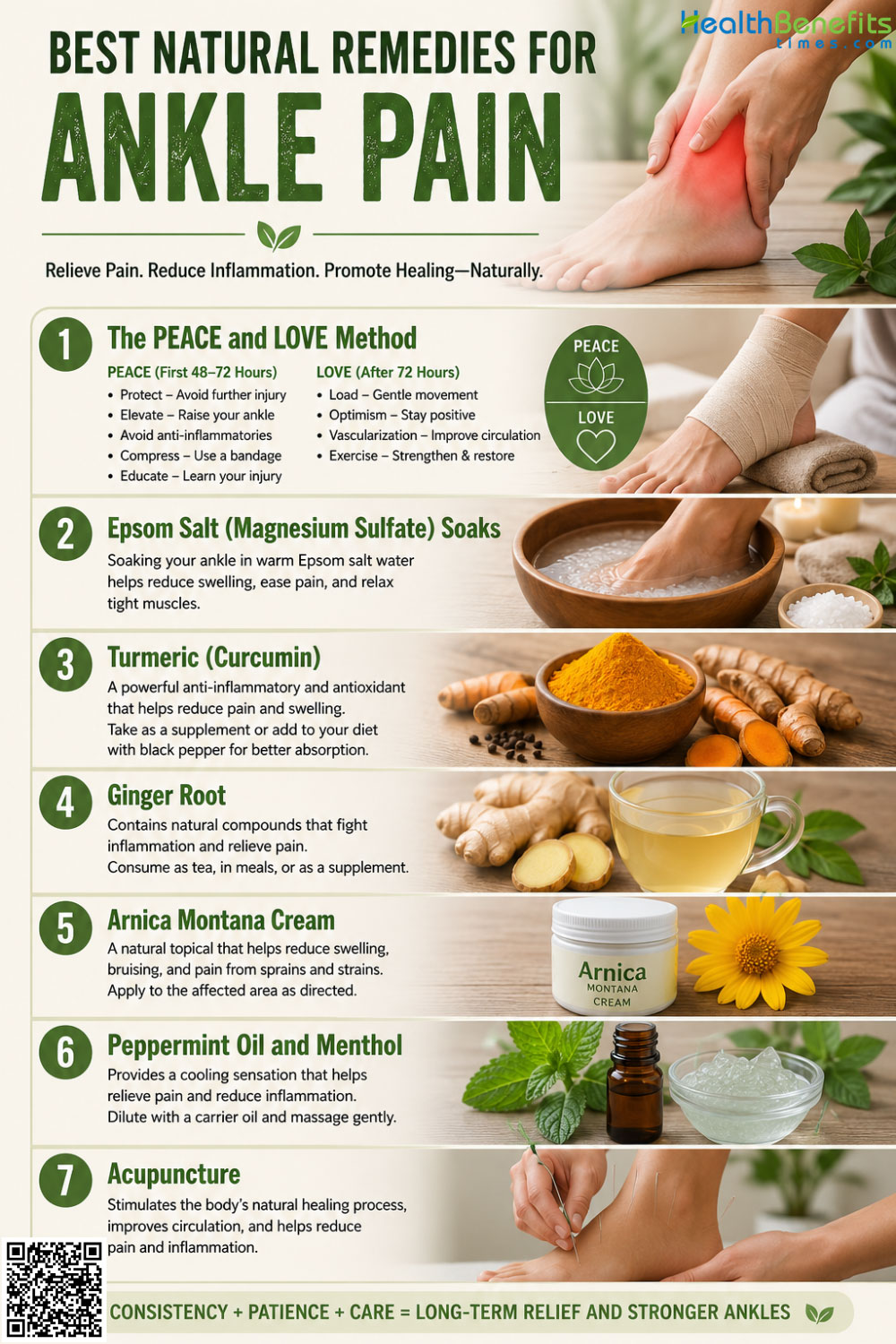
1. The PEACE and LOVE Method
Giving your body the right environment to heal is much better than rushing the process. For many years, people were told to use the “RICE” method (Rest, Ice, Compression, Elevation), but experts now suggest a more modern, holistic approach called “PEACE and LOVE” for soft tissue injuries 23. Right after you hurt yourself, you want to focus on PEACE: Protect the foot by resting, Elevate it on a pillow, Avoid taking strong anti-inflammatory pills so your body’s natural healing can start, Compress the area with a soft wrap, and Educate yourself on healing safely. After a few days, you switch to LOVE: Load the joint by walking a little bit if it doesn’t hurt too much, stay Optimistic, do gentle exercises to increase Vascularization (blood flow), and follow a safe Exercise routine to get your strength back 24.
Note: This is a daily activity guide used for physical recovery. You apply this method by changing how you rest, move, and think about your injury over the first few weeks.
2. Epsom Salt (Magnesium Sulfate) Soaks
Sinking your tired, aching foot into a warm bath is a wonderful way to find fast relief. Epsom salt is naturally made of magnesium sulfate, a powerful mineral that works wonders on tight, sore muscles 25. When you soak in it, the magnesium helps block specific pain sensors in your nervous system, turning down the volume on your discomfort. Studies show that people dealing with stiff, arthritic joints find it much easier to do their daily activities after regular warm water soaks because the minerals help pull out toxins and relax the surrounding tissues 26.
Note: Commonly used as a relaxing foot bath. You dissolve a cup of the salt into a small tub of comfortably warm water and soak your ankle for about 15 to 20 minutes to reduce soreness 27.
3. Turmeric (Curcumin)
Adding bright, colorful spices to your routine can do a lot more than just flavor your dinner. Turmeric is a vibrant yellow root from the ginger family that contains a highly active, natural medicine called curcumin 28. Curcumin is famous for its ability to travel through your body and fight off the inflammation that makes your joints red and swollen. Research proves that taking this natural extract can greatly lower inflammation levels and improve daily symptoms for people suffering from different types of joint pain, acting much like a natural pain reliever without being harsh on your stomach 29.
Note: Commonly eaten as a spice or taken as an oral supplement. You can take a daily capsule (often mixed with a little black pepper to help your body absorb it better) to calm down joint swelling from the inside out 30.
4. Ginger Root
Warming up your joints with the help of ginger is a fantastic trick passed down through generations. Ginger contains amazing little natural compounds especially ones called gingerols and shogaols that are incredibly good at stopping pain signals 31. These compounds actually stop your body from making the chemicals that cause swelling in your cartilage and ligaments. Whether you have a fresh sprain or an old, achy joint, ginger helps protect the soft tissues and reduces the feeling of stiffness when you try to walk 32.
Note: Commonly consumed as a fresh tea or swallowed as a daily capsule. You drink or eat it daily to safely lessen muscle aches and improve your ability to walk comfortably 33.
5. Arnica Montana Cream
Rubbing a soothing flower extract right onto a bruise can make it feel better almost instantly. Arnica montana is a beautiful yellow flower that has been used for hundreds of years to heal bruises, sprains, and sore muscles 34. The natural oils in the plant help to bring down swelling and provide localized pain relief right where you need it most. Clinical tests have shown that putting an arnica gel on a sprained ankle works remarkably well to reduce pain when moving, making it a great natural alternative to traditional medicine cabinet creams 35.
Note: Applied topically to the skin. You gently rub a small dollop of the cream or gel directly over the bruised or swollen area a few times a day to speed up healing 36.
6. Peppermint Oil and Menthol
Tricking your brain with a blast of cooling energy is a smart way to ignore nagging pain. Peppermint oil is naturally packed with menthol, a substance that creates an icy-cold feeling as soon as it touches your skin 37. This cold sensation quickly distracts your nerve endings, which stops them from sending loud pain signals up to your brain. It is an incredibly fast way to get temporary relief from a throbbing joint or a very tired, overworked tendon 38.
Note: Applied topically for quick pain relief. You must mix a few drops of the strong oil with a plain lotion or coconut oil, and then gently rub it into the sore joint to cool the area down safely 39.
7. Acupuncture
Unlocking your body’s natural energy pathways can help clear out stiffness and pain. Acupuncture is an ancient practice from traditional Chinese medicine where very tiny, thin needles are placed into specific spots on the skin. This careful placement tells your nervous system to release natural painkillers and helps rush fresh blood to the injured ankle 40. Studies suggest it is a very safe and effective way to relieve pain and help you get back to walking normally after an acute sprain 41.
Note: Applied as a physical therapy by a trained professional. You visit a practitioner who safely places the tiny needles around your leg and foot while you relax for a short period 42.
Foods and Activities to Avoid When You Suffer from Ankle Pain
Helping your ankle heal requires you to be very mindful about what you do throughout the day. Doing the wrong things can easily erase all the hard work your natural remedies are doing.
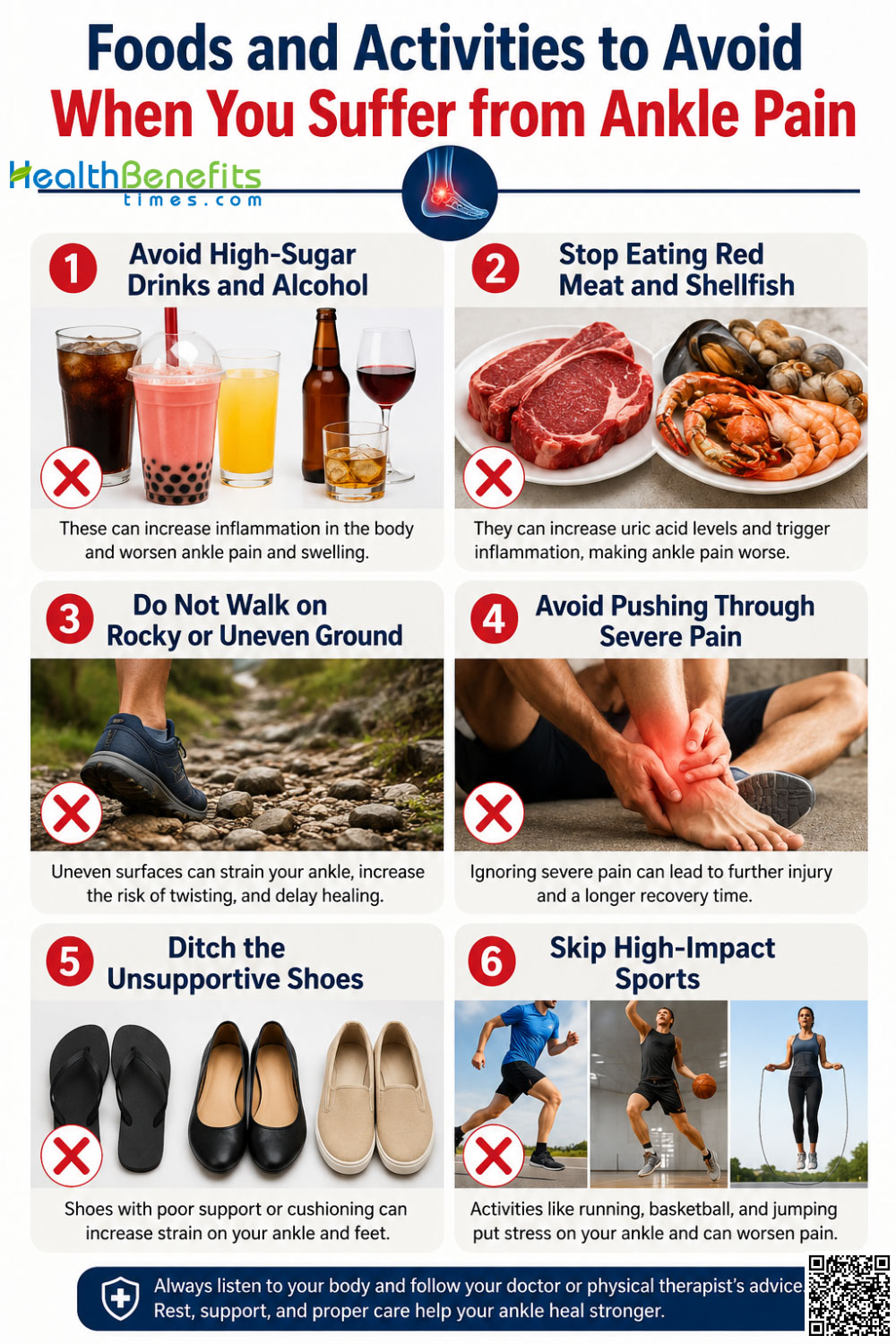
1. Avoid High-Sugar Drinks and Alcohol
If your pain is caused by gout, you need to stay away from sweet sodas and beer. These drinks force your body to make extra uric acid, which makes joint swelling much more painful 43.
2. Stop Eating Red Meat and Shellfish
Foods that are very high in natural chemicals called purines are dangerous for arthritic flare-ups. You should limit burgers, steaks, and shrimp while your foot is actively hurting 44.
3. Do Not Walk on Rocky or Uneven Ground
Your injured joint is very wobbly and weak. You must stay off of bumpy grass, hiking trails, and uneven sidewalks so you do not accidentally roll the foot over again and cause a worse sprain 12.
4. Avoid Pushing Through Severe Pain
A little bit of discomfort is normal when you start walking again, but you should never ignore a sharp, biting pain. If it hurts badly, you need to stop and sit down so you do not tear the ligament further 4.
5. Ditch the Unsupportive Shoes
High heels and completely flat flip-flops are terrible for a recovering foot. You should only wear wide, comfortable sneakers with a soft, supportive sole until you are completely healed 14.
6. Skip High-Impact Sports
Jumping up for a basketball rebound or sprinting on a soccer field places huge stress on your lower legs. You absolutely must take a break from these intense games until your strength is fully back 45.
Myths and Misconceptions
| Myth | Reality |
| Ice is always the best thing to put on an injury. | Putting ice on an injury used to be the gold standard, but newer guidelines show that freezing the tissue for too long can actually slow down the natural healing process your body needs to fix the damage. |
| You should take anti-inflammatory pills immediately.
47. |
The new “PEACE and LOVE” healing method suggests you should avoid taking strong anti-inflammatory pills right after a sprain, because a little bit of natural inflammation is actually how your body cleans up the injured cells. |
| Natural plant remedies are completely harmless. | Just because something grows in the ground does not mean it cannot hurt you. If you eat too much Arnica, it can cause severe stomach pain and vomiting, and plain essential oils can burn your skin if not mixed properly. |
| If it hurts a lot, the bone must be broken. | Severe pain does not automatically mean a bone is cracked. In reality, less than 15% of all painful ankle visits to the doctor end up being real fractures; most are just badly stretched ligaments. |
| Gout is a disease that only affects your big toe. | While gout is famous for attacking the big toe, those painful uric acid crystals can easily build up in your ankles and knees as well, causing intense heat and swelling. |
| “Walking it off” makes it heal faster. | Trying to walk completely normally on a freshly torn ligament without a brace can stretch it out permanently. This is a big reason why people develop ankles that easily give out on them later in life. |
Special Considerations
Every person is built a little differently, which means you need to adjust your healing plan depending on what stage of life you are in.
1. Children
Kids are still growing, and their bones have special soft spots called growth plates near the joints. If a child hurts their ankle, you should have a doctor look at it to make sure the growth plate isn’t damaged. Also, you must never rub strong things like peppermint oil near a baby’s face, as the menthol can make it hard for them to breathe 49.
2. Pregnancy
Carrying a baby changes the hormones in your body, which naturally makes all of your ligaments much looser and more prone to stretching. If you are pregnant, you should be very careful about taking new herbal pills, like high doses of ginger or turmeric, without asking your doctor first.
3. Chronic Conditions
People who have diabetes often have nerve damage that makes it very hard to feel hot or cold temperatures on their feet 15. If this applies to you, you must be extremely careful when using warm Epsom salt baths or ice packs, because you might accidentally burn or freeze your skin without even realizing it.
4. Elderly
Older individuals are much more likely to have thin cartilage and conditions like osteoarthritis 50. Because their bones might be more fragile, it is best for older folks to use very gentle remedies, supportive walking canes, and comfortable shoes rather than attempting aggressive exercises.
Precaution before use of natural remedies when you have Ankle Pain
Keeping yourself safe is the most vital part of any home care routine. Before you dive into using herbs and salts, you need to follow some basic safety rules.
1. Always Do a Small Skin Test
Before you rub a new herbal cream or mixed oil all over your sore foot, you should put a tiny dot of it on your arm. Wait a whole day to make sure it does not give you an itchy red rash 51.
2. Never Put Creams on Scrapes or Cuts
If you fell down and scraped your skin when you twisted your foot, you must not put Epsom salt, arnica, or essential oils on the open wound. It will sting terribly and could cause a bad reaction 48.
3. Check Your Other Medicines
Natural spices like turmeric and ginger are very strong and can change the way your blood flows. If you are already taking pills from your doctor for blood pressure or to thin your blood, you must ask a pharmacist before you start eating large amounts of herbal extracts 52.
4. Do Not Drink Essential Oils
Oils made for rubbing on the skin, like peppermint menthol, are incredibly concentrated and unsafe to swallow. You need to keep these little bottles tightly closed and far away from curious children and pets 39.
5. Follow the Instructions Carefully
You might think that taking double the amount of a natural supplement will make you heal twice as fast, but that is not true. You should stick strictly to the recommended amounts on the bottle to avoid getting an upset stomach 48.
When to See a Doctor
Taking care of yourself at home works wonderfully for minor bumps and twists, but some warning signs mean you need to get professional medical help right away.
1. You Cannot Stand Up at All
If you cannot even manage to take four small steps without crying out in pain right after you hurt it, you need to go see a doctor to get an X-ray 53.
2. Pressing the Bone is Agonizing
If you gently press your finger on the hard, bony bumps on the sides of your ankle and feel a sharp, terrible pain, there is a good chance you might have a crack in the bone 54.
3. Your Foot Feels Hot and Looks Bright Red
If the joint becomes very red, feels hot to the touch, and you start to feel feverish, you might have a serious infection inside the joint that needs medicine quickly 4.
4. You Feel Weird Tingling or Numbness
If your foot feels like it has fallen asleep, or you feel burning “pins and needles” shooting down into your toes, you could have a pinched or damaged nerve 11.
5. The Pain Just Won’t Go Away
If you have been resting, soaking, and being very gentle with your foot for a whole week, but it still feels just as weak and painful as day one, you should call your doctor to check for a worse injury 11.
Comments
comments