

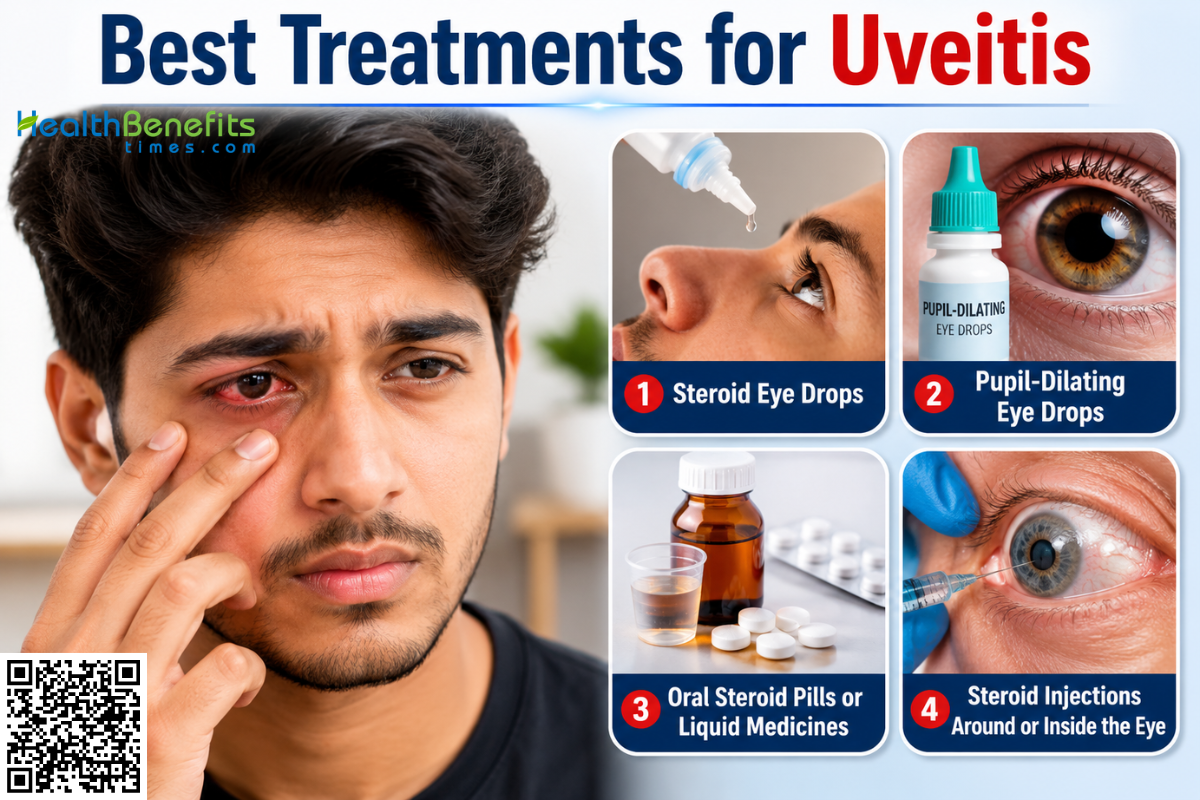
Causes of Uveitis
- Autoimmune and Systemic Inflammatory Diseases: Uveitis frequently occurs when the immune system mistakenly targets the body’s own ocular tissues. This inflammation is heavily associated with systemic autoimmune disorders, including HLA-B27 associated conditions, sarcoidosis, juvenile idiopathic arthritis, inflammatory bowel disease, Behçet’s disease, and multiple sclerosis 3.
- Infectious Pathogens: Microorganisms can directly invade the eye or trigger an intense secondary immunological reaction. Leading viral causes include the herpes simplex virus, varicella-zoster virus (the virus responsible for shingles), and cytomegalovirus, while prominent bacterial triggers include tuberculosis and syphilis 4. Parasitic infections, most notably toxoplasmosis, are also highly prevalent infectious catalysts 5.
- Physical Trauma: Direct mechanical injury to the eye whether from blunt force, penetrating wounds, or complications following routine ocular surgery can damage local cells. This structural damage prompts the immediate release of inflammatory cytokines, resulting in post-traumatic uveitis 3.
- Masquerade Syndromes: Certain underlying malignancies, specifically intraocular lymphoma and leukemia, can mimic the symptoms of uveitis. In these clinical scenarios, abnormal cancerous cells infiltrate the eye’s internal fluid, visually simulating standard intraocular inflammation during an examination 5.
- Idiopathic Origins: Despite exhaustive diagnostic laboratory testing and imaging, clinical data indicates that between 48% to 70% of all uveitis cases have no identifiable underlying disease, infection, or traumatic trigger. These cases are clinically classified as idiopathic uveitis 3.
Symptoms of Uveitis
- Severe Eye Redness: The white portion of the eye becomes visibly inflamed, with redness often concentrated in a ring around the colored iris. Unlike common bacterial or viral surface infections, this deep internal inflammation typically presents without sticky mucus or crusty discharge 1.
- Deep Eye Pain: The condition frequently causes a dull, persistent, and deep ache located within or directly behind the eye, rather than a superficial scratching or gritty sensation. This pain routinely worsens when attempting to focus on nearby objects or when the pupil constricts 3.
- Extreme Light Sensitivity (Photophobia): Exposure to standard indoor lighting or sunlight triggers sharp, sudden discomfort. This painful reaction occurs because the inflamed ciliary muscles that control the iris spasm violently when they attempt to shrink the pupil in response to light 3.
- Blurred or Hazy Vision: Inflammatory white blood cells and excess proteins leak into the normally clear fluid compartments of the eye. This cellular debris acts as a cloudy barrier that scatters incoming light before it can reach the retina, resulting in a noticeable decline in visual sharpness 1.
- Visual Floaters: Dark, moving shapes resembling spots, tiny cobwebs, or floating threads appear drifting across the visual field. These visual obstructions are physical clumps of inflammatory tissue and cellular debris suspended in the gel-like fluid of the eye, which cast distinct shadows onto the retina at the back of the eye 2.
Best Treatments for Uveitis
1. Steroid Eye Drops
How it may help
Corticosteroid eye drops are the standard initial treatment for inflammation located at the front of the eye. These drops work directly on the targeted area to suppress the immune system’s overactive response. By doing this, they rapidly reduce swelling, clear cloudy vision, and prevent permanent tissue scarring that could lead to vision loss 1.
What research says
Clinical guidelines establish that topical steroid drops successfully resolve most cases of non-infectious uveitis at the front of the eye. However, research indicates these medications cannot penetrate deeply enough into the eye to treat inflammation in the middle or back sections, requiring different treatment methods for those specific conditions 3.
How to use it safely
Always wash your hands before applying the drops to avoid introducing new infections. Apply the medication exactly on the schedule your doctor provides. You must slowly reduce your dosage over time as directed, rather than stopping abruptly, to prevent the inflammation from returning aggressively 3.
Potential precautions or side effects
Long-term use can dangerously increase pressure inside the eye, potentially causing glaucoma, or lead to cataracts. It also raises your risk for developing secondary eye infections 1.
2. Pupil-Dilating Eye Drops
How it may help
Pupil-dilating eye drops, also known as cycloplegics, relieve the severe eye pain associated with uveitis by relaxing the inflamed muscles inside the eye. Additionally, widening the pupil prevents the inflamed iris from permanently sticking to the eye’s lens, a complication that can severely damage vision 3.
What research says
Clinical protocols show that combining dilating drops with steroid treatments significantly improves outcomes for anterior inflammation. Research confirms these medications successfully prevent scar tissue formation, known as posterior synechiae, between the iris and the lens, which is crucial for preventing long-term structural eye damage 3.
How to use it safely
Apply the drops exactly as prescribed by your eye doctor, usually alongside your steroid medications. Because these drops temporarily blur your vision and increase light sensitivity, wear dark sunglasses outside and strictly avoid driving or operating machinery until your vision returns to normal 1.
Potential precautions or side effects
These drops cause expected blurred vision and temporary sensitivity to light. Rarely, they can trigger a local allergic reaction or dangerously increase eye pressure in susceptible individuals 3.
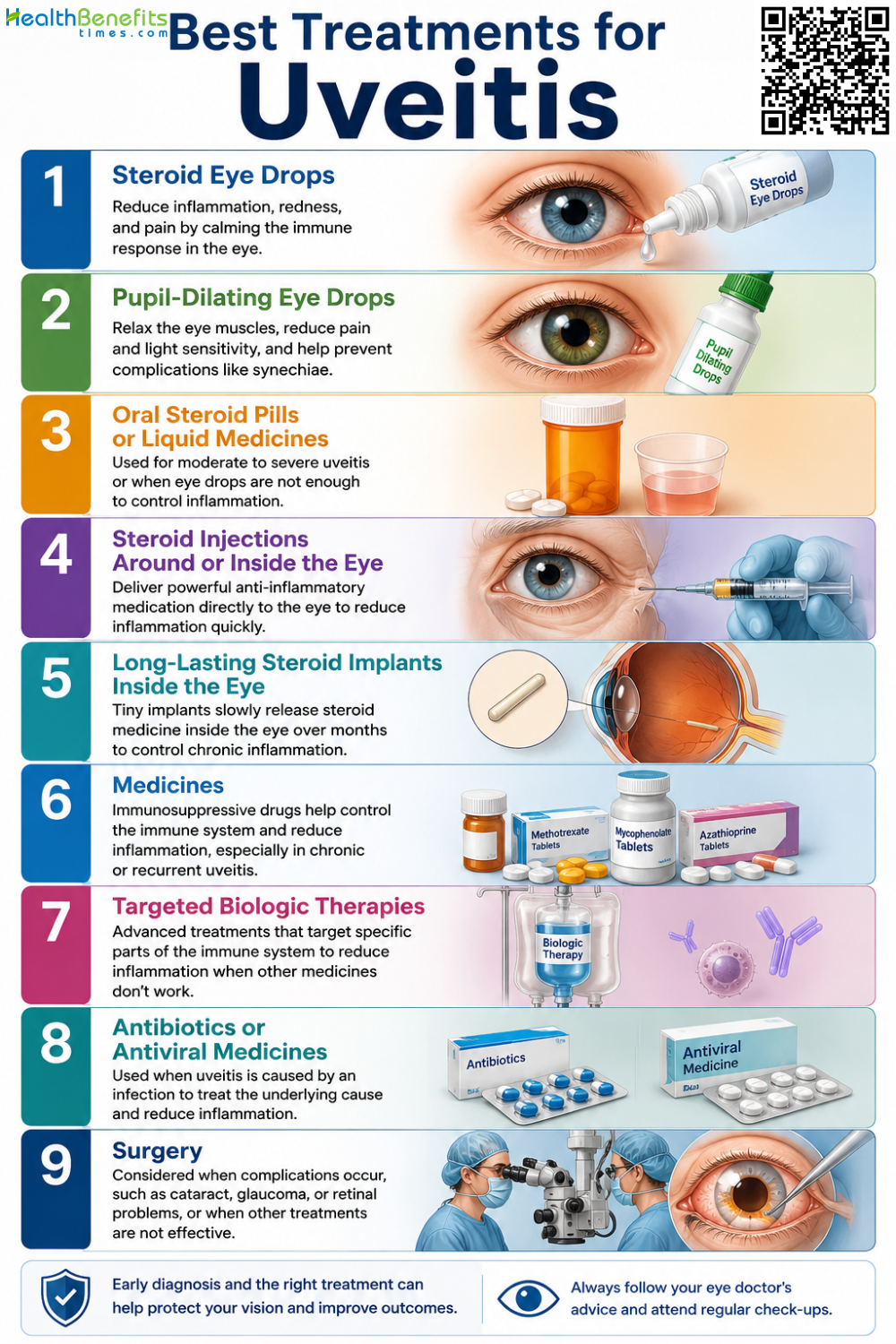
3. Oral Steroid Pills or Liquid Medicines
How it may help
Oral steroid pills, such as prednisone, treat inflammation in the middle and back of the eye where standard eye drops cannot reach. These medications systemically suppress the body’s overactive immune response, rapidly reducing severe swelling and protecting the eye from permanent structural damage and vision loss 1.
What research says
Clinical guidelines confirm oral corticosteroids are a highly effective initial treatment for severe non-infectious intermediate, posterior, and panuveitis. However, research emphasizes they are best used as a short-term solution, as long-term use is associated with significant systemic health risks that outweigh the ocular benefits 3.
How to use it safely
Take this medication with food to prevent stomach irritation. You must follow your doctor’s exact schedule and never stop taking the pills abruptly. Your dosage must be slowly reduced over time to prevent severe withdrawal symptoms and stop the inflammation from returning 2.
Potential precautions or side effects
Systemic side effects include weight gain, elevated blood sugar, high blood pressure, mood changes, weakened bones, and a significantly higher risk of developing bodily infections 3.
4. Steroid Injections Around or Inside the Eye
How it may help
Steroid injections deliver a highly concentrated dose of medication directly to the middle or back of the eye. This targeted approach rapidly reduces severe inflammation where standard eye drops cannot reach, providing powerful relief while avoiding the widespread bodily side effects associated with oral steroid pills 1.
What research says
Clinical studies confirm that periocular and intraocular corticosteroid injections are highly effective for treating posterior uveitis and reducing inflammatory fluid buildup in the retina. Evidence shows these localized injections successfully control internal eye inflammation while significantly lowering the risk of systemic complications compared to oral medications 3.
How to use it safely
These injections must be administered exclusively by a trained eye specialist in a sterile clinical setting. You will receive local numbing medication beforehand to minimize discomfort. Always attend all scheduled follow-up appointments, as your doctor must closely monitor your eye pressure after the procedure 2.
Potential precautions or side effects
Direct steroid injections significantly increase the risk of developing cataracts and elevated eye pressure, which can lead to glaucoma. There is also a rare risk of severe internal eye infection 1.
5. Long-Lasting Steroid Implants Inside the Eye
How it may help
Long-lasting steroid implants are tiny devices surgically placed inside the back of the eye. They continuously release a steady, controlled dose of anti-inflammatory medication over several months or even years. This provides long-term relief for chronic, hard-to-treat uveitis without the daily need for drops or pills 1.
What research says
Clinical research confirms that sustained-release implants, such as those containing fluocinolone or dexamethasone, significantly reduce inflammation flare-ups in severe, non-infectious posterior uveitis. Studies show these devices successfully stabilize vision and decrease the need for heavy oral immune-suppressing medications, offering a highly effective long-term treatment option 3.
How to use it safely
An eye surgeon must place this implant during a specialized clinical procedure. You must attend all regular follow-up visits so your doctor can monitor your healing. Contact your specialist immediately if you experience sudden eye pain, worsening vision, or new floating spots 2.
Potential precautions or side effects
These implants carry a very high risk of causing cataracts and dangerously elevated eye pressure. Most patients eventually require cataract surgery or daily glaucoma medications 1.
6. Medicines
How it may help
Immunosuppressive medicines help control severe uveitis by broadly calming the body’s overactive immune system. Doctors prescribe these specialized medications when eye inflammation does not respond to standard treatments, or when a person needs to stop taking high-dose steroids to prevent serious bodily harm 1.
What research says
Clinical guidelines establish that immunosuppressants, such as methotrexate, effectively control chronic, non-infectious uveitis. Research confirms these medications successfully preserve long-term vision, reduce structural eye damage, and allow patients to safely stop taking oral steroids, which significantly lowers the risk of severe steroid-induced complications 3.
How to use it safely
Take these medications exactly as prescribed by your eye specialist or rheumatologist. Because these drugs lower your natural immune defenses, you must complete regular blood tests to monitor your liver and kidney health. Wash your hands frequently and strictly avoid close contact with sick individuals 2.
Potential precautions or side effects
These medicines significantly increase your risk of catching serious bodily infections. Other potential side effects include stomach upset, mouth sores, severe fatigue, and long-term damage to the liver or kidneys 1.
7. Targeted Biologic Therapies
How it may help
Targeted biologic therapies are advanced medicines that block specific proteins, such as TNF-alpha, which cause severe inflammation. Doctors prescribe these powerful drugs for individuals with severe, hard-to-treat uveitis that does not improve with standard immune-suppressing medications, offering a highly precise way to stop eye damage 6.
What research says
Clinical studies demonstrate that biologic therapies, specifically adalimumab, are highly effective at controlling chronic, non-infectious uveitis in the middle and back of the eye. Research confirms these targeted treatments successfully prevent severe vision loss, reduce disease flare-ups, and help patients safely lower their reliance on oral steroids 6.
How to use it safely
You administer these medicines via injection under the skin, following strict schedules provided by your specialist. Because biologics powerfully alter your immune system, you must undergo regular blood tests and tuberculosis screenings. Always wash your hands and immediately report any signs of infection to your doctor 2.
Potential precautions or side effects
These therapies significantly increase your risk of developing severe bodily infections. Other serious side effects include allergic injection-site reactions, liver problems, and an increased risk of certain rare cancers 6.
8. Antibiotics or Antiviral Medicines
How it may help
When uveitis is triggered by an active bacterial, viral, or parasitic infection, doctors prescribe targeted antibiotics or antiviral medications. These medicines work by directly eliminating the harmful microbes causing the disease, resolving the root cause of the eye inflammation and preventing irreversible tissue damage 1.
What research says
Clinical protocols mandate that infectious uveitis must be treated with appropriate antimicrobial therapy. Research emphasizes that using steroids alone for infectious cases can dangerously worsen the infection; therefore, completely eradicating the underlying pathogen with antibiotics or antivirals is critical for preserving vision and stopping inflammation 3.
How to use it safely
Take these medications exactly as directed and complete the entire prescription, even if your vision improves quickly. Stopping early allows the infection to return stronger and become resistant to treatment. Take pills with water and report any new eye redness immediately 2.
Potential precautions or side effects
Common side effects include stomach upset, nausea, and allergic skin rashes. Overuse or incomplete treatments can lead to dangerous, drug-resistant bodily infections 1.
9. Surgery
How it may help
A surgical procedure called vitrectomy helps control severe uveitis by removing the gel-like fluid inside the eye. This clears away inflammatory debris, cloudy floaters, and harmful immune cells that block vision, allowing the eye to heal when standard medications fail to provide relief 1.
What research says
Clinical studies confirm that therapeutic vitrectomy successfully removes inflammatory proteins and restores visual clarity in patients with chronic, treatment-resistant posterior uveitis. Evidence shows that clearing this internal eye fluid significantly reduces future inflammatory flare-ups and helps preserve long-term retinal health 3.
How to use it safely
You must undergo this procedure in an operating room with a specialized eye surgeon. During recovery, wear your protective eye shield, apply prescribed drops, strictly avoid heavy lifting, and attend all follow-up appointments to ensure your eye heals properly 2.
Potential precautions or side effects
Surgery carries serious risks, including severe internal eye infection, bleeding, dangerous retinal detachment, and the rapid development of cataracts that will require future surgical removal 1.
Foods to Avoid When You suffer from Uveitis
While no specific diet cures uveitis, clinical evidence shows that consuming certain foods can trigger systemic inflammation and severely disrupt immune function. Because non-infectious uveitis is an immune-mediated disease, avoiding pro-inflammatory foods can help prevent excessive immune responses and potentially reduce the severity of ocular flare-ups.
1. Refined Sugars and Sweets
High sugar intake causes cellular damage and promotes widespread bodily inflammation, which can severely worsen the autoimmune responses linked to uveitis flare-ups 7.
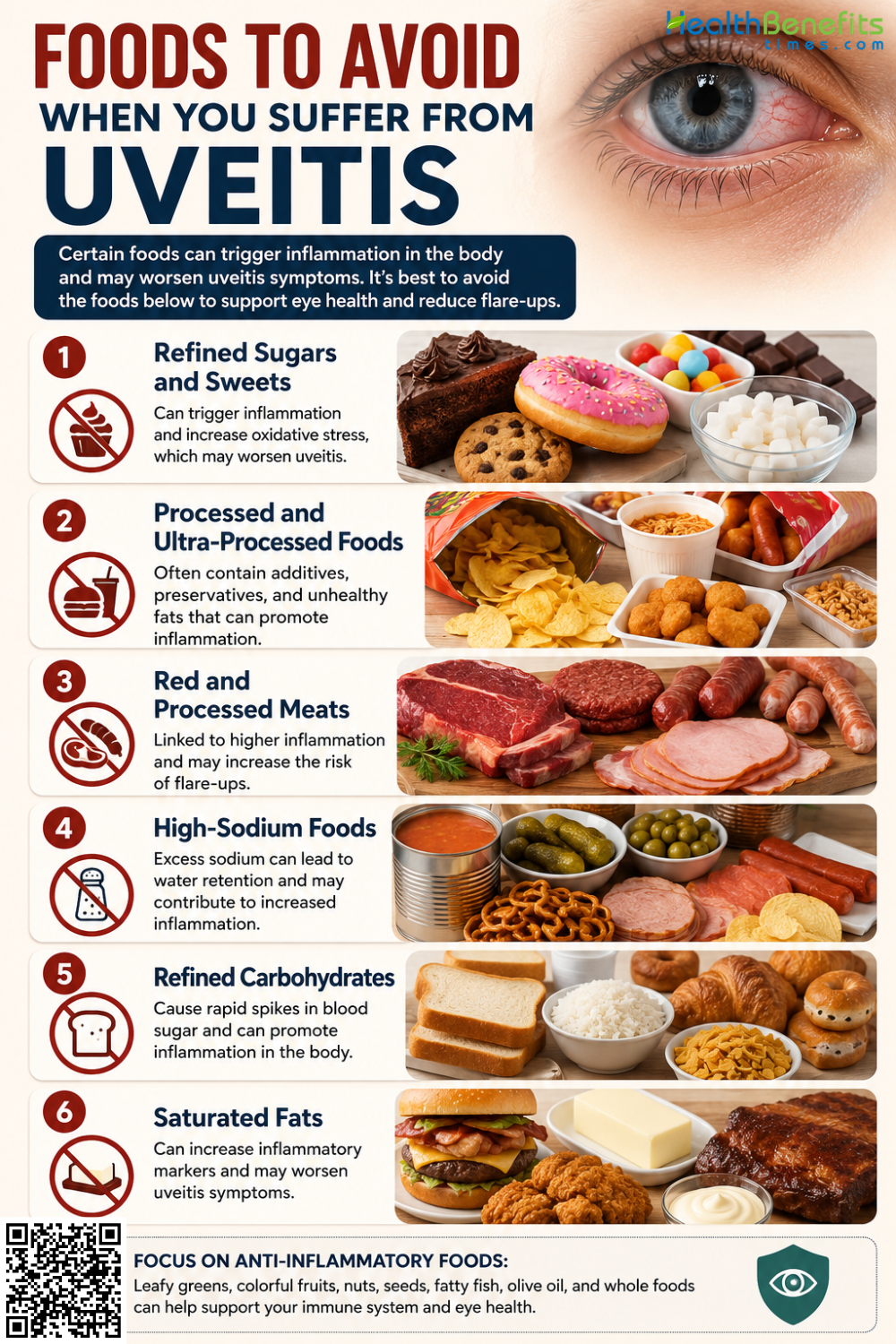
2. Processed and Ultra-Processed Foods
Heavily processed items contain harmful chemical compounds that disrupt healthy gut bacteria and aggressively fuel the systemic inflammation underlying autoimmune eye conditions 7.
3. Red and Processed Meats
Heavy consumption of red meat increases circulating pro-inflammatory proteins, directly exacerbating the dangerous immune system overactivity responsible for internal eye inflammation 8.
4. High-Sodium Foods
Excessive salt intake negatively alters healthy gut bacteria and promotes the overproduction of highly inflammatory immune cells, strongly driving autoimmune disease progression 7.
5. Refined Carbohydrates
Diets heavy in refined carbohydrates compromise the protective intestinal barrier, leading to chronic, low-grade systemic inflammation that can rapidly trigger or worsen uveitis symptoms 8.
6. Saturated Fats
Consuming high amounts of saturated animal fats causes a dangerous imbalance in immune cells and stimulates widespread inflammation that significantly complicates uveitis management 7.
When to see Doctor when you suffer from Uveitis
Uveitis is a serious eye condition that can progress rapidly and cause permanent vision loss or irreversible blindness if left untreated. Because its early warning signs often overlap with minor, temporary eye infections, recognizing the specific red flags of internal inflammation is critical. You must seek immediate emergency medical evaluation from an ophthalmologist or eye care specialist if you develop any severe or rapidly worsening ocular symptoms.
1. Sudden Blurry Vision
Any rapid decline in visual clarity requires emergency evaluation, as inflammatory fluid or cellular debris may be actively damaging the sensitive retina 1.
2. Severe, Deep Eye Pain
Seek immediate care for intense, aching pain within or behind the eye, especially if it worsens when focusing, as this indicates dangerous internal inflammation 3.
3. Extreme Light Sensitivity
If normal indoor lighting or sunlight suddenly causes sharp pain, you must consult a doctor rapidly, as inflamed internal eye muscles are violently spasming 2.
4. Sudden Onset of Floaters
A rapid appearance of dark spots, threads, or cobwebs drifting across your vision signals dangerous inflammatory debris accumulating inside the eye fluid 1.
5. Unexplained Eye Redness
Consult a specialist for persistent, deep redness concentrated around the colored part of the eye, particularly if it occurs without sticky surface discharge 3.
Comments
comments