

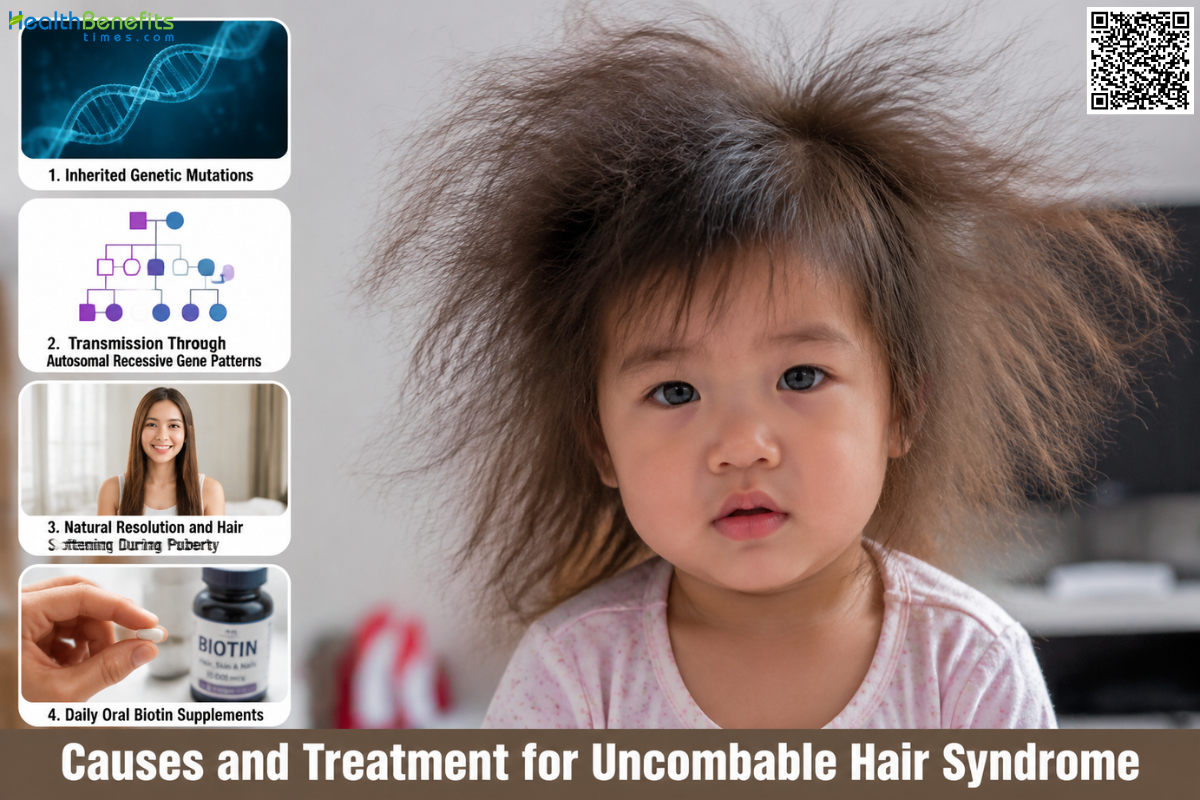
Causes of Uncombable Hair Syndrome
1. Genetic Mutations
The primary cause of uncombable hair syndrome is an inherited genetic change that disrupts the normal development of the hair shaft 6.
2. Specific Gene Involvement
The condition is directly linked to defects in one of three specific genes: PADI3, TGM3, or TCHH 7. These genes provide the cellular instructions necessary for building the proteins that give hair strands their round shape and structural integrity 3.
3. Structural Protein Deficiency
Alterations in these genes prevent the body from properly producing or processing trichohyalin, a critical hair protein, and the enzymes needed to bind it to other elements within the hair 6. Without this proper protein binding, the hair shaft grows with abnormal triangular or kidney-shaped cross-sections rather than a smooth, cylindrical shape.
4. Autosomal Recessive Inheritance
In most cases, the disorder is passed down in an autosomal recessive pattern, meaning a child must inherit two defective copies of the responsible gene—one from each parent—to develop the frizzy, unmanageable hair 7. Parents who carry only one copy typically show no signs of the condition.
5. Autosomal Dominant Inheritance
In rare instances, uncombable hair syndrome may follow an autosomal dominant pattern, where inheriting just a single altered copy of the gene from one parent is sufficient to cause the physical hair changes 8.
Symptoms of Uncombable Hair Syndrome
- Noticeable Hair Texture: The most prominent sign is scalp hair that becomes exceptionally dry, frizzy, wiry, and takes on a shiny or “spun-glass” appearance 7.
- Resistance to Combing: The hair stands out straight from the scalp, grows in multiple different directions, and physically resists all attempts to be brushed or combed flat 9.
- Distinct Color Changes: Affected children typically develop light-colored hair, frequently described as silvery-blond or straw-colored, regardless of their original hair color at birth 7.
- Specific Age of Onset: These physical changes to the hair usually appear in early childhood, typically developing between the ages of three months and three years, though occasionally appearing as late as age twelve 5.
- Abnormal Microscopic Shape: Under a microscope, the individual hair strands display an abnormal triangular, kidney-like, or heart-like shape with a distinct lengthwise groove, rather than the smooth, round shape of typical hair 2.
- Normal Growth and Durability: While the hair is highly unruly, it grows at a normal rate and is not inherently fragile, sparse, or prone to breaking unless subjected to harsh brushing or chemical treatments 1.
- Isolation to Scalp Hair: The structural abnormalities strictly affect the hair on the head; eyelashes, eyebrows, and all other body hair remain completely normal in texture and appearance 9.
- Lack of Other Medical Issues: In the vast majority of cases, the syndrome is an isolated physical trait and is not accompanied by any underlying physical, neurological, or developmental health problems 4.
Causes and Treatment for Uncombable Hair Syndrome
1. Inherited Genetic Mutations in Hair Proteins (PADI3, TGM3, and TCHH Genes)
How it may help
Identifying specific inherited genetic mutations helps doctors confirm an exact diagnosis of uncombable hair syndrome. This prevents unnecessary medical tests for other conditions and reassures families that the child’s frizzy hair is an isolated, harmless structural issue rather than a sign of a more severe underlying health problem 7.
What research says
Genetic studies confirm that mutations in the PADI3, TGM3, or TCHH genes disrupt the formation of proteins needed for normal, round hair shape 3. Research concludes that identifying these gene changes through DNA analysis provides a definitive diagnosis, confirming the condition is temporary and naturally improves during puberty 1.
How to use it safely
If you suspect your child has this condition, ask a pediatrician or dermatologist for a clinical evaluation. They may recommend safe, non-invasive genetic testing using a simple blood draw or cheek swab to analyze DNA and confirm the presence of these exact gene changes 9.
Potential precautions or side effects
Genetic testing carries no physical risks beyond mild discomfort from a blood draw. However, you should consider genetic counseling to fully understand the laboratory results and family inheritance patterns 10.
2. Transmission through Autosomal Recessive Gene Patterns
How it may help
Understanding that this syndrome spreads through an autosomal recessive pattern helps families manage future expectations. It confirms that the condition is a natural inherited trait, not caused by poor hair care, and clarifies the 25% chance that future children might also inherit the syndrome 11.
What research says
Clinical genetics research confirms that uncombable hair syndrome predominantly follows an autosomal recessive inheritance pattern 6. A child must inherit two copies of the defective hair-shaft gene—one from each symptom-free carrier parent—to develop the distinctive dry, resistant, and wiry hair 7.
How to use it safely
If you want to understand your family’s inheritance risks, consult a certified genetic counselor. They can safely guide you through DNA testing and family history evaluations to identify if both partners carry the specific recessive genes responsible for the condition 12.
Potential precautions or side effects
While genetic evaluation is physically harmless, discovering carrier status may cause emotional distress. Always undergo testing with a medical professional who can help you interpret the genetic results accurately.
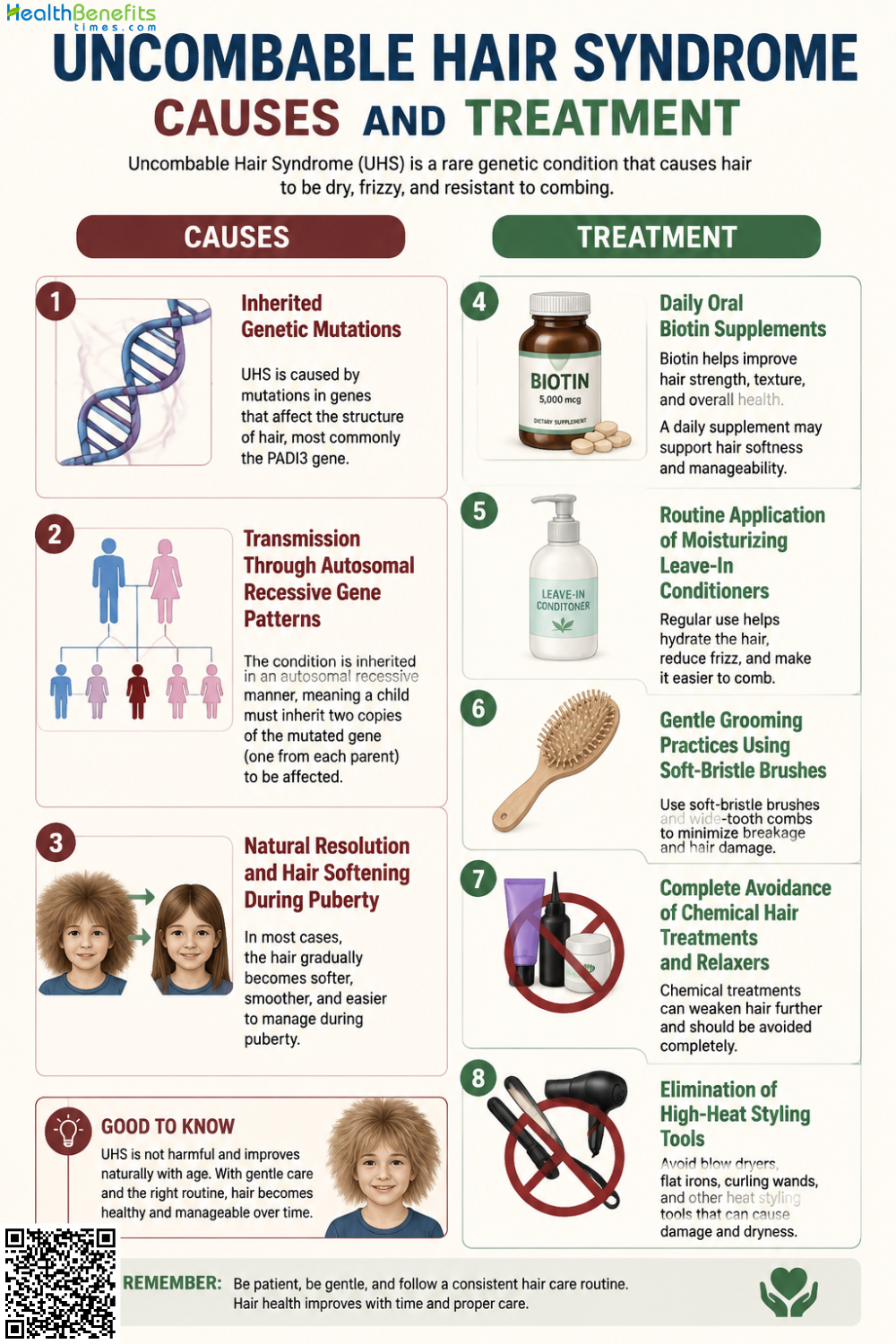
3. Natural Resolution and Hair Softening During Puberty
How it may help
Allowing the hair to naturally soften over time prevents unnecessary damage from harsh styling methods. Knowing the condition typically resolves on its own allows parents to focus on gentle maintenance rather than seeking aggressive, unproven medical treatments 9.
What research says
Clinical observations confirm that uncombable hair syndrome is a temporary childhood condition. Research shows that as a child ages, usually approaching puberty, the hair naturally changes texture, becoming softer, flatter, and significantly easier to groom without any specific medical intervention 5.
How to use it safely
You should manage your child’s hair gently while waiting for natural improvement. Use soft-bristled brushes, apply mild leave-in conditioners to reduce tangles, and simply allow time for the hair texture to change as your child grows 1.
Potential precautions or side effects
Do not attempt to force the hair flat using chemical relaxers, high-heat tools, or aggressive brushing, as these will cause severe structural breakage and scalp damage 1.
4. Daily Oral Biotin Supplements
How it may help
Daily oral biotin supplementation may help improve the strength, manageability, and growth rate of the hair in children with uncombable hair syndrome. While it does not change the underlying triangular shape of the hair shafts, it can make the hair noticeably softer, easier to comb, and less prone to breakage 13.
What research says
Clinical case studies demonstrate that administering oral biotin to children with uncombable hair syndrome can yield excellent cosmetic results. Research indicates that after several months of daily supplementation, patients experience significant improvements in hair combability and appearance, though microscopic examinations reveal the structural hair shaft deformities remain unchanged 14.
How to use it safely
If considering this option, you must consult a pediatrician or dermatologist before starting supplementation. A doctor can determine the appropriate daily dosage for your child, which typically ranges from a fraction of a milligram to five milligrams, and safely monitor their progress 14.
Potential precautions or side effects
Biotin is generally considered safe, as the body naturally excretes excess amounts. However, high doses can falsely alter the results of certain clinical laboratory blood tests 15.
5. Routine Application of Moisturizing Leave-In Conditioners
How it may help
Moisturizing leave-in conditioners provide essential hydration and lubrication to the dry, deeply grooved hair strands. This reduces friction, minimizes severe tangles, and makes the wiry texture significantly easier to manage without causing physical breakage to the delicate hair shaft 9.
What research says
Dermatological guidelines confirm that implementing gentle hair care routines with moisturizing conditioners is the primary supportive treatment for uncombable hair syndrome. Experts emphasize these conservative measures improve the cosmetic appearance and manageability of the hair while successfully preventing mechanically induced breakage 1.
How to use it safely
You should apply a mild, hypoallergenic leave-in conditioner directly to damp hair after washing. Gently distribute the product using your fingers or a wide-toothed comb, moving slowly to ensure you do not forcefully pull or stretch the resistant hair strands 9.
Potential precautions or side effects
Strictly avoid conditioners containing drying alcohols or harsh chemical additives, as these ingredients can further strip away natural moisture, increasing hair fragility and causing unnecessary scalp irritation 1.
6. Gentle Grooming Practices Using Soft-Bristle Brushes
How it may help
Using a soft-bristle brush helps manage the unruly hair without applying excessive tension. Because the individual strands have irregular, grooved shapes that easily catch on each other, gentle grooming minimizes friction. This prevents the hair shafts from snapping and reduces physical discomfort during daily routines 9.
What research says
Clinical dermatology guidelines strongly emphasize that gentle hair care is the primary approach for managing this condition. Experts conclude that avoiding forceful brushing and exclusively utilizing soft grooming tools successfully prevents mechanically induced hair breakage, thereby preserving the integrity of the structurally abnormal hair shafts 1.
How to use it safely
You should use a brush with soft, flexible bristles and always detangle the hair slowly. Begin brushing at the ends of the hair and gently work your way up to the scalp to prevent pulling, ideally while the hair is damp and conditioned 9.
Potential precautions or side effects
Never forcefully drag a brush through severe knots or use stiff, fine-toothed combs. Aggressive brushing will physically fracture the fragile hair shafts and cause
7. Complete Avoidance of Chemical Hair Treatments and Relaxers
How it may help
Avoiding chemical hair treatments and relaxers protects structurally abnormal hair shafts from severe damage. Because the hair naturally resists flattening, chemical straighteners cannot fix the genetic shape. Skipping these harsh treatments prevents widespread hair breakage, severe drying, and painful scalp damage 9.
What research says
Clinical dermatology guidelines strongly advise against using chemical relaxers, perms, or straightening agents. Research concludes that these chemicals further weaken the hair’s internal protein structure, leading to severe brittleness and extensive hair breakage without permanently correcting the underlying triangular shape of the hair shafts 1.
How to use it safely
You should strictly manage the hair using only non-chemical, gentle moisturizing products. If visiting a salon, clearly instruct the stylist to completely avoid all chemical straighteners, relaxers, and texturizers to ensure the vulnerable hair strands remain intact and undamaged 9.
Potential precautions or side effects
Applying chemical relaxers will cause immediate, severe hair breakage and potential chemical burns to the scalp, which may require professional dermatological care to manage the resulting physical damage 1.
8. Elimination of High-Heat Styling Tools
How it may help
Eliminating high-heat styling tools like flat irons and hot blow dryers protects the hair from extreme thermal damage. Because uncombable hair is naturally dry, intense heat rapidly strips away remaining moisture. Avoiding these tools prevents the structurally grooved hair strands from becoming highly brittle and snapping off completely 9.
What research says
Dermatological management guidelines strongly advise against exposing uncombable hair to high-heat tools. Clinical evidence concludes that extreme heat irreparably degrades the keratin proteins within the hair shaft, which causes severe mechanically induced breakage without ever permanently flattening the genetic triangular shape of the strands 1.
How to use it safely
You should allow your child’s hair to air-dry naturally whenever possible. If you must use a blow dryer, strictly select the lowest heat or cool air setting and maintain a safe distance from the scalp to avoid overheating the fragile strands 9.
Potential precautions or side effects
Directly applying hot flat irons will burn the delicate hair fibers, causing immediate widespread snapping, significant hair breakage, and potential thermal burns to the scalp 1.
Foods to Avoid When You Suffer from Uncombable Hair Syndrome
Clinical research confirms that uncombable hair syndrome is a genetic anomaly, meaning no specific foods cause or cure the underlying structural hair mutations. However, because dermatologists frequently recommend biotin therapy to improve hair manageability, individuals should avoid dietary elements that actively interfere with biotin absorption or broadly weaken general hair integrity.
1. Raw Egg Whites
They contain avidin, a protein that tightly binds to biotin and prevents its intestinal absorption, directly counteracting the primary supplement used to manage this condition 15.
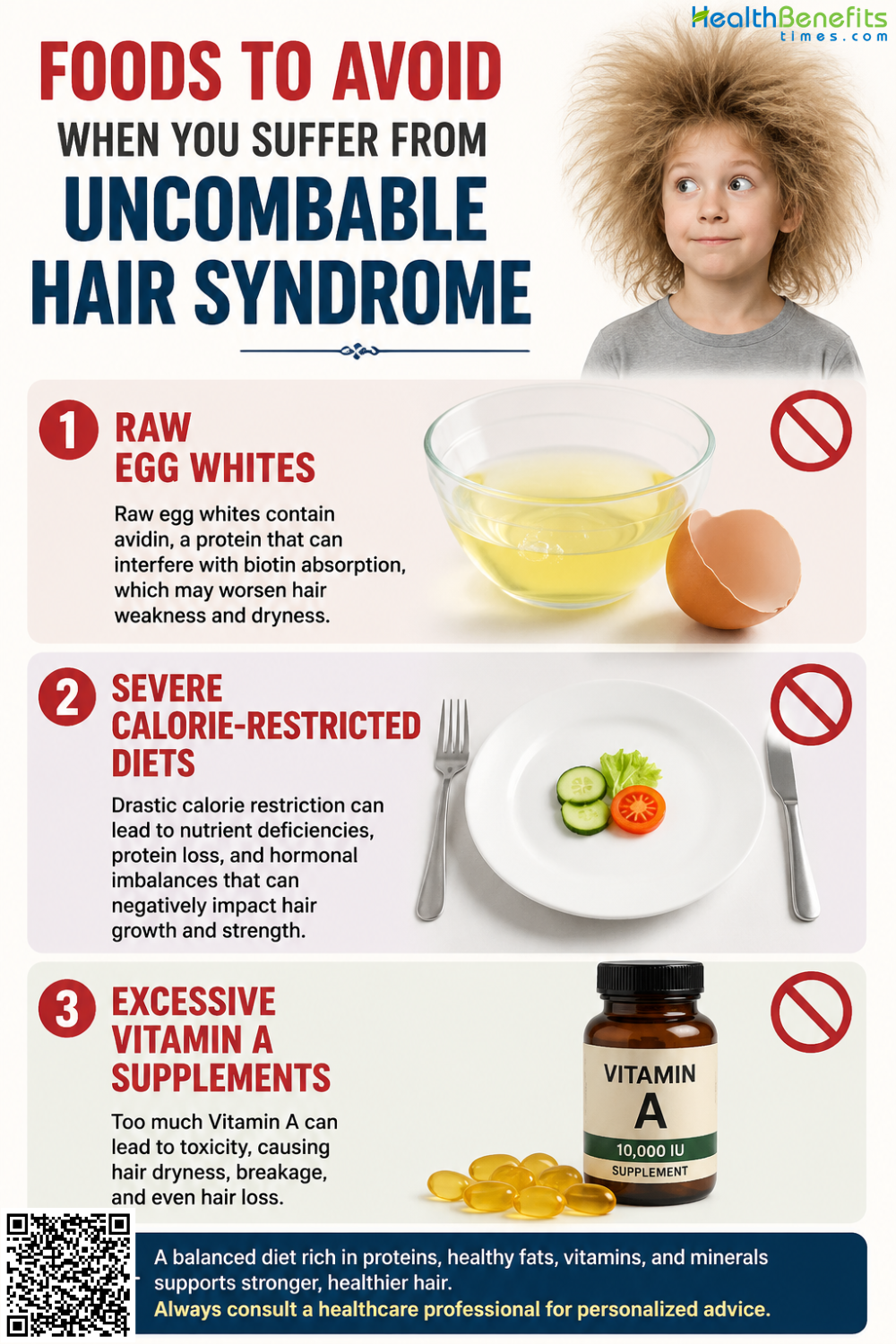
2. Severe Calorie-Restricted Diets
Extreme caloric restriction deprives the body of essential amino acids necessary for keratin production, which can further weaken the already structurally compromised hair shafts 16.
3. Excessive Vitamin A Supplements
Overconsuming synthetic Vitamin A can trigger telogen effluvium, causing severe hair shedding that unnecessarily complicates the daily management of existing hair shaft abnormalities 16.
When to See a Doctor When You Suffer from Uncombable Hair Syndrome
Although uncombable hair syndrome is a benign and naturally resolving condition, you should consult a pediatrician or pediatric dermatologist in several specific situations to ensure safe and appropriate management.
1. For an Initial Medical Diagnosis
See a specialist to confirm the condition microscopically and strictly rule out complex genetic disorders that feature similar hair abnormalities, such as various ectodermal dysplasias 9.
2. Before Starting Biotin Supplements
Always consult a pediatrician before using oral biotin, as a doctor must determine the safest clinical dosage and properly monitor the child’s physical response 14.
3. Treating Scalp Pain and Breakage
Seek immediate dermatological care if the scalp becomes visibly inflamed or painful, or if significant hair snapping occurs due to harsh grooming or severe chemical damage 1.
4. Pursuing DNA Testing
Schedule an appointment with a specialist if you desire formal genetic testing to identify the specific inherited mutations and properly assess future family transmission risks 7.
Comments
comments