

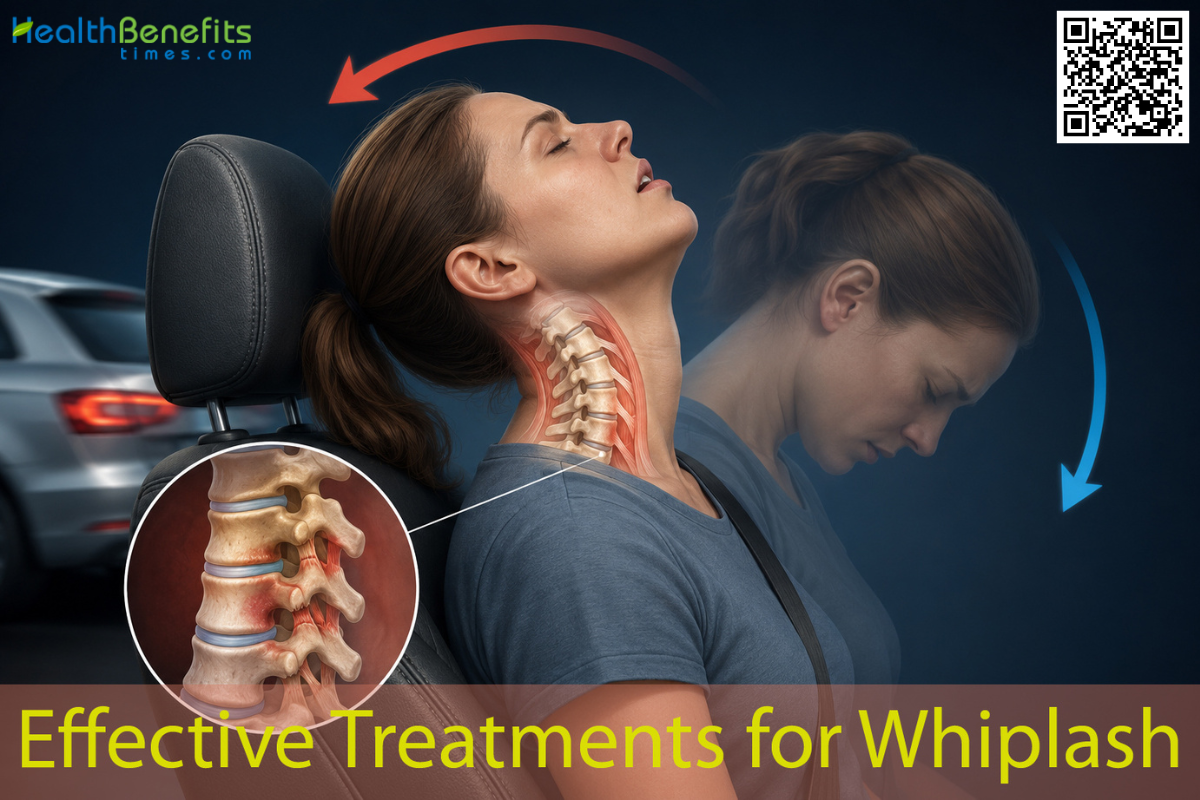
Causes of Whiplash
1. Motor Vehicle Collisions
Rear-end and side-impact crashes are the most frequent causes, as the rapid deceleration or acceleration forces the head to snap forward and backward beyond its normal range of motion.
2. Physical Assaults
Blows to the head or face, or forceful shaking, can transmit sufficient energy to the cervical spine to cause injury.
3. Sports Injuries
Contact sports, such as football, rugby, or combat sports, can result in sudden, jarring impacts that strain neck structures.
4. Falls
Tripping or falling in a manner that causes the head to jerk abruptly upon impact can lead to soft tissue damage.
5. Diving Accidents
Striking the head against the bottom or sides of a pool or shallow body of water can force the neck into a sudden, damaging position.
6. Workplace or Recreational Accidents
Heavy objects striking the head or sudden, violent jolts during machinery operation or leisure activities like amusement park rides.
Symptoms of Whiplash
1. Neck Pain and Stiffness
The most common report, often worsening within the days following the initial injury.
2. Reduced Range of Motion
Difficulty turning the head from side to side or tilting it forward and backward.
3. Headaches
Frequently localized at the base of the skull, often radiating toward the forehead.
4. Tenderness
Pain or sensitivity to touch in the muscles of the upper shoulders and upper back.
5. Neurological Sensations
Tingling, numbness, or “pins and needles” sensations in the arms or hands.
6. Muscle Spasms
Involuntary tightening or cramping of the neck and shoulder muscles.
7. Fatigue
A general sense of exhaustion or lethargy following the injury.
8. Cognitive and Sensory Changes
Difficulties with concentration, memory, or sleep disturbances, and occasionally blurred vision or tinnitus (ringing in the ears).
Effective Treatments for Whiplash
1. Early Movement and Active Range of Motion Exercises
How it may help
Gentle neck movements shortly after a whiplash injury prevent muscle stiffness and promote blood flow to healing tissues. Active range of motion exercises maintain flexibility and reduce the pain that comes from sudden joint freezing.
What research says
Studies demonstrate that early active movement is significantly more effective for long-term recovery than resting with a rigid neck collar 3. Patients who immediately return to mild, normal daily activities experience less pain and retain better overall neck flexibility 4.
How to use it safely
You should begin with simple, slow neck movements within a comfortable range, completely avoiding forced stretching. You must avoid aggressive muscle strengthening during the first few weeks of recovery 5. Always seek medical guidance to ensure these motions do not strain injured ligaments.
Potential precautions or side effects
Initial exercises may cause a temporary, mild increase in neck soreness 6. Stop immediately if you experience dizziness or numbness, which require urgent medical evaluation 7.
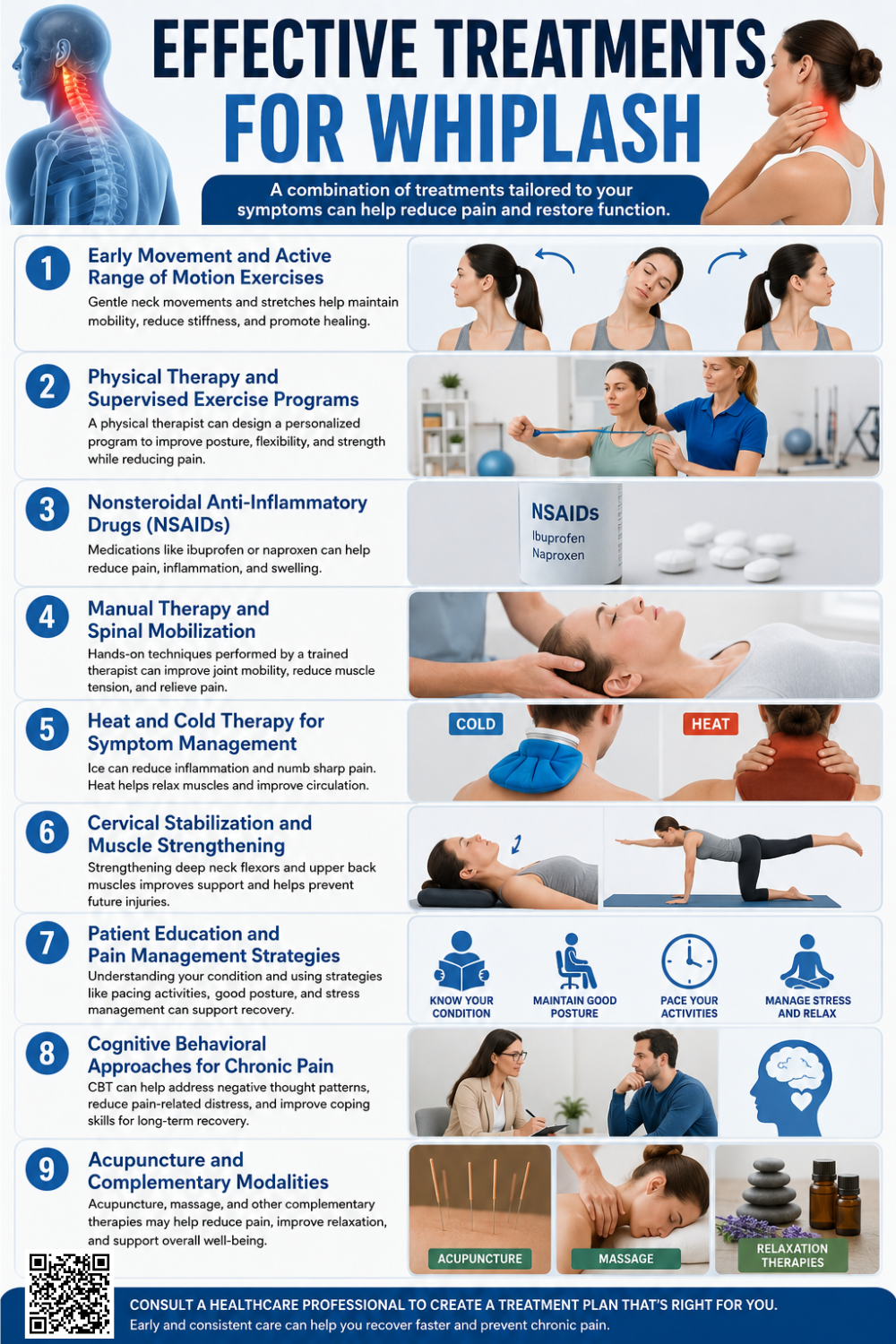
How it may help
Supervised exercise and physical therapy reduce whiplash-related pain by restoring neck mobility, rebuilding muscle strength, and preventing chronic stiffness 8. Active treatments prevent muscle weakness caused by prolonged resting 9. Structured movement protocols actively rehabilitate damaged soft tissues and promote long-term recovery without relying heavily on medications 10.
What research says
Clinical studies indicate that early movement and supervised neck exercises significantly improve recovery compared to passive treatments or staying entirely still 11. Programs combining gentle strengthening and stretching routines substantially reduce long-term disability and pain severity in individuals suffering from whiplash 12.
How to use it safely
To prevent further injury, you must begin physical therapy gently and strictly follow a licensed professional’s guidance 13. Avoid aggressive strengthening routines immediately after the injury. Stop and notify your therapist immediately if any exercise causes severe pain, sudden dizziness, or unexpected numbness 14.
Potential precautions or side effects
While mild muscle soreness is common initially, improper exercises or forceful neck adjustments can rarely trigger severe adverse events, including intense headaches, extreme fatigue, or radiating nerve pain 15.
3. Nonsteroidal Anti-Inflammatory Drugs (NSAIDs)
How it may help
Nonsteroidal anti-inflammatory drugs (NSAIDs) alleviate whiplash symptoms by chemically inhibiting the enzymes responsible for producing inflammation and pain signals in the body 16. By specifically targeting the affected cervical tissues and muscles, these medications decrease severe local discomfort and help restore functional neck mobility 17.
What research says
Clinical evidence establishes that general practitioners frequently prescribe NSAIDs as a primary pharmacological intervention for managing acute whiplash-associated disorders 18. Systematic reviews demonstrate that these medications provide significantly higher rates of localized musculoskeletal pain relief compared to inactive placebos 19.
How to use it safely
You should take oral NSAIDs exactly as directed, using the lowest effective dose for the shortest duration necessary to control symptoms. Always consume these medications with food to protect your stomach lining from irritation and potential ulceration 20.
Potential precautions or side effects
You must exercise caution, as prolonged NSAID therapy increases the risk of severe gastrointestinal bleeding and elevated blood pressure 21. Avoid these drugs if you have cardiovascular conditions.
4. Manual Therapy and Spinal Mobilization
How it may help
Manual therapy involves skilled hand movements that help improve tissue flexibility and restore normal joint motion 22. It alters central nervous system responses by suppressing motor nerve activity, which decreases localized pain sensitivity and reduces muscle tension in the neck 23. This process ultimately relaxes restricted structures and alleviates pinched nerve symptoms.
What research says
Clinical evidence indicates that combining spinal mobilization with targeted exercises significantly reduces neck pain and enhances physical function for whiplash-associated disorders 24. Studies demonstrate that manual therapy provides rapid pain relief and decreases the frequency of neck-related headaches compared to standard medical care alone 25.
How to use it safely
You should only receive this treatment from a licensed physical therapist or chiropractor following a thorough medical evaluation 26. Ensure your provider screens for vascular risk factors before beginning 27. Ask your clinician to start with low-force, gentle joint movements to prevent further tissue irritation 28.
Potential precautions or side effects
Common side effects include temporary localized soreness, minor fatigue, or mild headaches. Rarely, high-velocity upper neck adjustments can cause severe complications, including neck artery tears and stroke.
5. Heat and Cold Therapy for Symptom Management
How it may help
Applying cold therapy immediately after a whiplash injury narrows local blood vessels, which lowers circulation and suppresses metabolic activity to limit tissue swelling and inflammation 29. Conversely, heat therapy widens blood vessels, enhancing local blood flow and increasing muscle elasticity to help relieve tight, painful neck tension 30.
What research says
Evidence indicates that comprehensive rehabilitation, combining targeted heat and cold applications with physical exercise, successfully relieves acute whiplash symptoms. Additional studies confirm that alternating hot and cold temperature stimulation provides measurable symptom relief by significantly improving muscle stiffness and subjective shoulder fatigue following soft tissue trauma 31.
How to use it safely
During the initial acute phase, apply a cloth-wrapped ice pack to your neck for at least ten to twenty minutes to safely minimize swelling 32. After forty-eight hours, you can transition to superficial heat wraps to stimulate local circulation and relieve persistent muscle stiffness 33.
Potential precautions or side effects
Icing bare skin restricts blood flow, risking nerve damage 34. To avoid thermal burns, frequently check your skin and never sleep while using an active heating pad.
6. Cervical Stabilization and Muscle Strengthening
How it may help
Cervical stabilization and muscle strengthening alleviate whiplash symptoms by restoring control and balance between deep and outer neck muscles 35. Restoring this control supports natural neck and jaw function 36. These exercises rebuild endurance in damaged muscles, stabilizing the spine and reducing the compensatory overactivity of surrounding painful tissues 37.
What research says
Clinical evidence indicates that neck-specific stabilization exercises successfully decrease pain and disability in patients with chronic whiplash-associated disorders 38. Studies confirm that supervised strengthening programs significantly improve physical function compared to generalized advice. Furthermore, targeted interventions can correct abnormal muscle activation patterns often observed in accident victims 39.
How to use it safely
To protect your recovering spine, you must begin with gentle head nods guided by a healthcare professional 40. Maintain proper, neutral posture to avoid straining unstable joints 41. Ensure steady breathing, and gradually increase resistance only when basic exercises feel completely comfortable.
Potential precautions or side effects
While mostly safe, overexertion may trigger mild muscle soreness, temporary stiffness, or tension headaches 42. You must stop immediately if you experience sharp, shooting, or radiating pain.
7. Patient Education and Pain Management Strategies
How it may help
Patient education and pain management empower individuals to understand their injury, reducing fear of movement and unhelpful anxiety. By teaching practical coping skills and encouraging a confident return to daily activities, these methods help prevent acute discomfort from becoming a chronic problem 43.
What research says
Structured educational materials significantly improve patient beliefs about recovery and pain management 44. Combining patient education with supervised mobility exercises safely reduces short-term disability and pain compared to complete rest 45.
How to use it safely
Providers must offer clear, personalized information matching specific symptoms 46. You should strictly follow advice to gradually resume tasks, avoiding sudden neck movements. Combine learning with gentle physical activities rather than prolonged resting 47.
Potential precautions or side effects
Misinterpreting complex medical terms can unintentionally increase anxiety or trigger severe panic 48. Relying solely on reading materials without physical movement delays healing.
8. Cognitive Behavioral Approaches for Chronic Pain
How it may help
Cognitive behavioral therapy addresses the negative thought patterns and fear of movement that often worsen neck pain recovery 49. By shifting focus away from catastrophic thoughts, individuals can better manage psychological distress and reduce the overall impact of physical disability on their daily lives 50.
What research says
Studies demonstrate that combining psychological interventions with physical exercises significantly decreases pain intensity and long-term disability in chronic whiplash patients 51. Evidence confirms that this approach successfully lowers pain catastrophizing and prevents the transition into chronic, disabling pain conditions 52.
How to use it safely
You should practice these mental strategies under the guidance of a trained psychologist or physical therapist. Incorporate the coping techniques gradually during daily physical activities. Focus on setting realistic, attainable goals without ignoring severe physical warning signs or pushing your body too quickly 53.
Potential precautions or side effects
While this therapy has no physical side effects, it may cause temporary emotional discomfort. It must never replace professional medical evaluations to rule out severe structural spinal injuries 54.
9. Acupuncture and Complementary Modalities
How it may help
Acupuncture involves inserting thin needles into specific body points to relieve musculoskeletal pain associated with whiplash injuries 55. This technique reduces pain sensitivity and stimulates endogenous analgesia, providing symptomatic relief for chronic whiplash-associated disorders 56. It aims to decrease muscle tension and restore normal physical function.
What research says
Clinical studies indicate that acupuncture effectively reduces neck pain intensity and improves neck extension in patients with whiplash-associated disorders 57. Clinical trials reveal that combining traditional acupuncture with motion style treatments results in faster recovery times and significant improvements in cervical range of motion 58.
How to use it safely
To ensure safety, you should always seek treatment from a licensed and certified acupuncture practitioner. Communicate your complete medical history, including any bleeding disorders or current medications, before starting sessions. Combining acupuncture with standard medical care, rather than using it as a standalone treatment, is highly recommended.
Potential precautions or side effects
Acupuncture is relatively safe. Minor adverse effects may include temporary pain, bruising, minor bleeding, fainting, or local swelling at the needle insertion sites 59.
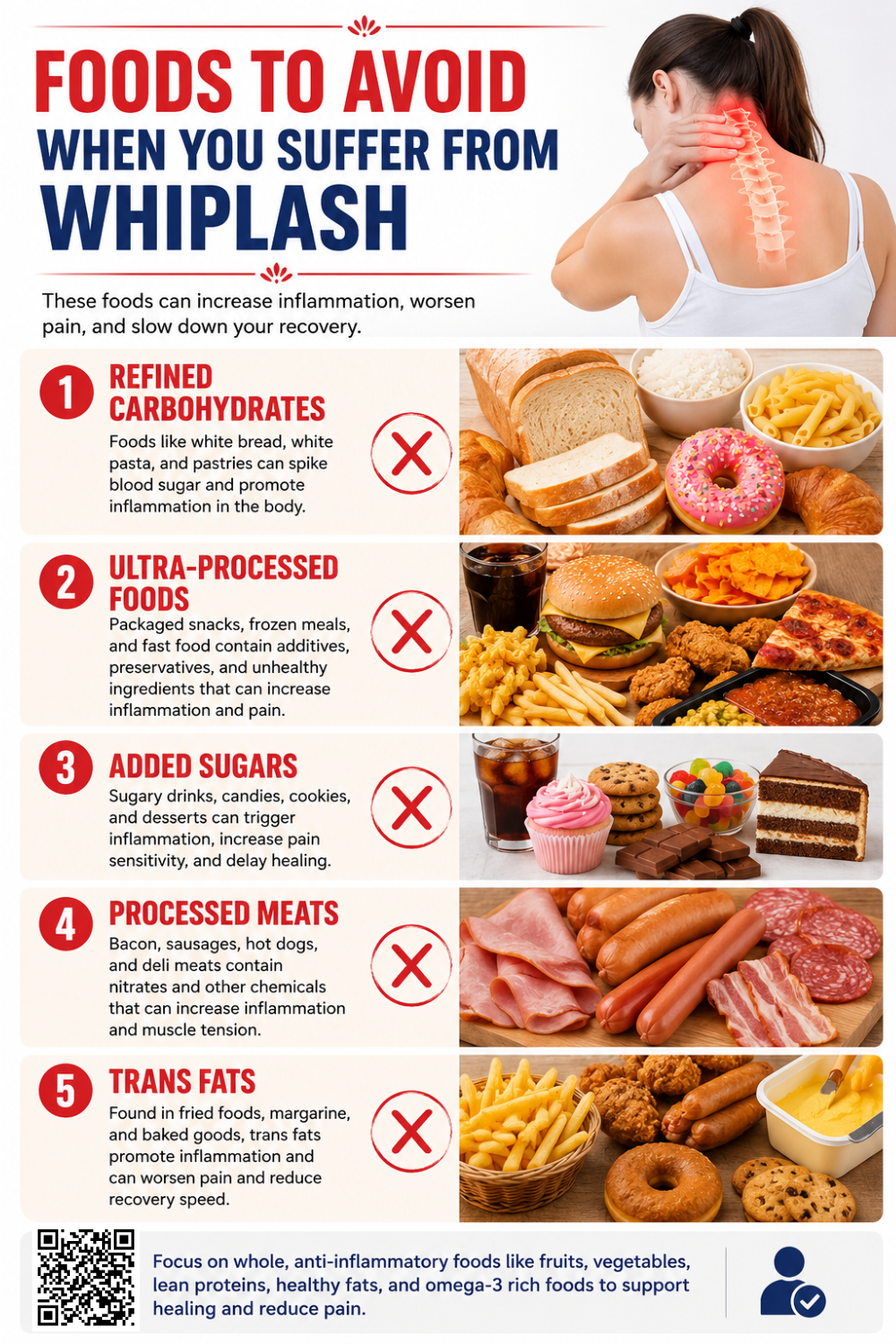
1. Refined Carbohydrates
White bread, pastries, and sugary cereals can cause rapid spikes in blood glucose levels, which may promote oxidative stress and exacerbate inflammatory responses throughout the body. 60, 61
2. Ultra-Processed Foods
Items such as chips, packaged snacks, and frozen meals often contain additives, preservatives, and unhealthy fats that are linked to increased levels of systemic inflammation. 62, 63
3. Added Sugars
High intake of added sugars—found in soda, candies, and many processed snacks—is associated with a pro-inflammatory state that may hinder the body’s natural healing processes. 64, 65
4. Processed Meats
Products like bacon, salami, and sausages frequently contain high levels of saturated fats and sodium, which have been clinically associated with elevated markers of inflammation.
5. Trans Fats
Often found in fried foods and certain processed goods, trans fats are well-documented triggers for inflammation and can negatively impact cardiovascular and joint health during recovery.
When To see Doctor when you have Whiplash
1. Neurological Symptoms
Seek immediate care for numbness, tingling, or weakness in your arms or hands, which indicate potential nerve compression or structural pathology. 66, 67
2. Radiating Pain
Radiating neck pain spreading to your shoulders or arms is a red flag for radiculopathy requiring immediate medical evaluation. 68, 69
3. Concussion or Vision Changes
Dizziness, spatial disorientation, or blurred vision require prompt care, as they may indicate a concurrent traumatic brain injury. 70, 71
4. Severe or Worsening Pain
Intolerable or worsening pain during neck movements requires urgent medical imaging to rule out severe cervical spine trauma or fractures. 72, 73
Comments
comments