


Understanding how the human body works can sometimes feel like solving a complex puzzle, especially when it comes to nerve pain. Carpal tunnel syndrome is a very common physical condition that causes a noticeable tingling sensation, uncomfortable numbness, and persistent dull pain in the hand and arm. It happens when one of the major nerves traveling to the hand known in the medical world as the median nerve gets severely squeezed or pinched as it passes through a narrow, rigid passageway in the wrist called the carpal tunnel 1.
Remarkably, this small tunnel is packed tightly with both the delicate nerve and nine different tendons that bend your fingers, leaving absolutely no extra room for swelling. When the protective tissues inside this tunnel become irritated and inflamed, they expand and press heavily against the median nerve, disrupting the normal electrical signals sent from your hand to your brain 27. Statistical data reveals just how widespread this nerve issue really is around the globe. Global health research indicates that this specific condition affects roughly one to five percent of the general population at some point in their lives 3. It is fascinating to note that it is three times more common in adult women than in men, often striking between the ages of forty and sixty, and individuals with underlying metabolic conditions heavily double their risk of developing this syndrome 4.
Causes of Carpal tunnel syndrome
Pinpointing the exact reason someone develops this condition can be quite tricky, as it is usually caused by a combination of different lifestyle and biological factors acting together. The following list explains the most common underlying causes of this uncomfortable nerve compression:
1. Repetitive Hand and Wrist Use
Performing the exact same hand and wrist motions over a prolonged period is one of the leading causes of nerve irritation. Constant friction from activities like typing, working on an assembly line, sewing, or scanning groceries can severely aggravate the tendons in the wrist, causing swelling that eventually puts heavy, unrelenting pressure on the median nerve 5.
2. Heredity and Natural Anatomy
Sometimes, human anatomy simply plays the biggest role in nerve health. Some people naturally inherit smaller carpal tunnels from their parents, meaning their median nerve has much less space to begin with, making them naturally much more susceptible to compression even without engaging in repetitive work.
3. Extreme Wrist Positions
Engaging in daily tasks that require the hand and wrist to be extremely bent forward or backward for long hours increases the physical pressure inside the carpal tunnel. Doing activities that involve extreme flexion or extension of the hand over prolonged periods significantly alters the fluid dynamics and cuts off the tiny blood vessels that feed the nerve 6.
4. Pregnancy and Hormonal Shifts
Hormonal changes during pregnancy frequently cause the human body to retain extra fluid. This natural fluid builds up in the limbs and causes noticeable swelling inside the rigid wrist tunnel, heavily compressing the nerve and causing symptoms that often resolve only after childbirth 7.
5. Underlying Systemic Health Conditions
Certain systemic diseases actively alter the body’s fluid balance or cause chronic, widespread inflammation. Medical conditions such as diabetes, rheumatoid arthritis, kidney failure, and thyroid gland imbalances are strongly linked to the gradual development of this syndrome because they change the structural integrity of the tissues surrounding the nerve 8.
6. Trauma and Acute Wrist Injury
A sudden physical injury to the arm, such as a severely fractured wrist, a bad sprain, or a dislocated carpal bone, can rapidly decrease the available space inside the tunnel. This leads to a rare but severe acute form of the syndrome caused by sudden bleeding and intense swelling that crushes the median nerve 9.
7. Space-Occupying Growths
Less commonly, physical blockages can form inside the wrist and take up the precious space meant for the nerve. The development of fluid-filled ganglion cysts, benign fatty tumors, or even abnormal muscle bellies can directly press against the median nerve and trigger chronic symptoms.
Symptoms of Carpal tunnel syndrome
Recognizing the early warning signs can make a massive difference in how well the condition responds to natural remedies and simple rest. The symptoms generally appear very gradually, without a specific injury, and may include the following specific physical sensations:
1. Tingling, Burning, or Numbness
These uncomfortable sensations are primarily felt in the thumb, index finger, middle finger, and the inner half of the ring finger. Because the median nerve does not connect to the pinky finger, the little finger usually feels completely normal.
2. Nighttime Pain and Discomfort
It is incredibly common for these symptoms to be severe enough to wake a person from a deep sleep. Many people sleep with their wrists curled up under their chins, which bends the wrist and pinches the nerve for hours at a time, leading to intense nocturnal pain.
3. Electric Shock-Like Sensations
As the nerve becomes more irritated and damaged, it can misfire and send incorrect signals to the brain. This results in occasional, sudden electric shock-like sensations that shoot quickly down into the thumb and first three fingers.
4. Radiating Dull Aches
The pain is not always just located in the hand itself. A persistent dull ache or sharp, throbbing pain can travel backward, moving up the forearm toward the elbow, and in severe cases, all the way up to the shoulder area.
5. Noticeable Hand Weakness
The median nerve controls the small muscles at the base of the thumb. When the nerve is choked off, it cannot send strong signals to these muscles, resulting in weakness and clumsiness that makes fine motor tasks like buttoning a shirt or tying shoelaces very difficult.
6. Loss of Proprioception and Dropping Objects
The nerve is responsible for telling the brain exactly where the hand is in space and how hard it is gripping something. When this feedback loop is damaged, people develop a tendency to accidentally drop objects like coffee cups or keys because they simply cannot feel what they are holding.
7. Daytime Flare-Ups During Gripping
Symptoms frequently flare up during the daytime when holding an object for a long time with the wrist bent. Simple daily tasks like holding a phone to the ear, gripping a steering wheel while driving, or reading a heavy book can trigger intense tingling and numbness.
Carpal tunnel syndrome Facts table
Diving into the hard facts provides a much clearer picture of what this condition actually entails and how it affects the general population. The table below outlines the core characteristics, medical realities, and statistical data of the syndrome in an easy-to-read format.
| Category | Details |
| Symptoms |
|
| Causes |
|
| Types of Carpal tunnel syndrome |
|
| How does it spread |
|
| Age Group |
|
| You might be at a higher risk for exposure of this disease if you: |
|
| How doctors diagnose |
|
| Other facts |
|
Exercise and Natural Remedies for Carpal tunnel syndrome
Taking control of your physical health often starts with exploring gentle, non-invasive treatments in the comfort of your own home. If you are experiencing mild to moderate symptoms, there are several highly effective exercises and natural remedies you can use to relieve the pressure on your median nerve and soothe your daily pain.
1. The Wrist Extension Stretch
Warming up your hands before a long day of work is a fantastic way to prevent nerve irritation from setting in. To perform this stretch, you should hold your arm straight out in front of you and bend your wrist backward as if you are signaling someone to “stop.” Using your opposite hand, apply gentle pressure across your palm and pull it slowly toward your body until you feel a deep, comfortable stretch on the inside of your forearm. Hold this exact position for fifteen seconds, and repeat it five times on each arm. Make sure you do not lock your elbow perfectly straight, as keeping a tiny bend protects the elbow joint from strain 10.
Note: This specific stretch is commonly used to warm up the wrist joints and safely lengthen the flexor muscles before engaging in any heavy daily activities that require strong gripping.
2. The Wrist Flexion Stretch
Stretching the opposite side of your wrist is just as crucial for maintaining proper balance in your arm muscles. You should extend your arm straight out with your palm facing down toward the floor, and bend your wrist so your fingers point straight downward. Gently pull your hand toward your body with your other hand until you feel a comfortable, pulling stretch on the outside of your forearm. Hold this for fifteen seconds and repeat it five times on each side. If you feel a temporary increase in finger numbness while doing this, that is normal, but you should stop if the numbness becomes actively painful.
Note: This technique is commonly applied to relieve built-up tension in the extensor muscles on the top of the arm and improve your overall daily wrist flexibility.
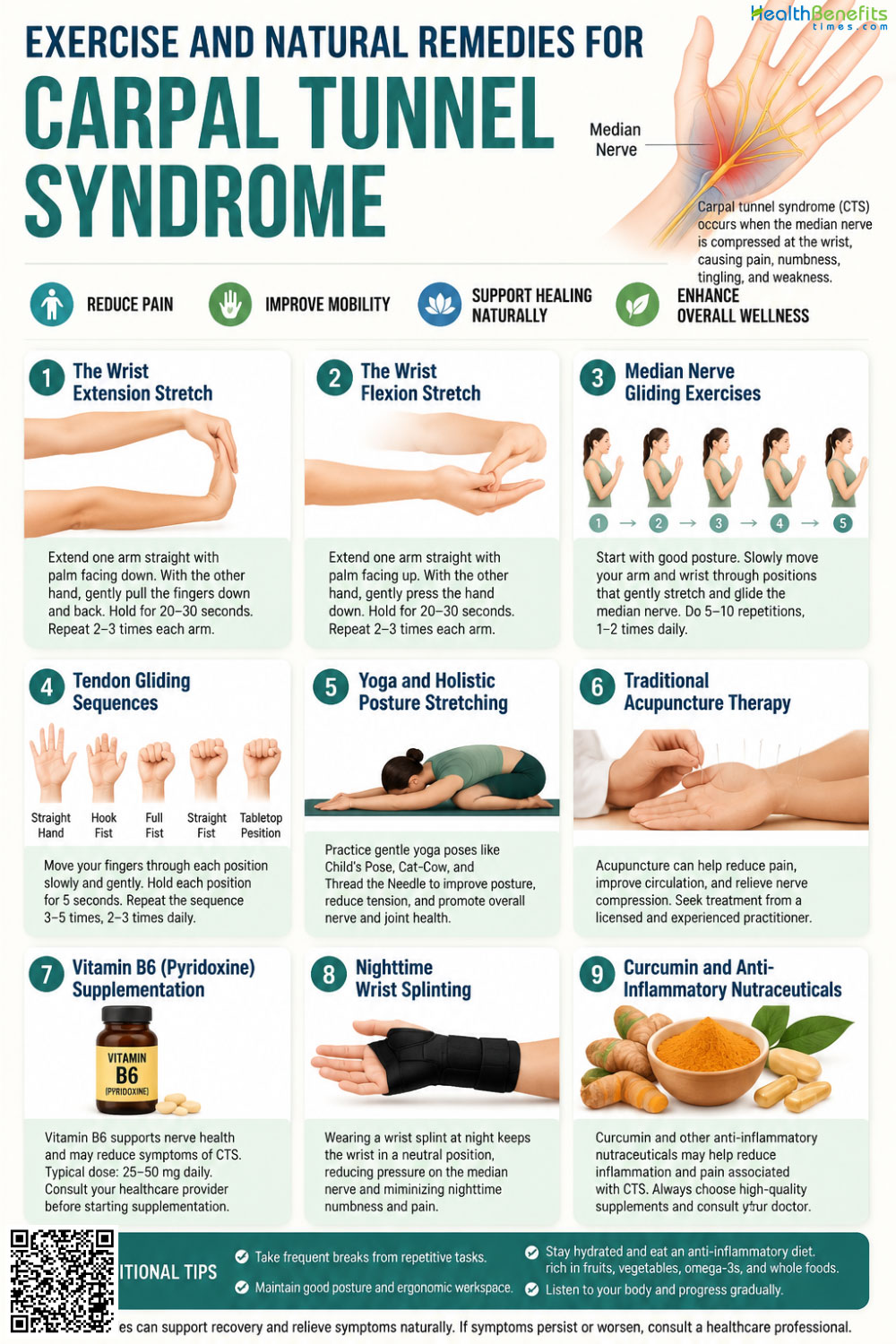
3. Median Nerve Gliding Exercises
Helping the nerve move freely inside its tight, crowded tunnel is the primary goal of this specific physical therapy exercise. You should start by applying a warm towel or gentle heat to your hand for fifteen minutes to loosen the tissues. Then, follow these precise steps, holding each position for three to seven seconds: First, make a tight fist with your thumb resting outside your fingers. Next, straighten your fingers while keeping the thumb close to the side of your hand. Third, keep your fingers straight and bend your hand backward toward your forearm. Fourth, extend your thumb out to the side away from the hand. Fifth, turn your entire forearm so your palm faces the ceiling. Finally, use your other hand to gently stretch your thumb downward. After completing ten repetitions, apply a bag of crushed ice to your wrist to prevent any new inflammation.
Note: This routine is commonly applied as a daily physical therapy remedy to help the median nerve slide smoothly through the wrist without getting stuck, adhered, or compressed against the local tendons.
4. Tendon Gliding Sequences
Keeping your finger tendons fully lubricated and healthy prevents the exact swelling that pinches your nerves. You should begin with your hand open and your wrist perfectly straight. Bend the upper tips of your fingers into a “hook” shape, keeping your main knuckles straight. Next, progress to making a tight, full fist with your thumb wrapped safely over your fingers. A second variation involves making a flat “tabletop” shape by bending only your bottom knuckles, followed by curling your fingers all the way down to touch your lower palm. You should aim to hold each of these poses for about three seconds and repeat the whole sequence five to ten times. These movements might cause a gentle pulling sensation, but they should never cause sharp pain 11.
Note: This specific movement sequence is commonly applied to help the flexor tendons glide safely and independently through the carpal tunnel, greatly reducing internal friction and swelling.
5. Yoga and Holistic Posture Stretching
Turning to ancient movement practices can sometimes offer incredible modern pain relief. Clinical research studies have shown that participating in a dedicated yoga-based regimen can significantly reduce pain and improve grip strength in people suffering from this syndrome 12. The specific stretching involved in yoga helps to correct poor upper body posture, open up a slouched chest, and pull the shoulders back. Because the median nerve originates in the neck and travels down the arm, improving your upper body posture through yoga ultimately relieves downstream compression on the nerve at the wrist. Furthermore, specific yoga poses stretch the carpal ligament directly, expanding the available space inside the tunnel.
Note: Yoga is commonly applied as a holistic, full-body remedy to improve blood flow, reduce bodily stress, and naturally decompress affected nerve pathways from the neck down to the fingertips.
6. Traditional Acupuncture Therapy
Exploring alternative medicine might feel slightly daunting, but fine needles can sometimes achieve what traditional pills cannot. Acupuncture involves a trained professional placing incredibly thin, virtually painless needles into specific meridian points on the body. Scientific studies indicate that acupuncture stimulates the brain’s main pain centers to release the body’s natural painkillers, which can effectively decrease the severe, chronic pain associated with this condition 13. While the exact mechanism is still being studied, many patients report feeling a warm, heavy sensation during treatment that leaves their hands feeling much lighter and less painful afterward.
Note: Acupuncture is commonly applied by licensed holistic practitioners to block pain signals from reaching the brain and to reduce localized nerve inflammation in the wrist.
7. Vitamin B6 (Pyridoxine) Supplementation
Nourishing your delicate nerves from the inside out is a key pillar of long-term recovery. Several historical and modern medical studies have linked a bodily deficiency in Vitamin B6 to the onset of this nerve syndrome. Taking a daily Vitamin B6 supplement has been shown in clinical trials to actively improve clinical symptoms and enhance the sensory nerve conduction speeds in affected patients 14. Vitamin B6 acts as a vital coenzyme in the body, helping to build and repair the myelin sheath, which is the protective coating wrapped around your nerves. By repairing this coating, the nerve can send its electrical signals much faster and clearer.
Note: Vitamin B6 is commonly eaten in fortified foods or taken as a daily dietary supplement pill to support overall nerve health and repair damaged nerve sheaths.
8. Nighttime Wrist Splinting
Creating a perfectly safe environment for your wrist to rest is perhaps the easiest and most effective initial treatment you can do at home. When you sleep, you naturally curl your wrists up against your chest, which heavily squeezes the median nerve and cuts off its tiny blood supply. Wearing a rigid wrist splint or brace at night keeps your hand locked in a perfectly neutral, straight position, preventing this accidental nighttime compression 15. By keeping the tunnel as wide open as possible for eight straight hours, the nerve gets a chance to breathe, heal, and recover from the day’s physical stress.
Note: Rigid wrist splints are commonly applied right before bed as a physical preventative barrier to stop the wrist from curling and waking you up with shooting pain.
9. Curcumin and Anti-Inflammatory Nutraceuticals
Harnessing the power of natural plant compounds can provide excellent relief for swollen tendons. Curcumin, which is the active anti-inflammatory compound found in the bright yellow spice turmeric, has been studied for its ability to naturally inhibit the body’s production of inflammatory chemicals. In some clinical studies, specific nutraceutical blends containing B-vitamins, alpha-lipoic acid, and curcumin have shown a moderate ability to determine a significant short-term reduction in pain, numbness, and tingling for nerve compression patients 16. These natural compounds work systemically to calm down the aggressive immune response that causes tendon swelling inside the wrist.
Note: Curcumin is commonly eaten as a spice in cooking or taken as a concentrated herbal supplement to naturally lower systemic bodily inflammation without the harsh side effects of chemical painkillers.
Foods and Activities to Avoid When You suffer from Carpal tunnel syndrome
Protecting your wrists means you also have to be highly mindful of what you are doing and eating throughout the entire day. If you want to successfully manage your nerve symptoms and give your body the best chance to heal naturally, you should actively avoid the following specific foods and activities:
1. Using Heavy, Vibrating Tools
You should stay far away from using power tools like heavy drills, jackhammers, chainsaws, or orbital sanders. The intense, rapid vibrations send violent shockwaves through your hands, which severely aggravates the median nerve, damages the tiny blood vessels, and massively worsens the swelling inside the wrist 17.

2. Continuous Repetitive Gripping
You should try your absolute best to avoid activities that force you to tightly grip tools, steering wheels, paintbrushes, or heavy sporting equipment for hours on end without taking a break. A tight grip flexes the wrist tendons to their maximum capacity, creating intense friction inside the carpal tunnel.
3. Extreme Wrist Bending and Slouching
You must avoid typing on a computer keyboard with your wrists bent sharply upward or resting heavily on the hard, sharp edge of a desk. Always aim to keep your wrists hovering in a straight, neutral position. You should also avoid slouching your shoulders forward, as this compresses the nerves higher up in your neck and chest.
4. Consuming High-Sodium Foods
You should actively cut back on eating heavily processed foods, canned soups, frozen dinners, and salty snacks. High amounts of sodium cause your body to heavily retain water, which directly increases the fluid swelling inside the tiny, rigid space of the carpal tunnel 18.
5. Eating High-Fat and Sugary Diets
You should avoid eating excessive amounts of saturated fats, fried foods, and refined sugars. Modern nutritional studies suggest that high-fat diets drive metabolic dysfunction and create fibrosis, which is a dangerous thickening and scarring of connective tissues that can make nerve entrapment much worse and harder to heal over time 19.
6. Drinking Coffee Before Acupuncture
You should avoid drinking highly caffeinated beverages like coffee or energy drinks if you are utilizing acupuncture for pain relief. Interestingly, researchers have found that even the small amounts of caffeine remaining in the body hours after drinking a cup of coffee could potentially block and reduce acupuncture’s natural pain-relieving effects on the nervous system 20.
Myths and Misconceptions
Navigating the vast sea of medical information online can leave anyone feeling confused and overwhelmed. Let us clear up some of the most common misunderstandings regarding this painful nerve condition so you can make informed choices about your health.
| Myth | Reality |
| Only office workers who type on computers all day get this syndrome. | While intense keyboard use can certainly aggravate existing symptoms by keeping the wrist in a strained posture, deep systemic reviews of medical literature show there is insufficient evidence that typing actually causes the syndrome. It is heavily prevalent in manual laborers, butchers, musicians, and factory workers who use forceful, repetitive hand motions all day long. |
| Surgery is the only possible way to fix the pain. | This is entirely false. Early and mild cases respond incredibly well to non-surgical, conservative treatments like nighttime splinting, nerve gliding exercises, yoga, and natural anti-inflammatory remedies. Doctors usually only reserve surgery for severe cases where the nerve is actively dying or failing to respond to weeks of conservative care. |
| It is just a normal muscle ache and part of getting older. | This condition is a specific, diagnosable mechanical compression of a major nerve, not a muscle strain. It is not just “normal arthritis” or a standard part of aging. Ignoring nerve compression can eventually lead to permanent muscle wasting, permanent numbness, and irreversible nerve death. |
| If my hand hurts, it must automatically be Carpal tunnel syndrome. | Hand and wrist pain can be caused by many different, complex issues, including tendonitis, osteoarthritis, or pinched nerves higher up in the neck (cervical radiculopathy). True carpal tunnel pain is highly specific to the thumb, index, middle, and half of the ring finger, and rarely affects the pinky finger. |
| Shaking my hands out cures the problem entirely. | Many patients find that violently shaking or flicking their hands provides a temporary burst of relief from the numbness. While this does temporarily restore some blood flow to the choked nerve, it absolutely does not fix the underlying mechanical compression or cure the condition. |
Special Considerations
Treating nerve compression is never a simple, one-size-fits-all scenario. Different groups of people experience, manage, and recover from this condition in vastly different ways due to their unique biological circumstances.
1. Children
It is exceptionally rare for a normal, healthy child to develop this nerve syndrome naturally. However, when it does consistently occur in young children, it is heavily associated with rare genetic lysosomal storage diseases, most notably mucopolysaccharidosis, which is often referred to clinically as Hunter syndrome 22. In these specific genetic disorders, the body lacks an enzyme needed to break down complex sugar molecules. These molecules accumulate in the tissues, severely thickening the wrist ligaments and crushing the nerves. Because children with these conditions often suffer from severe communication barriers and rarely complain of classic nerve pain, the disease can silently cause severe, irreversible nerve damage. Caretakers must diligently watch for physical, non-verbal clues like sudden clumsiness, dropping toys, or visual muscle wasting in the palm of the child’s hand.
2. Pregnancy
Expecting mothers face a multitude of beautiful but exhausting bodily changes, and nerve pain is surprisingly one of them. The intense hormonal shifts that occur, particularly during the heavy third trimester, prompt the mother’s body to retain excess fluid, causing widespread edema (swelling) 23. When this extra fluid accumulates in the narrow wrists, it compresses the median nerves, often causing severe symptoms in both hands simultaneously. Fortunately, these pregnancy-induced symptoms generally fade away spontaneously a few weeks or months after childbirth once the body’s fluid levels return to a normal, non-pregnant state. Mothers are highly encouraged to use gentle nighttime splinting to manage the pain safely without medications.
3. Chronic conditions
Living with long-term systemic diseases drastically alters the body’s internal environment, making nerve entrapment much more likely to occur and harder to treat. Individuals battling chronic diabetes are highly susceptible because elevated blood sugar chemically damages the tiny blood vessels that feed peripheral nerves over time, making the nerves incredibly weak and vulnerable to pressure. Furthermore, autoimmune conditions like rheumatoid arthritis cause the actual synovial lining around the wrist tendons to become chronically inflamed, heated, and physically thicker. This massive, inflamed tissue directly crowds out the median nerve inside the tunnel 28. Managing the underlying chronic condition is absolutely vital for relieving the nerve pain.
4. Elderly
As the human body gracefully ages into the senior years, the connective tissues inside the wrist can become significantly stiffer, drier, and less elastic. Existing chronic conditions combined with decades of physical wear and tear can compound the risk of nerve entrapment, leading to a physical structural narrowing of the carpal tunnel. Additionally, older adults must be monitored much more closely by their physicians because their aged nerves heal at a much slower rate than younger people. They are at a significantly higher risk of experiencing permanent muscle atrophy (the visible wasting away of the thumb muscles) if the nerve compression is left untreated for too long 1.
Precaution before use of natural remedies when you have Carpal tunnel syndrome
Diving headfirst into at-home treatments requires a strong sense of caution and body awareness to ensure you do not accidentally make your nerve damage worse. You should always keep the following safety measures in mind before starting any new remedy:
1. Do Not Push Through Nerve Pain
You must stop doing any physical stretch or nerve gliding exercise immediately if it causes your fingers to become completely numb or shoots sharp, blinding pain up your arm. Therapeutic exercises should only create a mild, comfortable pulling sensation, not an increase in nerve damage.
2. Seek Professional Medical Supervision
You should ideally consult with a primary care doctor or a licensed physical therapist before starting an intense exercise routine. They can ensure you are performing the intricate movements correctly and not accidentally tearing your wrist tendons.
3. Beware of Vitamin Toxicity
You should never, under any circumstances, exceed the recommended daily dose of Vitamin B6 on the supplement bottle. While low, controlled doses help repair nerve health, toxic, excessively high doses of B6 can actually cause a completely different, highly dangerous type of permanent nerve damage 25.
4. Use Cold, Not Heat, for Active Swelling
You should apply a cold ice pack instead of a hot heating pad if your wrist is actively swollen, red, and throbbing. Heat increases local blood flow and drives more inflammation into the joint, whereas ice shrinks the tissues and reduces the painful swelling compressing the nerve.
5. Do Not Rely Solely on Alternative Medicine
You should view therapies like acupuncture, yoga, and herbal supplements as helpful complementary tools. They are meant to be used alongside standard medical advice, not as a total replacement for a doctor’s care, especially if your hand is rapidly losing strength.
When to see a Doctor
Listening closely to your body is the most reliable way to know when home remedies are simply no longer enough to protect your nerves. You should schedule a prompt visit with a medical professional immediately if you experience any of the following severe warning signs:
1. Constant Nighttime Waking and Sleep Deprivation
You find yourself waking up multiple times every single night crying out in pain, violently shaking your hands to restore feeling, and suffering from severe daily exhaustion due to the lack of sleep.
2. Complete Loss of Sensation
You realize you can no longer tell the physical difference between hot and cold water using your fingertips, which strongly signals that the sensory fibers in the nerve have been severely disrupted 17.
3. Dropping Everyday Items Constantly
You notice that you are becoming dangerously clumsy, suddenly dropping your hot coffee mug, toothbrush, or car keys because your hand muscles simply give out without any warning.
4. Visible Muscle Wasting in the Hand
You look closely at the palm of your hand and see that the fleshy, plump muscle at the base of your thumb has physically flattened out or appears sunken in, indicating that the muscle is starving for nerve signals and dying.
5. Sudden Acute Pain Following a Physical Injury
You develop sudden, excruciating wrist pain, massive swelling, and instant numbness immediately after falling on your outstretched hand or suffering a wrist bone fracture. This could be acute carpal tunnel syndrome, which requires an emergency surgical release within hours to prevent permanent nerve death 26
Comments
comments