


Medical professionals usually classify this discomfort based on exactly how long the aches last. When the pain is acute, it means it lasts for less than six weeks, while sub-acute pain lasts between six and twelve weeks, and chronic pain stubbornly sticks around for more than twelve weeks 3. While it can happen to literally anyone, including young children, the highest number of cases usually happens in adults between the ages of 50 and 55. Because it impacts so many aspects of daily life, learning about how it works and how to manage it naturally is important for overall wellness.
Causes of Lower Back Pain
Understanding exactly why the lower spine hurts can help people make better choices about their daily activities. The back is a complex structure of bones, muscles, and nerves, and many different things can cause it to ache.
- Muscle or Ligament Strains: Picking up a heavy box incorrectly or twisting too fast can easily stretch or tear the soft tissues in the back, which causes a majority of non-specific aches 4.
- Natural Disc Degeneration: As individuals grow older, the rubbery, jelly-like discs that sit between the spine’s bones naturally lose their moisture and their bouncing, cushioning ability 5.
- Herniated or Slipped Discs: The soft inside of a spinal disc can sometimes get squished and push out through a crack in its tough outer layer, pressing painfully against sensitive nerves nearby 6.
- Spinal Stenosis: This is a condition where the spinal canal slowly narrows over a period of years, putting very uncomfortable physical pressure on the spinal cord and the nerves that travel down the legs 7.
- Osteoarthritis: Normal, everyday wear and tear can slowly break down the protective cartilage in the spine’s delicate joints, leading to swelling, stiffness, and constant pain 8.
- Non-Spine Problems: Surprisingly, the back itself is sometimes completely fine, but hidden conditions inside the body like kidney stones or endometriosis, send confusing pain signals that are felt strongly in the lower back muscles 9.
Symptoms of Lower Back Pain
Recognizing how the back actually feels can give great clues about what is going wrong inside. Symptoms can range from mildly annoying to completely exhausting.
- A dull, continuous ache that stays strictly in the lower back area and does not move anywhere else 1.
- Sharp, shooting pain that suddenly appears like an electric shock when trying to bend over, twist around, or stand up from a chair 4.
- Pain that travels or radiates outward from the bottom of the spine down into the buttocks, thighs, or even reaching all the way to the feet 6.
- Tight, cramping muscle spasms and stiffness that make it extremely hard to stand up completely straight or walk normally 10.
- Tingling, burning, or a strange “pins and needles” feeling in the legs or feet, which usually means a nerve is being pinched or irritated 11.
- A feeling of weakness in one or both legs that can make walking, climbing stairs, or simply keeping balance feel much more difficult than usual.
Lower Back Pain Facts
| Symptoms |
|
| Causes |
|
| Types of Lower Back Pain |
|
| How does spread |
|
| Age Group |
|
| You might be at a higher risk for exposure of this disease if you: |
|
| How doctors diagnose |
|
| Other facts |
|
Exercise and Natural Remedies for Lower Back Pain
Taking care of your back does not always mean rushing to get strong medicines or surgeries. There are plenty of gentle, natural ways you can help your spine heal and feel much better using everyday movements and gifts from nature.
1. Walking and Gentle Aerobics
Starting with simple, easy movements is truly one of the best things you can do for a sore back. Walking around the neighborhood or swimming in a pool helps increase the healthy blood flow to your muscles without putting too much harsh strain on your sensitive joints 17. When you move gently, your spine gets the fresh oxygen and nutrients it desperately needs to heal itself. Swimming is especially nice because the water holds up your body weight, giving your back a well-deserved rest while you exercise.
Note: This is commonly used as a daily physical activity to keep joints flexible, increase blood circulation, and prevent back muscles from becoming weak or stiff.
2. Knee-to-Chest Stretches
You can easily stretch out your tight lower back by lying flat on a comfortable floor and gently pulling your knees up toward your chest 18. This simple, comforting movement helps to gently open up the crowded spaces between your spine’s bones. By doing this, it takes the squeezing pressure off the back of your vertebrae and lets the pinched areas breathe. You can do one leg at a time or both together, whichever feels better for you.
Note: This is applied as a daily stretching routine to relieve built-up pressure on spinal nerves, stretch tight ligaments, and strengthen the core muscles.
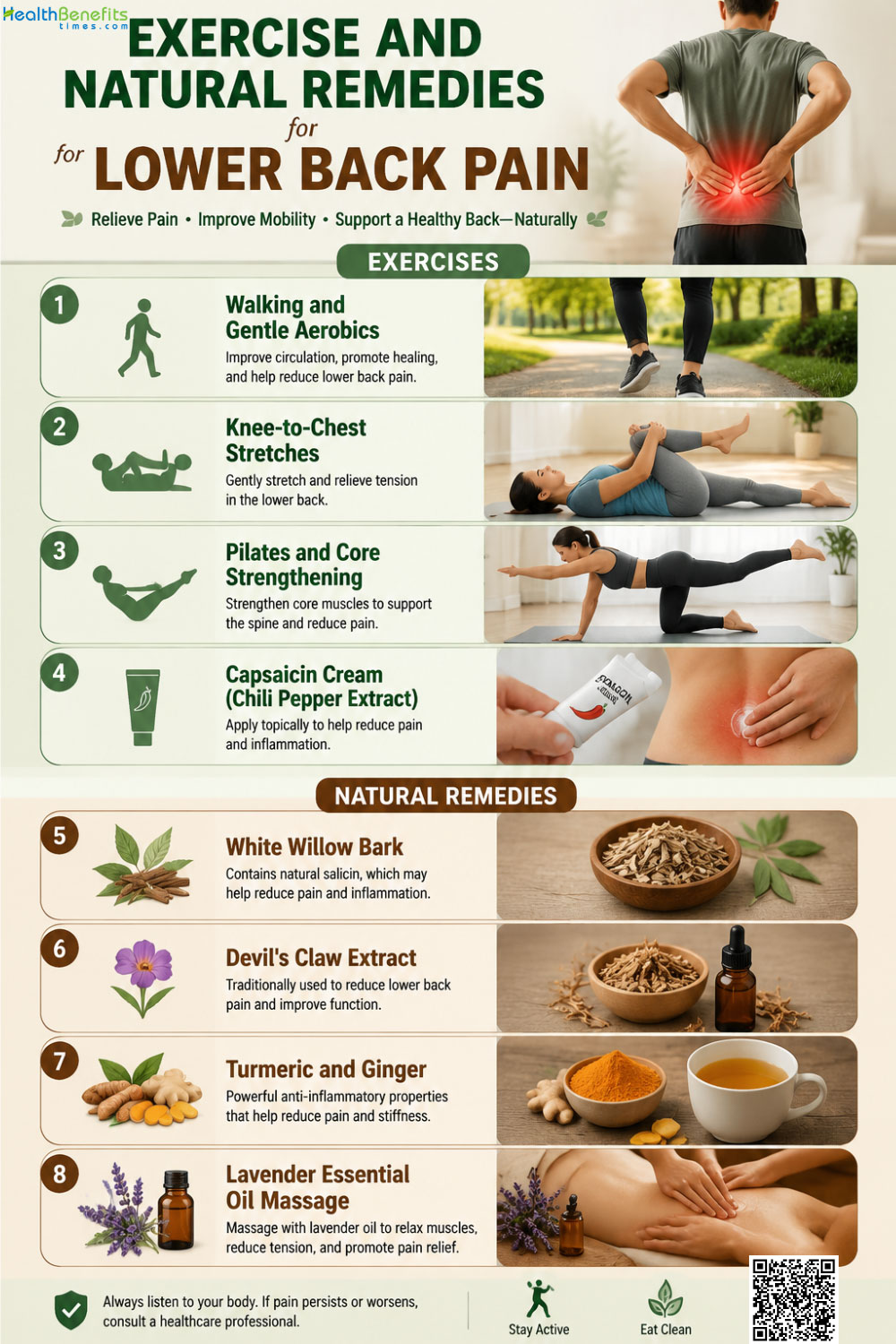
3. Pilates and Core Strengthening
Building a strong center, or “core,” helps create a natural support belt for your spine. Pilates is a gentle type of exercise that focuses on slow, very controlled movements to strengthen your abdominal and back muscles 19. When your stomach and back muscles are strong and balanced, your spine does not have to work nearly as hard during your everyday activities like lifting groceries or tying your shoes.
Note: This is commonly used as a regular workout method to build a strong muscular corset that protects the lower back from sudden strains and improves posture.
4. Capsaicin Cream (Chili Pepper Extract)
If you want to try a natural rub for your sore spots, creams made from cayenne peppers can be surprisingly helpful. Capsaicin is the special natural ingredient that makes chili peppers taste hot, and when rubbed on the skin, it works by temporarily stopping pain signals from traveling from your skin’s nerves up to your brain 20. It creates a nice, warm feeling that distracts the body from the deeper muscle aches.
Note: This is applied directly to the skin over the painful area as an ointment to create a warming sensation and block local pain from reaching the brain.
5. White Willow Bark
Long before modern aspirin was ever invented, people used the bark of the white willow tree to naturally ease their fevers and aches. It contains a wonderful natural compound called salicin that helps to lower inflammation and soothe sore, tired muscles 21. Many people find it is a much gentler way to calm down their aches without using strong pharmacy pills.
Note: This is commonly consumed orally as an herbal supplement, capsule, or tea to provide systemic, whole-body pain relief and lower internal swelling.
6. Devil’s Claw Extract
Despite its scary-sounding name, this unique plant has been used safely in traditional medicine for a very long time to fight off joint swelling. Scientific studies show that taking Devil’s Claw can provide wonderful short-term relief that is sometimes just as helpful as standard, store-bought pain medications 22. It works by calming down the body’s natural swelling response.
Note: This is typically eaten as a capsule or tablet to gently reduce internal swelling and soothe aching joints across the body.
7. Turmeric and Ginger
Spicing up your daily food can actually help calm down your back pain. Curcumin, which is the bright yellow part of turmeric, and spicy ginger root both contain powerful natural chemicals that tell your body to stop creating unnecessary inflammation 23. Adding these simple roots to your meals is a tasty and healthy way to protect your joints from getting stiff and sore.
Note: These spices are commonly eaten in everyday meals or taken as concentrated dietary supplements to naturally lower the body’s inflammatory response.
8. Lavender Essential Oil Massage
Relaxing your busy mind can actually help relax your stiff back. Using sweet-smelling lavender oil during a gentle back massage not only physically loosens up tight muscles but also helps to lower your overall mental stress, which can actually make your physical pain feel much less intense 24. A calm nervous system does not send as many strong pain signals.
Note: This is applied topically during physical massage to calm the nervous system, lower stress, and relax intensely tense back muscles.
Foods and Activities to Avoid When You suffer from Lower Back Pain
Sometimes, getting better is not just about what you do, but also about what you choose to stop doing. Certain everyday habits can quietly keep your back from healing properly.
1. Staying in Bed Too Long
While a day of resting with pillows feels good at first, staying completely in bed for more than a couple of days actually makes your supporting muscles weaker and your spine much stiffer 25. You should try to keep moving gently around the house.
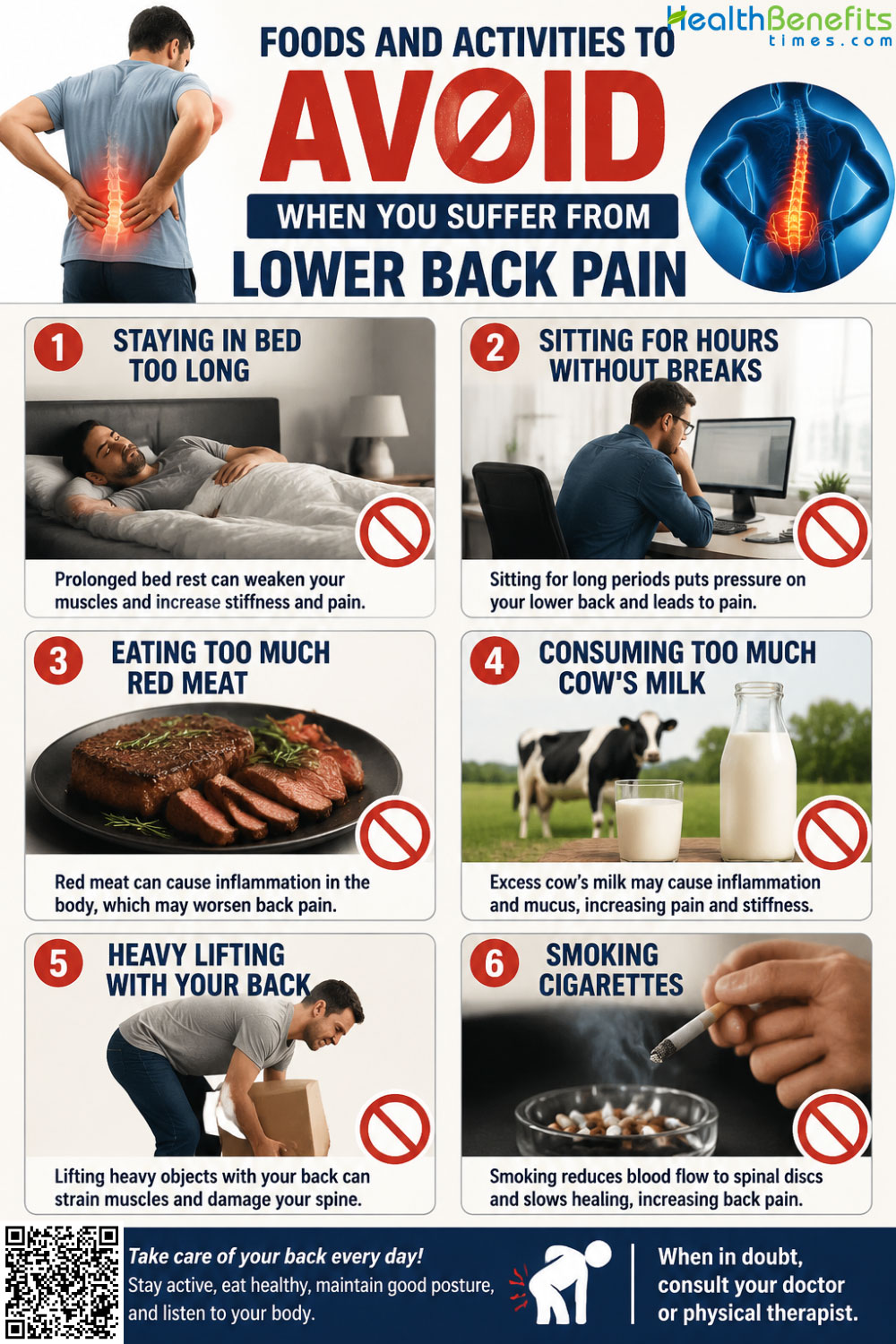
2. Sitting for Hours Without Breaks
Sitting down at a desk or slouching on the couch for long, unbroken periods starves your spine of healthy blood flow 26. You should make sure you stand up, stretch your arms, and walk around every thirty minutes.
3. Eating Too Much Red Meat
Heavy amounts of red meat, like steaks and burgers, can trigger your body to create more internal swelling and inflammation, which naturally makes your joints and muscles ache more than they should 27. You might want to try eating more chicken or fish instead.
4. Consuming Too Much Cow’s Milk
Some of the natural fats found in everyday dairy products can increase the inflammatory markers inside your body, so it is usually best to enjoy them only in moderation when your back is actively hurting 10.
5. Heavy Lifting With Your Back
Bending straight forward at the waist to pick up something heavy off the floor is a very quick way to pull a back muscle. You should always remember to bend your knees, keep your back straight, and let your strong leg muscles do the hard work.
6. Smoking Cigarettes
Smoking hurts your lungs, but the chemicals also stop healthy oxygen from reaching the delicate discs in your spine, which can severely slow down your body’s natural healing process 15.
Myths and Misconceptions
There are many old rumors about back pain that can lead people down the wrong path. Learning the truth can save a lot of worry.
| Myth | Realty |
| A scan, like an MRI or X-ray, will always show exactly why your back hurts.
28. |
Scans often show completely normal wear and tear that simply happens as we age, but these tiny changes are usually not the actual cause of the physical pain. |
| Complete bed rest is the absolute best cure for a sore lower back.
29. |
Laying down quietly for more than 24 hours can actually slow down your recovery, making the back muscles much tighter and weaker. |
| Moving, stretching, or exercising a painful back will only cause more damage.
30. |
Gentle, carefully guided movement is incredibly helpful because it brings healing oxygen and rich blood flow right to the sore tissues. |
| Severe, sharp pain always means that a bone or disc is seriously broken inside.
31. |
Pain is very complex and is often just a sign of a simple muscle spasm or temporary inflammation, rather than major, permanent structural damage. |
Special Considerations
Back pain does not treat everyone exactly the same. Depending on a person’s age or health history, the spine has different needs and challenges.
1. Children
It is very easy to think of back aches as strictly an adult problem, but growing children and teenagers can definitely get them too. Carrying heavy school backpacks, having poor posture while slouching over phones or computer screens, and a lack of active outdoor play can lead to spinal discomfort in kids as young as 17 years old 13. Teaching young ones good posture early on helps protect their growing spines from future issues.
2. Pregnancy
Expecting mothers go through amazing bodily changes, but carrying extra baby weight puts a massive physical strain on the lower back. During pregnancy, special hormones naturally loosen the body’s joints to prepare for birth, and the growing belly shifts the mother’s entire center of gravity 32. This extra pressure on the blood vessels and nerves often makes the third trimester quite uncomfortable, but gentle support belts and prenatal yoga can help.
3. Chronic conditions
People who already live with long-term health issues, like inflammatory bowel disease or fibromyalgia, might find that their back pain is deeply tied to their overall, whole-body health. When the body is constantly fighting systemic inflammation, the joints and muscles in the back can become extra sensitive to normal pain signals 33. In these cases, eating an anti-inflammatory diet is just as important as doing physical stretches.
4. Elderly
As people celebrate more birthdays, their spines naturally change their shape and strength. Older adults, especially those over the age of 80, face a much higher chance of having back pain because their spinal discs become thinner, drier, and their bones may become more fragile and easily cracked 14. Gentle, guided movement and making sure the home is safe to prevent falls become very important for this age group.
Precaution before use of natural remedies when you have Lower Back Pain
Natural remedies are fantastic, but just because something comes from a plant does not mean it is completely harmless. You need to be smart and careful when using them.
1. Check for Drug Interactions
Even natural herbs can completely change how your regular prescription medicines work. For example, if you take blood thinners for your heart, adding ginger or willow bark to your diet can make your blood too thin and highly increase your risk of bleeding 20.
2. Watch for Skin Irritation
Natural rubs and creams like capsaicin are great for stopping pain, but they can sometimes cause your skin to become very red, itchy, or overly sensitive. You should always test a very small amount on your arm first to see how your body reacts.
3. Avoid Using Them Too Long
Most herbal remedies and spine treatments have only been tested by scientists for short-term use, usually around six weeks or so 34. You should not rely on taking them every single day for months at a time without talking to a health professional.
4. Be Careful With Upset Stomachs
Taking powerful herbs in pill form, like Devil’s Claw, can sometimes give you a mild stomach ache, nausea, or heartburn. You should pay close attention to how your tummy feels after trying a brand new supplement.
5. Talk to Your Doctor or Pharmacist
You should always give your doctor or pharmacist a full, honest list of all the natural teas, massage oils, and herbal pills you are using so they can keep you safe and make sure nothing mixes badly 35.
When to see Doctor
While most back aches go away on their own with a little time and gentle care, some warning signs mean you should stop treating yourself and get professional help right away.
1. Numbness in Your Legs
If you suddenly feel like you cannot lift your foot to walk, or your legs feel completely weak, heavy, and numb, you need to see a doctor immediately to check if your nerves are being damaged 36.
2. Bathroom Troubles
Losing control of your bladder or your bowels when you have severe back pain is a very serious warning sign that a major spinal nerve is being squeezed too tightly 37.
3. Unexplained Weight Loss
If your clothes are suddenly too big and you have not been trying to lose weight at all, please tell your doctor. This could be a sign of a deeper infection or illness hiding in the body 38.
4. Fever and Chills
Having a high temperature or waking up sweating through your pajamas at night alongside your back pain means your body might be fighting off a dangerous bacterial infection 39.
5. Pain After an Accident
If your back starts hurting right after a scary car crash, a bad fall down the stairs, or a rough sports injury, you should get checked out to make absolutely sure no bones are fractured.
6. Pain That Keeps You Awake
Normal, everyday muscle aches usually feel much better when you lie down to rest. If your pain is so bad that it wakes you up from a deep sleep and changing positions does not help, it is time to seek professional medical advice 6.
Comments
comments