


Shoulder pain is one of the most common health complaints worldwide. Studies show it affects 18–26% of adults at any given time, 2 making it the third most common musculoskeletal complaint seen in primary care, after low back pain and knee pain. 3 A global systematic review found the community prevalence of shoulder pain has a median of 16%, with some populations reporting rates as high as 55%. 4 The condition is more common in women than men and tends to peak in middle age, especially between 45 and 64 years. 5 Shoulder pain can be acute (short-term) or chronic (lasting more than three months), and it may affect a person’s ability to dress, work, sleep, or perform daily tasks.
Causes of Shoulder Pain
Shoulder pain can arise from many different sources. Some of the most common causes include:
1. Rotator Cuff Injury
The rotator cuff is a group of four muscles and tendons that stabilize the shoulder. Tears, usually from repetitive overhead motions or aging, are among the most common causes of shoulder pain, especially in people over 40. 6
2. Frozen Shoulder (Adhesive Capsulitis)
This occurs when the tissue surrounding the shoulder joint thickens and stiffens, causing restricted movement and persistent pain. It develops in three stages: freezing, frozen, and thawing, a process that can last one to three years. 7
3. Shoulder Impingement Syndrome
This happens when the bones in the shoulder pinch or rub against the rotator cuff tendons, causing pain especially when raising the arm. Experts estimate impingement causes around half of all shoulder pain cases. 6
4. Bursitis
Inflammation of the small fluid-filled sacs (bursae) that cushion the shoulder joint. It often occurs alongside rotator cuff injuries or overuse.
5. Arthritis
Both osteoarthritis and rheumatoid arthritis can affect the shoulder joint, causing pain, stiffness, and swelling.
6. Tendinitis
Inflammation of the tendons in the shoulder due to overuse, often seen in athletes and people who perform repetitive arm motions at work. 8
7. Fractures and Dislocations
Breaks in the collarbone, upper arm bone, or shoulder blade, and dislocations where the upper arm bone pops out of the shoulder socket, often from falls or accidents.
8. Referred Pain
Sometimes pain felt in the shoulder actually originates from another area, such as the neck (cervical spine), heart, or diaphragm.
9. Poor Posture
Extended periods of sitting, especially with forward-head posture or hunched shoulders, can put excess stress on the shoulder muscles and joints. 2
10. Diabetes and Thyroid Disorders
Certain systemic conditions such as diabetes and thyroid disease significantly increase the risk of developing frozen shoulder. 8
Symptoms of Shoulder Pain
The symptoms of shoulder pain can vary depending on the underlying cause, but common signs to watch for include:
- A dull ache or sharp pain in and around the shoulder joint
- Pain that worsens when lifting the arm overhead or rotating it
- Stiffness or limited range of motion in the shoulder
- Weakness in the arm, especially when lifting or carrying objects
- Tenderness when pressing on or around the shoulder
- Swelling or visible deformity around the shoulder area
- Pain that worsens at night, particularly when lying on the affected shoulder
- A clicking, popping, or grinding sensation during shoulder movement
- Numbness or tingling that radiates down the arm or into the hand
- Muscle spasms or tightness in the neck and upper back connected to the shoulder
Shoulder Pain — Quick Facts Table
| Symptoms |
|
| Causes |
|
| Types of Shoulder Pain |
|
| How It Spreads |
|
| Age Group |
|
| Higher Risk If You: |
|
| How Doctors Diagnose |
|
| Other Facts |
|
Exercise and Natural Remedies for Shoulder Pain
Managing shoulder pain doesn’t always require strong medications or surgery. A combination of targeted exercises and evidence-based natural remedies can significantly reduce pain, improve mobility, and support healing especially in mild to moderate cases. Below is a comprehensive guide to the most effective options.
Exercises for Shoulder Pain
1. Pendulum Stretch (Codman’s Exercise)
The pendulum stretch is one of the most widely recommended exercises for shoulder rehabilitation. It works by using gentle trunk movement to create passive shoulder motion, which loosens tight muscles without stressing the joint. 9
How to do it: Lean forward slightly and place one hand on a table or chair for support. Let the painful arm hang freely. Gently swing it in small circles clockwise, then counterclockwise for 30 seconds to 1 minute each direction. Repeat 2–3 times daily.
Note: This exercise is commonly used as the very first step in shoulder rehabilitation for conditions like frozen shoulder and rotator cuff injury. It is often performed immediately after injury or surgery to maintain blood flow and prevent stiffness.
2. Cross-Body Shoulder Stretch
Stretching the posterior shoulder capsule can help restore flexibility and reduce pain caused by tightness in the back of the shoulder. This simple stretch targets the posterior rotator cuff muscles.
How to do it: Bring one arm across your chest. Use the opposite hand to gently press the arm closer to your body. Hold for 30 seconds, then release. Repeat on both sides 2–3 times. 10
Note: This stretch is commonly incorporated into warm-up and cool-down routines for athletes and is widely recommended by physical therapists for both preventive and rehabilitative shoulder care.
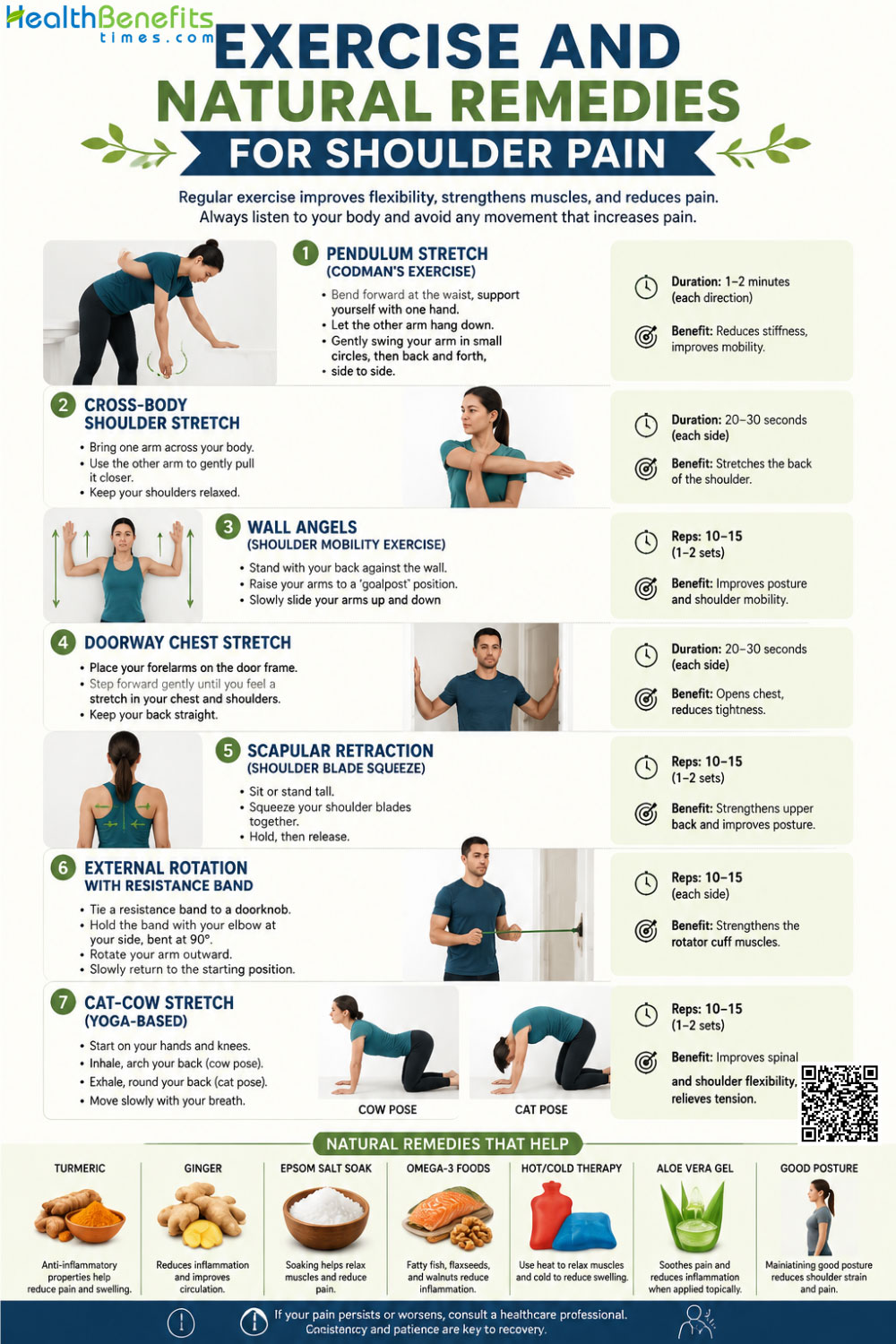
3. Wall Angels (Shoulder Mobility Exercise)
Wall angels target the muscles of the upper back and improve scapular (shoulder blade) control, which is essential for healthy shoulder movement and pain reduction.
How to do it: Stand with your back flat against a wall. Raise both arms to a ‘W’ position with elbows bent. Slowly slide your arms up to a ‘Y’ shape and back down. Keep your arms, wrists, and back in contact with the wall throughout. 11
Note: Wall angels are commonly prescribed by physiotherapists to correct rounded shoulders and improve posture, making them especially beneficial for desk workers and those with impingement syndrome.
4. Doorway Chest Stretch
Tightness in the chest and front shoulder muscles is a common driver of shoulder pain, especially in people who sit for long periods. The doorway stretch opens up the chest and relieves tension in the anterior shoulder.
How to do it: Stand in a doorway and place both forearms on the doorframe at shoulder height. Gently lean forward until you feel a stretch in the front of your shoulders and chest. Hold for 20–30 seconds. Repeat 2–3 times.
Note: This stretch is commonly used for people with shoulder impingement, forward-head posture, and rounded shoulders. It is a go-to stretch in both gym warm-up routines and physical therapy programs.
5. Scapular Retraction (Shoulder Blade Squeeze)
Strengthening the muscles between the shoulder blades helps stabilize the shoulder joint, improve posture, and reduce the strain that leads to pain. This is a foundational shoulder-strengthening exercise.
How to do it: Sit or stand with arms at your sides. Gently squeeze your shoulder blades together as if trying to hold a pencil between them. Hold for 5 seconds, relax, and repeat 10–15 times. Aim for 2 sets.
Note: Scapular retractions are commonly prescribed as part of rotator cuff rehabilitation and posture correction programs. They are also used by physical therapists to re-train shoulder mechanics after injury.
6. External Rotation with Resistance Band
Weakness in the external rotators of the shoulder is a well-documented contributor to pain and impingement. Resistance band exercises are evidence-based tools for rotator cuff strengthening. 11
How to do it: Attach a resistance band at waist height. Hold the band with the affected arm, elbow bent at 90 degrees, tucked at your side. Slowly pull the band away from your body by rotating your forearm outward. Return slowly. Do 2 sets of 10–15 repetitions.
Note: Resistance band external rotation is one of the most recommended exercises in rotator cuff rehabilitation programs. It is commonly used in both clinic and home exercise settings.
7. Cat-Cow Stretch (Yoga-Based)
The cat-cow stretch is a yoga-based movement that improves flexibility in the spine and reduces tension in the shoulders and neck. Evidence from clinical research shows that yoga-based movements may help relieve chronic musculoskeletal pain. 12
How to do it: Start on all fours with your hands below your shoulders and knees below your hips. Inhale and arch your back downward (cow), lifting your head and tailbone. Exhale and round your spine upward (cat), tucking your chin and pelvis. Move smoothly for 30 seconds.
Note: The cat-cow pose is widely used in yoga classes, physical therapy, and pain management programs for both spinal and shoulder relief. It is often recommended as a gentle daily mobility routine.
Natural Remedies for Shoulder Pain
1. Ice Therapy (Cold Compress)
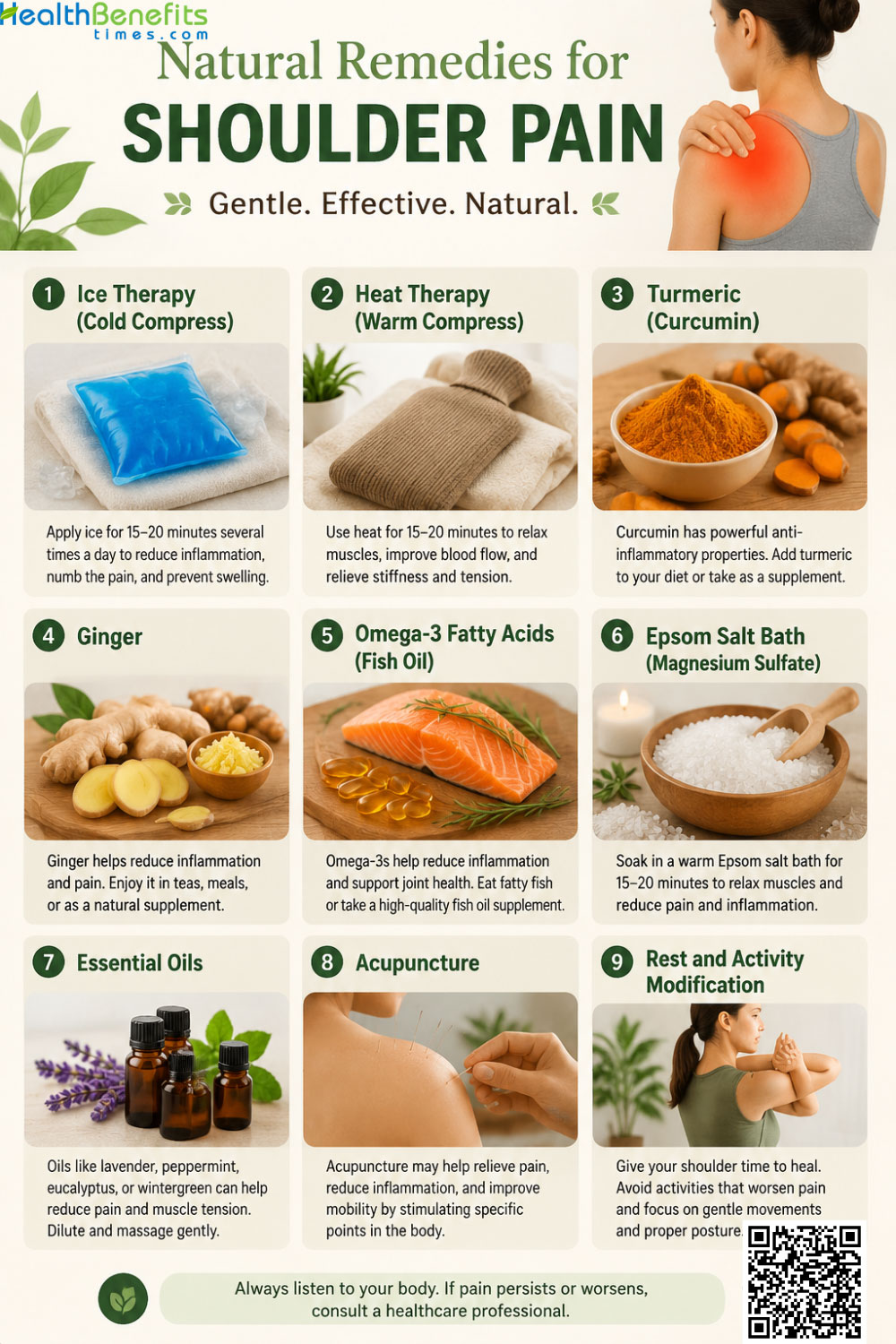
Applying ice to an acutely injured or inflamed shoulder is one of the most effective and accessible remedies. Cold therapy helps reduce swelling, numb the area, and decrease pain signals in the early stages of injury.
How to use it: Wrap an ice pack or bag of frozen vegetables in a thin towel. Apply it to the painful shoulder for 10–20 minutes at a time, several times a day. 13 Never apply ice directly to skin to avoid frostbite.
Note: Ice therapy is most effective in the first 48–72 hours after an acute shoulder injury or during flare-ups of inflammation. It is a standard recommendation from orthopedic and physical therapy clinics worldwide.
2. Heat Therapy (Warm Compress)
Heat is typically recommended for chronic shoulder pain and muscle stiffness rather than fresh injuries. It increases blood flow to the area, relaxes tense muscles, and promotes healing in the deeper tissues.
How to use it: Apply a heating pad, warm moist towel, or hot water bottle to the shoulder for 15–20 minutes. Ensure the heat is on a medium setting not too hot to avoid burns. 13 After the initial 48–72 hours of acute injury, switch from ice to heat for ongoing relief.
Note: Heat therapy is commonly recommended by physical therapists for chronic shoulder conditions, muscle spasms, and frozen shoulder. It is often applied before exercise to warm up the tissues.
3. Turmeric (Curcumin)
Turmeric is one of the most researched natural anti-inflammatory agents. Its active compound, curcumin, has been shown in multiple clinical trials to reduce pain and inflammation in musculoskeletal conditions. 14 A meta-analysis of randomized controlled trials found curcuminoids significantly reduced pain scores in people with joint pain. 15 Further research confirms curcumin may decrease key inflammatory markers including CRP and TNF-alpha. 16
How to use it: Add 1/2 to 1 teaspoon of turmeric powder to warm milk, tea, soups, or curries daily. For supplements, consult a healthcare provider for appropriate dosage. Adding black pepper improves absorption significantly.
Note: Turmeric is commonly consumed as ‘golden milk’ (turmeric in warm milk), added to cooking, or taken as a standardized curcumin supplement. It has a long history of use in Ayurvedic and traditional Chinese medicine for joint and muscle pain.
4. Ginger
Ginger contains powerful bioactive compounds including gingerols and shogaols that have well-documented anti-inflammatory effects. Research shows ginger can inhibit inflammatory enzymes (COX-2) similar to non-steroidal anti-inflammatory drugs, but without some of their gastrointestinal side effects. 17 Clinical evidence suggests ginger supplementation improves pain, stiffness, and functional capacity in people with joint pain. 18 Ginger has also been historically used as an anti-rheumatic for musculoskeletal pain. 19
How to use it: Boil 2–3 slices of fresh ginger in water for 10 minutes to make ginger tea. Drink 1–2 cups daily. Ginger can also be added to meals, juices, or smoothies.
Note: Ginger tea is one of the most popular natural remedies for joint and muscle pain worldwide. It is also available in standardized supplement form and as topical ginger oil for massage application.
5. Omega-3 Fatty Acids (Fish Oil)
Omega-3 fatty acids found in fatty fish and fish oil supplements have well-established anti-inflammatory properties. They work by reducing the production of pro-inflammatory compounds in the body. 20 The National Center for Complementary and Integrative Health (NIH/NCCIH) notes that omega-3 fatty acid supplements may help relieve symptoms of inflammatory joint conditions. 21
How to use it: Eat 2–3 servings of fatty fish (such as salmon, mackerel, or sardines) per week. Alternatively, take a fish oil supplement as directed by a healthcare professional. Typical doses used in research range from 1–3 grams of EPA and DHA daily.
Note: Omega-3 supplements are among the most widely used dietary supplements globally. They are commonly taken with food to reduce the risk of a fishy aftertaste and are widely available in capsule or liquid form.
6. Epsom Salt Bath (Magnesium Sulfate)
Epsom salt, chemically known as magnesium sulfate, has been used for generations as a traditional remedy for muscle aches and joint pain. Soaking in warm Epsom salt water is thought to help muscles relax and may ease shoulder tightness.
How to use it: Dissolve 1–2 cups of Epsom salt in a warm bath. Soak for 15–20 minutes. Focus on submerging the shoulder if possible, or apply a warm Epsom salt-soaked cloth directly to the shoulder.
Note: Epsom salt baths are a widely used home remedy for muscle soreness and joint stiffness, commonly recommended after physical activity and sports. They are easily available at pharmacies and grocery stores.
7. Essential Oils
Certain essential oils including lavender, peppermint, and eucalyptus have natural analgesic (pain-relieving) and anti-inflammatory properties. When diluted and applied topically, they may provide localized pain relief and help relax tense shoulder muscles.
How to use it: Mix 3–5 drops of your chosen essential oil with a tablespoon of a carrier oil (such as coconut or jojoba oil). Gently massage the blend into the painful shoulder area in circular motions. Always do a small patch test first to check for skin sensitivity.
Note: Essential oil massage is commonly used in aromatherapy and complementary medicine settings. It is often combined with gentle massage techniques to maximize the relief of shoulder muscle tension.
8. Acupuncture
Acupuncture is a traditional Chinese medicine practice that involves inserting thin needles at specific points in the body to reduce pain and promote healing. Clinical evidence suggests acupuncture can be an effective complementary treatment for chronic shoulder pain. 22 The NIH’s National Center for Complementary and Integrative Health acknowledges acupuncture as an evidence-supported option for some chronic musculoskeletal pain conditions. 21
How to use it: Acupuncture should always be performed by a licensed, trained acupuncturist. Sessions typically last 30–60 minutes. A course of 6–10 sessions is commonly recommended for chronic shoulder pain, though individual needs vary.
Note: Acupuncture is commonly used for pain management in integrative medicine clinics, physiotherapy centers, and traditional Chinese medicine practices. It is recognized as a complementary therapy in several national pain management guidelines.
9. Rest and Activity Modification
Sometimes, the most important remedy is to give the shoulder a break. Overusing an already inflamed or injured shoulder can worsen the condition significantly. Temporarily reducing or modifying activities that cause pain allows the tissues to heal.
How to do it: Identify and avoid activities that trigger or worsen your shoulder pain. Modify your posture and workstation setup. Use supportive pillows when sleeping to avoid rolling onto the painful shoulder.
Note: Rest and activity modification are universally recommended as first-line management for acute shoulder injuries and flare-ups of chronic conditions. They are the foundation upon which all other treatments are built.
Foods and Activities to Avoid When You Have Shoulder Pain
1. Inflammatory Foods
Avoid processed foods, refined sugars, white bread, fried foods, and red meat in large quantities. These foods can increase systemic inflammation and worsen joint pain.
2. Excessive Alcohol
Alcohol can interfere with the body’s healing response and increase inflammation. It also interacts poorly with common pain medications.
3. High-Sodium Foods
Excess salt promotes fluid retention and swelling, which can worsen shoulder inflammation. Limit processed snacks, canned soups, and fast food.
4. Overhead Activities Without Warm-Up
Avoid lifting heavy objects overhead or performing repetitive overhead tasks (painting ceilings, throwing balls) without proper warm-up and technique, especially during recovery.
5. Sleeping on the Painful Shoulder
Lying on the affected shoulder compresses the joint and reduces blood flow, worsening pain and stiffness overnight. Use a supportive pillow to keep the shoulder in a neutral position.
6. Prolonged Desk Posture Without Breaks
Sitting in a forward-hunched position for hours causes muscular imbalances around the shoulder. Take movement breaks every 30–60 minutes.
7. Ignoring Pain Signals
Pushing through sharp pain during exercise or daily activities can worsen an underlying injury. Pain is a signal it should guide your limits, not be ignored.
8. Smoking
Smoking reduces blood supply to muscles and tendons and is associated with poorer healing outcomes in rotator cuff conditions.
Myths and Misconceptions about Shoulder Pain
| ❌ Myth | ✅ Reality |
| Rest is always the best treatment for shoulder pain. | While rest helps in acute injury, prolonged inactivity can worsen stiffness and delay recovery. Gentle, guided movement is usually beneficial and recommended. |
| Shoulder pain only affects older people. | Shoulder pain affects all age groups, including adolescents aged 12–18 years, especially those who play overhead sports or spend long hours at screens. |
| If you can move your shoulder, it isn’t seriously injured. | Partial rotator cuff tears and early-stage frozen shoulder can still allow some movement while causing significant damage. Imaging is needed to confirm diagnosis. |
| Cracking or popping sounds in the shoulder always mean damage. | Harmless popping sounds (crepitus) are common and often caused by gas bubbles in the joint fluid. However, sounds accompanied by pain should be evaluated. |
| Natural remedies like turmeric and ginger have no scientific support. | Multiple randomized controlled trials published in peer-reviewed journals confirm that curcumin (from turmeric) and ginger have measurable anti-inflammatory and pain-relieving effects. |
| Surgery is the only effective treatment for rotator cuff tears. | Many partial rotator cuff tears heal well with physical therapy, exercise, and conservative management. Surgery is typically reserved for full-thickness tears or failed conservative treatment. |
| Shoulder pain will always go away on its own. | While some mild shoulder pain resolves with rest, many conditions like frozen shoulder or rotator cuff tears require active treatment. Ignoring persistent pain can lead to worsening and long-term disability. |
Special Considerations
1. Children
Shoulder pain in children and adolescents is often linked to sports activities, especially in those who play throwing sports, swimming, or gymnastics. 23 Growth plates (areas of developing cartilage) in young athletes are more vulnerable to injury than in adults. It is important that children with persistent shoulder pain are evaluated by a pediatric orthopedic specialist before returning to sport. Treatment typically focuses on rest, physical therapy, and gradual return to activity. Heavy resistance training and overhead loads should be carefully supervised in young athletes.
2. Pregnancy
Pregnancy-related hormonal changes particularly increased relaxin cause joint laxity that can make the shoulder more vulnerable to strain and pain. 24 Shoulder pain during pregnancy can also be a warning sign of serious conditions such as HELLP syndrome (a life-threatening liver complication) or referred pain from gallbladder issues. 25 Pregnant women should consult their obstetrician before taking any pain medication or starting new exercise programs. Gentle stretches, prenatal yoga, and acetaminophen (as directed by a doctor) are generally considered safer options. Most anti-inflammatory drugs (NSAIDs) should be avoided during pregnancy.
3. Chronic Conditions
People with chronic conditions such as diabetes, rheumatoid arthritis, and thyroid disorders face a higher risk of developing shoulder pain and frozen shoulder. 8 Managing the underlying condition particularly blood sugar control in diabetics is a critical part of shoulder pain management. These individuals often benefit from close collaboration between their primary care physician, endocrinologist, and physiotherapist.
4. Elderly
Shoulder pain prevalence increases with age and is particularly common in adults over 50 years old. 5 In elderly individuals, rotator cuff degeneration, arthritis, and bone fragility all contribute to shoulder problems. Falls are a significant cause of shoulder fractures in older adults. Gentle exercise, fall prevention strategies, and appropriate pain management are key. Elderly patients should have careful evaluation before starting resistance training, and all exercises should be performed within a pain-free range under supervision when possible.
Precautions before Using Natural Remedies for Shoulder Pain
1. Consult a Healthcare Provider First
Before starting any natural remedy especially herbal supplements speak with your doctor or pharmacist. Natural products can interact with prescription medications (e.g., turmeric and blood thinners).
2. Do Not Use Natural Remedies as a Substitute for Medical Care
If shoulder pain is severe, follows an injury, or does not improve within a few days, seek professional medical evaluation. Natural remedies are supportive, not a replacement for diagnosis and treatment.
3. Check for Allergies
Always perform a patch test before applying any topical remedy (essential oils, turmeric paste) to the skin. Some people have contact allergies to plant-based products.
4. Avoid Overusing Herbal Supplements
More is not always better. Excessive amounts of turmeric or ginger can cause gastrointestinal upset, and very high doses of some supplements can be harmful.
5. Be Cautious If You Are Pregnant or Breastfeeding
Many herbal remedies are not well-studied in pregnancy. Always consult an obstetrician before using herbal supplements or essential oils during pregnancy.
6. Be Careful with Heat on Acute Injuries
Heat therapy should not be applied to fresh injuries (within the first 48–72 hours) as it can increase blood flow and worsen swelling. Use ice in the acute phase first.
7. Watch for Worsening Symptoms
If your shoulder pain worsens, you develop fever, significant swelling, or the arm becomes weak after starting any home remedy, discontinue it and contact a doctor.
When to See a Doctor
While most mild shoulder pain can be managed at home, certain signs indicate that professional medical evaluation is necessary. You should see a doctor if:
- Pain is severe and does not improve after 1–2 weeks of home care (rest, ice, gentle exercise)
- The shoulder pain follows an injury, fall, or accident — especially if there is visible deformity or significant swelling 1
- You cannot lift your arm at all or the arm feels significantly weak
- Shoulder pain is accompanied by fever, redness, or warmth over the joint, which may suggest infection
- Pain radiates down the arm, into the fingers, or causes numbness or tingling — these may indicate nerve involvement
- You experience chest pain or difficulty breathing alongside shoulder pain, which can be a sign of a cardiac emergency requiring immediate emergency care
- The pain wakes you up at night consistently or prevents you from sleeping
- You have diabetes, rheumatoid arthritis, or another chronic condition and develop new or worsening shoulder symptoms 8
- Symptoms have been present for more than 6 weeks without improvement despite home management
- You are pregnant and experience sudden sharp shoulder pain — this may require urgent assessment to rule out serious complications 25
Medical Disclaimer: This article is for educational and informational purposes only and is not a substitute for professional medical advice, diagnosis, or treatment. Always consult a qualified healthcare provider before starting any new treatment or exercise program.
Comments
comments