Month: September 2020
-

Orange
Although you might expect oranges to have taken their name from their colour, the opposite is true: the name of the colour was borrowed from the name of the fruit. The ultimate source of the orange’s name is the Sanskrit nnaranga, which made its way through Persian and Arabic before arriving in Spanish as namnj.…
-
Opsophagy
Holidays such as Christmas or Thanksgiving, with their endless plates of cookies, cakes, pickles, nuts, and chocolate, are occasions of rampant opsophagy, that is, the eating of dainties. The word derives from the Greek opson, meaning rich fare (especially fish), and phagein, meaning to eat. When the desire to eat such goodies becomes overwhelming, the…
-
Opsony
Opsony is an exact synonym for companage, the name given to anything eaten with bread to give it greater savour. The word derives from the Latin opsonium, meaning provisions, but was used for only a short time in the seventeenth century.
-
Open-arse
Medlars make excellent jams and jellies. Those delicious preserves would perhaps be less popular if the original name for the medlar—open-arse—had not become obsolete in the nineteenth century. The fruit acquired that shocking name more than a thousand years ago, thanks to the fact that it has a deep depression at its top that looks…
-
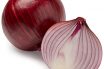
Onion
A labour union brings together many different individuals; a garden onion has many tightly bound layers. This connection explains why both words—union and onion—derive from the Late Latin unio, meaning oneness or unity, which in turn arose from the Latin unus, meaning one. The earliest English spellings of the bulb’s name—unyonn back in the fourteenth…
-
One-arm
One-arm refers not to a careless sausage maker, but to a kind of cheap restaurant, in vogue in the first two decades of the twentieth century, where a patron ate his meal from a seat that had one arm wide enough to support his tray.
-
Omnivorous
The Latin word vorare, meaning to devour, has been compounded with other Latin words to form omnivorous (all-devouring), carnivorous (flesh-devouring), and herbivorous (plant-devouring). All these words entered English in the mid sixteenth century as zoological terms; much more recently batrachivorous was adopted for application to people in nations such as France who eat grenouille, in…
-

Omelette
Strange as it might seem, the word omelette is related to both the word laminate and the word enamel, but is not related to the similar sounding amulet, a charm that wards off evil spirits. Omelette ultimately goes back to the Latin word lamina, meaning a plate of metal. Lamina gave rise to a diminutive…
-
Offal
When you set about to butcher a chicken, the first thing you do is chop off its legs and head; these severed items are as unimportant to you as they were important to the bird, and thus you sweep them to the edge of the table where they fall onto the floor. It is this…
-
Nym
If you glance through a fourteenth-century cookbook, you will see many strange words, but one will appear more than almost any other. That word is nym, meaning take, and it was used in Middle English sentences like this—”Nym a pond of ris, seth hem fort it berste”—a sentence that actually means this—”Take a pound of…