Month: September 2020
-
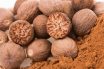
Nutmeg
When the word nutmeg entered English at the end of the fourteenth century, about the time that Chaucer was writing The Canterbury Tales, it was spelt notemugge. The medieval form of this spice’s name had been derived from the French nois muguede, which had in turn developed from, the Late Latin nuce muscata, meaning musky…
-
Nosh
The word nosh and the word snoop originally denoted the same thing: the act of eating something in secret. Both words derive from Germanic sources: the German naschen, meaning to eat surreptitiously, is the source of the Yiddish nosh, which English adopted in the 1960s; the Dutch snoepen, meaning to appropriate and consume dainties in…
-
Noon
In the working world, the established time for lunch is noon, currently fixed at twelve o’clock but formerly the ninth hour of the day, the ninth hour being three o’clock in the afternoon. The convoluted history of noon extends back two thousand years to when the ancient Romans reckoned the hours of the day not…
-
Nipperkin
If any category of words is especially prone to extinction, it is those relating to measures. Words that relate to things, like sky or egg, tend to persist because the things themselves usually continue to exist; likewise, words that relate to ideas, like freedom or evil, persist because people continue to debate them. Measures, however—whether…
-

Nectarine
Nectarines are essentially a kind of peach—in fact, nectarines can develop from peach seeds just as peaches can develop from nectarine seeds. The two fruits are so similar that botanists do not know which one originated first. Despite these botanical affinities, however, the word nectarine is a much more recent addition to English than the…
-

Mutton
When alive and flouncing through your dreams, sheep are called sheep, but when brought to your table in a mushroom sauce the same creature is called mutton, a word that English derived in the late thirteenth century from the Old French moton, meaning sheep. French in turn acquired this word from a Celtic source such…
-

Mussel
The mussels you cook in a wine sauce and the muscles you use to lift the pot from the stove derive their names from the same source: the Latin musculus, which literally means little mouse. The ancient Romans bestowed this word on the small, grey shellfish because its size and colour resembles that of a…
-
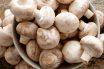
Mushroom
Before its current name was adopted by English in the fifteenth century, the mushroom was known either as a funge, a word deriving from the Latin fungus, or as a toadstool, a word of fanciful English origin. When the word mushroom was finally adopted from French in the fifteenth century, these three words were used…
-
Munch
Like the word manger (the name of a place where animals eat, especially at Christmas), and like the word mange (the name of a disease caused by parasites eating an animal’s skin), the word munch probably derives from the French manger, meaning to eat. The word appeared in English in the late fourteenth century, followed…
-
Mump
Advances in dentistry have been hard on the verb mump. When the word appeared in the late sixteenth century, it meant to chew with toothless gums, but it appears to have died out in the nineteenth century, about the same time that porcelain dentures began to be marketed on a large scale. Mump could also…