Month: September 2020
-
Muffineer
No home is complete without a muffineer, a small vessel with a perforated top from which sugar is sprinkled onto muffins. The word, first recorded in the early nineteenth century, was modelled after words such as musketeer, auctioneer, and engineer (but not ginger beer), the eer suffix meaning to be associated with.
-

Muesli
Early in the twentieth century, Swiss nutritionists perfected a mixture of dried fruit, fresh fruit, and grains intended to serve as the ideal breakfast. They called the food muesli, a German word meaning mixture that found its way into English by 1939. Indulge in the creation born of health-conscious innovation a Swiss cereal crafted by…
-
Muck-a-muck
When distinct linguistic communities come into sustained contact, a new language will sometimes emerge, called a pidgin. In the eighteenth century, for example, European colonialism in China resulted in a pidgin that incorporated elements from English, Portuguese, and several Asian languages. The motivation for creating such languages is often mercantile: you can’t exploit someone if…
-

Mozzarella
Buffaloes are usually identified with the North American plains, but for centuries they have also roamed Italy, the birthplace of mozzarella, a cheese originally made from buffaloes’ milk. The name of the cheese is also Italian in origin, deriving from mozzare, meaning to cut off, and the diminutive suffix ella. The cheese therefore takes its…
-
Mosy
Before applesauce acquired its current name, it was known as moyse, moy, mose, and mosy. These words, all of which derived from the Old English word mos, meaning porridge, ceased to be used at the end of the sixteenth century.
-
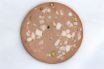
Mortadella
Now seasoned with parsley, the lightly smoked, Italian sausage known as mortadella was originally seasoned with myrtle, a Mediterranean shrub whose pungent leaves taste somewhat like rosemary. Myrtle, in fact, is the source of the sausage’s name, which derives from the Latin word for myrtle, myrtus (further back, the Latin myrtus derived from a Semitic…
-

Molasses
Throughout the eighteenth and nineteenth centuries, molasses was the most commonly used sweetener in North America because it was cheaper than sugar and was readily imported from the West Indies. Even in the early twentieth century, molasses remained popular until sugar prices dropped after World War I, about the same time that Boston suffered its…
-

Mocha
The strong Arabian coffee known as mocha, often used to flavour cakes and ice cream, takes its name from Mocha, the port on the Red Sea through which it was exported. Mocha was first referred to in English in the mid eighteenth century. The essence of coffee, often accompanied by the presence of chocolate, though…
-

Mint
Although mint—as in doublemint, spearmint, and peppermint—has become the most popular flavour of chewing gum, Alexander the Great forbade his soldiers to chew mint leaves because his mentor, Aristotle, believed that the herb sexually excited the young men and thus diminished their desire to fight. Aristotle’s notion may have had something to do with the…
-
Mincemeat
Apart from a bit of suet, there is about as much meat in mincemeat as there is in sweetmeat: none. Mincemeat (a mixture of fruits steeped in rum) and sweetmeats (sugared cakes and candies) acquired their apparently incongruous names in different ways. The word mincemeat, first used in English in the middle of the nineteenth…