Month: September 2020
-

Kiwi fruit
In the early nineteenth century, British scientists studying the flora and fauna of New Zealand decided to name a flightless bird they found there the apteryx, an ugly Greek name meaning wingless. Luckily, however, the British settlers of New Zealand took to calling the bird by its much more mellifluous Maori name, kiwi, which in…
-
Kissing-crust
When loaves of bread bake, they expand in size, sometimes causing one loaf to lean against another. This point of contact, usually soft instead of crusty, is called the kissing-crust, a baking term dating back to at least the early nineteenth century. Although the name sounds delightful, bakers—before the invention of plastic bags—tried to avoid…
-

Kimchi
So hot that some nations have considered using it as a plutonium substitute, kimchi is a Korean pickle seasoned with garlic, horseradish, or ginger. The Koreans derived their name for this condiment from the Chinese, who called a similar pickle chen cay, meaning steeped vegetables. The Korean name was introduced to English in the late…
-

Kidney bean
The kidney bean takes its name from its resemblance in shape to the human kidney, an organ that cleanses the blood of wastes. In turn, the kidney takes its own name from something it resembles: an egg. In Middle English, egg was spelt and pronounced ey, which is exactly how it appears at the end…
-
Kickshaw
Kickshaws are tidbits of food like the cashews, cookies, and mints scattered in bowls around your grandparents’ home. However, the original meaning of kickshaw was slightly different: from the late sixteenth to the late nineteenth century, it was a disparaging name for a dish that seemed needlessly fancy or suspiciously exotic. British food, according to…
-

Ketchup
Although squabbles still erupt over whether the spelling is catsup or ketchup, the original form of the tomato-based condiment’s name was a happy blending of the two spellings—catchup—which appeared in 1690. Today, the ketchup spelling has become established in Britain and Canada, but catsup remains the main form in most parts of the United States.…
-
Jubjub
Samuel Johnson, who published the first comprehensive dictionary of the English language in 1755, imbued many of his entries with dry wit. His entry for oats, for example, defines it is “a grain, which in England is generally given to horses, but in Scotland supports the people.” Much different is the Oxford English Dictionary, which…
-
Jordan almond
The Jordan almond, an especially fine and tasty variety of almond, has nothing to do with either the country called Jordan or the river Jordan running through it. Instead, the Jordan of Jordan almond is a corruption of the French word jardin, meaning garden. Such sweet garden almonds are cultivated for use in pastries, while…
-
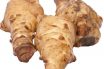
Jerusalem artichoke
The Jordan almond is not from Jordan, but at least it is an almond. The Jerusalem artichoke, on the other hand, is not only not from Jerusalem, it is not even an artichoke. Instead, the Jerusalem artichoke is a tuber, much like a potato, and is native to North and South America. The vegetable was…
-
Java
Although Java has become a slang name for coffee, the word originally meant barley: thousands of years ago, an Indonesian island famous for its barley acquired the Sanskrit name Yavadvipa, yava meaning barley, and dvipa meaning island. In time, the name of the island shortened to just Yava, which in English became Java. Because the…