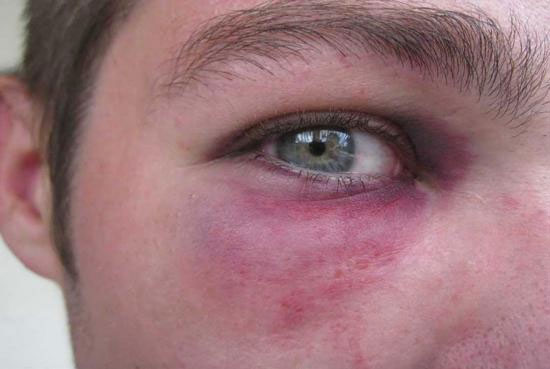
 The extravasation and collection of blood into the subcutaneous tissues, which appears as a yellow to bluish mark on the mucous membrane or skin.
Skin discoloration caused by the escape of blood into the tissues from ruptured blood vessels.
Blood under the skin such as bruising.
Discoloration of the skin associated with a contusion.
Diffusion of blood into the tissue spaces.
A dark area on the skin made by blood which has escaped into the tissues after a blow.
Bruise; discolored (purplish) spot resulting from an accumulation of blood under the skin’s surface caused by injury or fragility of the blood vessel walls.
Large hemorrhages or bruises on the skin.
The oozing of blood from a blood vessel into the tissues, usually the result of a bruise. This causes a bluish discoloration oft he skin.
An initially bluish-black mark on the skin, resulting from the release of blood into the tissues either through injury or through the spontaneous leaking of blood from the vessels (as in some blood diseases).
The development of a discoloured skin patch resulting from escape of blood into the tissues just under the skin, often from bruising.
Superficial bleeding under the skin or a mucous membrane; a bruise.
The clinical designation for a bruise is ecchymosis. In the context of a nasal fracture, ecchymoses can manifest around the eyes.
The medical term for a bruise that is visible through the skin is “ecchymosis.”
The accumulation of blood beneath the skin results in a minor hematoma, or a blood-filled swelling. Over time, this area undergoes the various color transformations typically associated with bruises.