
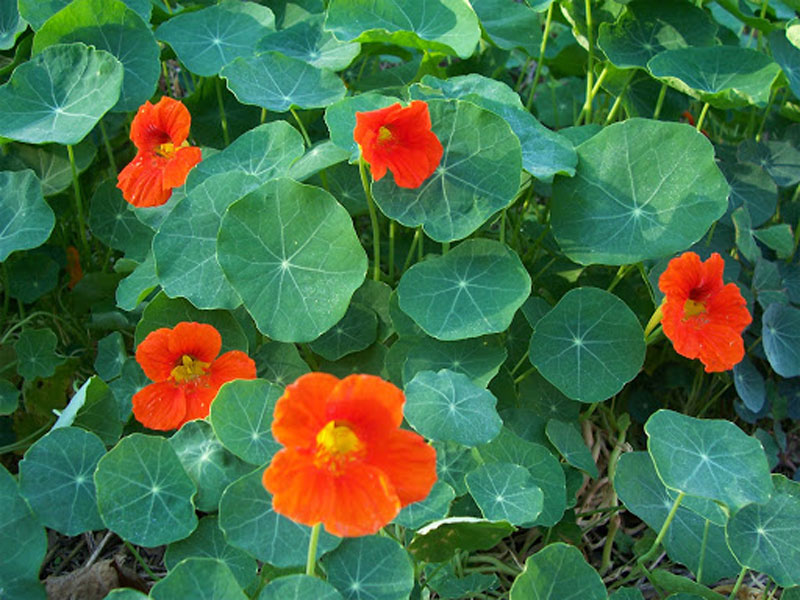
 A peppery tasting, low-growing annual with spurred flowers that is high in tannin.
A vibrant plant with blossoms that exhibit hues of orange and yellow, bearing a name that signifies “to twist the nose.” Similar to marigolds, this plant is seldom viewed as an herb used in culinary applications, although in the Orient, the petals of nasturtium have been employed as a garnish due to their piquant spiciness for centuries. The verdant and supple leaves are outstanding when incorporated into vegetable salads or served with canapés. It is noteworthy that pickled nasturtium seed pods are actually English capers.
The yellow, orange, or red flower petals of this plant native to the New World were once widely enjoyed in salads and are occasionally used as a garnish even today. The leaves and stems of this plant can also be added to salads for their unique flavor. Additionally, the green, berry-like seeds of the plant are edible and can be pickled as a satisfactory alternative to capers. This versatile plant is commonly known as nasturtium and is sometimes referred to as Indian cress. Its various edible parts, including the vibrant petals, leaves, stems, and seeds, add both visual appeal and a distinctive taste to culinary creations.