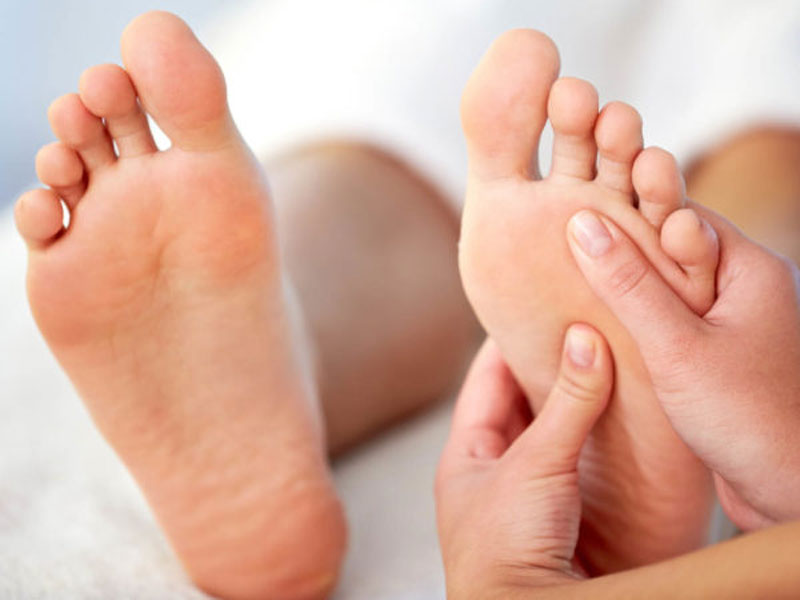
 An ancient therapy using foot massage, in which the soles of the feet mirror the rest of the body and pressure is applied to specific points that correspond to other body parts and organs.
A treatment to relieve tension by massaging the soles of the feet and thereby stimulating the nerves and increasing the blood supply.
A form of massage therapy in which pressure is applied to specific points on the feet and hands to relieve symptoms throughout the body; a form of zone therapy. Reflexology is used to alleviate stress-related problems and symptoms of other disorders, although no claims are made for its ability to address underlying causes of any disorders. Advocates of reflexology believe that reflex points on the foot correspond to such health problems as headache, premenstrual tension, asthma, acne, and chronic pain from arthritis and sciatica. The toes, for example, represent the head, while the arch of the foot corresponds to the internal organs in the center of the body.
Method of foot (and sometimes hand) massage in which pressure is applied to “reflex” zones mapped out on the feet (or hands).
Also called zone therapy; an approach to natural healing based on the belief that each body part is represented by a zone on the hands and feet and that pressing on this specific reflex area can have therapeutic effects on that part of the body. Reflexologists claim that the body is divided into 10 zones and that each organ or body part is represented on one of these zones. The therapy also alleges a preventative/diagnostic power. By feeling in and around these zones, reflexologists claim that abnormalities in the body can be diagnosed before they actually manifest themselves in the affected area.
Reflexology is an ancient art. The Chinese in 3000 B.C.E. practiced a form of pressure therapy that is thought to have developed alongside Acupuncture. It was also used in Ancient Egypt in 2330 B.C.E., as illustrated by paintings on the physician’s Tomb in Saqqara. There is then a gap in our knowledge about its usage until publications on the subject appeared in the 16th century in Europe, when there were reports of its use by a Dr. Bell of Leipzig in 1582. But it was not until the early part of this century that it was taken up seriously in the West, and then it became known as “Zone Therapy.”
A unique method of applying pressure with thumb and index fingers to the hands and feet, and it has demonstrated health benefits.
This is a method of applying pressure to specific nerve pathways responsible for transmitting reflexive signals, with the aim of potentially activating electrochemical impulses along the neural network. The ultimate goal is to improve the performance and functionality of internal bodily organs.
The notion that specific regions on the soles of the feet align with various body regions, encompassing organs and glands, and that applying pressure to the appropriate reflex area can influence the corresponding body part.
A type of alternative medicine where the practitioner massages specific areas of the patient’s feet in an effort to address disorders that impact other regions of the body.