Category: B
-
Biomimetic
Able to replicate or imitate a body structure (anatomy) and/or function (physiology).
-
Biometry
Statistical analysis of biological data. The application of statistics to biology. The application of statistical methods to the study of biological problems. The science which applies statistics to the study of living things. Use of mathematics and statistics in biological problem-solving. The measurement of living things and the processes associated with life, including the application…
-
Biomechanics
The study of mechanics as it relates to a living structure, specifically the forces exerted by muscles and gravity on skeletal structures. The analysis of biology from a functional aspect. Engineering principles applied to living organisms. The area of kinesiology that deals with analysis of movement. Study of the effects of mechanical forces on the…
-
Biomechanical test
A test that measures the physical properties of any biomechanical device, device–tissue interface (e.g., bone–implant), or the properties of tissues themselves.
-
Biomechanical load model
Simulation or model of load pattern in and adjacent to a structure.
-
Biomaterial
Any substance other than a drug that can be used for any period of time as part of a system that treats, augments, or replaces any tissue, organ, or function of the body. A synthetic material which can be used as an implant in living tissue. An inert substance used to replace a body part…
-
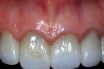
Biologic width
The combined apicocoronal height of connective tissue and epithelial attachment. It exists around teeth as well as around dental implants once exposed to the oral cavity. Structure of the attachment apparatus containing connective tissue attachment, junctional epithelium, and gingival sulcus.
-
Biointegration
The bonding of living tissue to the surface of a biomaterial or implant, independent of any mechanical interlocking mechanism. It is often used to describe the bond to hydroxyapatite‐coated dental implants.
-
Bioinert
Describes a biomaterial that does not elicit a biologic response or is unaffected by the adjacent biologic environment.
-
Biofilm
A multispecies community of microorganisms that adhere to each other and a surface, and are encased in an extracellular matrix. The extracellular matrix is a complex polymeric substance, and protects the microorganisms from environmental stresses. Thin layer of microorganisms adhering to the surface of a structure. Films of bacteria or other microbial organisms, usually embedded…