Category: B
-
Biofeedback
A method of behavioral modification in which signals are relayed to the patient regarding the status of certain physiologic functions such as the heart rate and blood pressure. The use of instrumentation to provide information (i.e., feedback) about variations in one or more of the subject’s own physiological processes not ordinarily perceived (e.g., brain wave…
-
Bioengineering
Use of engineering in biomedical technology such as the movement analysis of body parts or prostheses. Branch of biology dealing with (1) processing or artificial production of plant and animal materials, especially in the fermentation of organic products; and (2) application of engineering principles to medical problems (e.g., manufacture of artificial limbs and other organs).…
-
Biodegradable
Property of a material to degrade when placed in a biologic environment. Capable of being broken down into innocuous products by microorganisms. Describes any material that can be broken down by biological action (e.g., dissimilation, digestion, denitrification, etc.). The breakdown of material (chemicals) by microorganisms (bacteria, fungus, etc.). A substance that is capable of being…
-
Biocompatible
Capable of existing together; acceptable to the body. This term is used to describe blood, organs, or tissue that can be transplanted or transfused into a patient’s body without being rejected. It describes a biodynamic process in which a material neither elicits an immune response nor is rejected by the host. Property of a material…
-
Biocompatibility
Condition whereby the body does not respond to a foreign substance (e.g., metal) but recognizes it immunologically as self. Biocompatible materials do not lead to acute or chronic inflammatory responses nor do they prevent proper differentiation of implant‐surrounding tissues. The compatibility of a donated organ or artificial limb with the living tissue into which it…
-
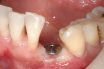
Bio‐Col technique
Technique developed to preserve the ridge in the esthetic zone. A tooth is extracted via a low‐trauma technique to maintain intact bony walls and surrounding gingival anatomy without flap reflection. The extraction socket is grafted up to the alveolar crest with an anorganic bovine bone substitute, covered with a collagen plug, and sutured in place…
-
Bioceramics
Specially designed and fabricated ceramics for the repair or reconstruction of diseased, damaged, or missing parts of the body.
-
Bioadhesion
Result of a process whereby a chemical attachment between biologic and other materials is obtained.
-
Bioactivity
Effect of implant material that allows interaction and bond formation with living tissues. Implant bioactivity may depend upon material composition, topography, and chemical or physical surface variations.
-
Bioactive glass
Ceramic material that stimulates or otherwise promotes biologic activity. It consists of silicophosphate chains that bond ionically to compounds such as CaO, CaF2, Na2O, ZnO, TiO2, and NiO, among others. It may undergo ionic translocations in vivo, or exchange ions or molecular groups in an osseous recipient site, and thereby osseointegrate. Bioactive glass may be…