Category: C
-
Crumb
In the fifteenth century, the word crumb meant the part of a loaf of bread that is not the crust; recipes calling for bread often instructed the cook to slice the crust from the loaf and use only the crumb. The word crumb, however, is older than this particular usage, dating back to the tenth…
-

Cruller
In 1809, American author Washington Irving published a book called A History of New York, ostensibly written by one Diedrich Knickerbocker, an imaginary Dutch immigrant. Nine years later, in 1818, Irving introduced the word cruller to the English language when he briefly mentioned the curly pastry in his Legend of Sleepy Hollow. That Irving both…
-
Crock pot
Like the last clause in this sentence, the term crock pot is redundant because crock means pot, and pot means crock. This sense of crock is still evident in the old-fashioned phrase crock of gold, now heard only in conjunction with leprechauns and rainbows. The word crock, which in the mid eighteenth century gave rise…
-
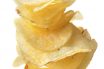
Crisp
Nowadays, having crisp hair is a sign that you need to switch to a less astringent shampoo. However, when the word crisp entered the English language in the tenth century, it meant—like its Latin source, crispus—that something was curly, and it was often used to describe the curly hair of handsome knights and lovely maidens.…
-

Cress
Although the watercress is the best known, there are actually over thirty different cresses, many of which have leaves that can be added to salads or soups. The name of the plant derives from kreson, a Germanic word meaning to creep, and therefore descriptive of how the plant grows. In English, cress dates back to…
-
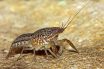
Crayfish
A crayfish is no more a fish than a catfish is a cat; the original name of this edible crustacean was crevice (no relation to the crevice that means gap), which was adopted from French in the fifteenth century; this French name, in turn, was a borrowing of the Old German name for crab, krebiz.…
-
Crapulous
Crapulous is how you feel on Thanksgiving Day after ingesting two pounds of turkey, three cups of stuffing, mounds of mashed potato, and four glasses of red wine. You feel, in short, like crap, and yet crap and crapulous are not related to one another. Crapulous derives from the Latin crapula, meaning intoxicated, though in…
-
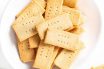
Cracker
The word cracker meant many things before it came to refer to a kind of unsweetened wafer: when the word appeared in the early sixteenth century, it meant liar or boaster, then, in the late sixteenth century, it came to refer to a noisy firework, a firecracker; and finally, in the early seventeenth century, it…
-
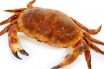
Crab
The Latin word for crab, cancer, was borrowed in the early seventeenth century as the name of a malignant disease that creeps like a crab through its victim. Cancer is not, however, the source of the English crab. Instead, the English name of this crustacean, first recorded about a thousand years ago, derives from an…
-
Couscous
There are a number of entries in this dictionary that look as if the author got up to fill his coffee cup and then, upon returning to his keyboard his keyboard, accidentally retyped the words he last completed. These words include couscous, jubjub, wow-wow, gite-gite, piri-piri, pili-pili, mealie-mealie, and bonbon. Such words, all of them…