Category: C
-
Chong (meridian)
One of the Eight Extra Meridians. Chong acts as a sea of the blood, as well as the reservoir of all other meridians, and is especially important in women’s reproductive functions, such as menstruation, fertility, etc.
-
Chi section
The third portion of the pulse that is felt with the practitioner’s ring finger, which indicates Kidney Yin on the left wrist, Kidney Yang on the right wrist, and their related Fu organs.
-
Chakras
The energy centers along your spinal cord, from the top of your head down to the bottom of your tailbone. Each chakra is related to a particular energetic function: root chakra (muladhara), sacral chakra (svadhisthana), solar plexus chakra (manipura), heart chakra (anahata), throat chakra (vishuddha), third eye chakra (agna), and crown chakra (sahasrara). The energy…
-
Cytoplasm
The jellylike substance inside a cell that is made up of water, proteins, and other molecules. The protoplasm of a cell exclusive of that of the nucleus; it consists of a continuous aqueous solution (cytosol) and the organelles and inclusions suspended in it (phaneroplasm), and is the site of most of the chemical activities of…
-
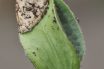
Cotyledon
The first leaf, or one of the first pair or whorl of leaves, developed by the embryo of a seed plant. Seed-leaf, the first-formed leaf that is often of a different shape from later leaves. One of the pair of first leaves of a seed ling in Dicotyledons, which is one of the two great…
-
Chloroplast
Structure within a green plant cell in which photosynthesis occurs. Small body in plant cells containing chlorophyll, in which starch is formed by photosynthesis. In botany, a plastid containing chlorophyll, developed only in cells exposed to light are the seat of photosynthesis and starch formation.
-
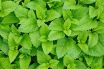
Chlorophyll
Any member of the most important class of pigments involved in photosynthesis. The green coloring matter in plants that changes raw materials into food. The green pigment in plant cells that makes photosynthesis possible. Porphyrin derivatives containing magnesium that act to convert light energy in photosynthetic organisms. The green coloring matter of plants. A green,…
-
Cellulose
A complex carbohydrate that is the main component of plant cell walls. A polysaccharide with glucose units linked as in cellobiose. It is the chief constituent of plant fibers, cotton being the purest natural form of the substance. As a raw material, it forms the basis for many derivatives used in chromatography, ion exchange materials,…
-
Cambium
A thin layer of vascular-plant tissue that continuously generates new cells and is responsible for secondary plant growth.
-
Cytostatic
Preventing the growth and proliferation of cells. A substance that slows down cell growth and multiplication.