Category: D
-
Developmental dysplasia
An abnormal growth pattern at the cellular or organ level.
-
Developmental dysmorphia
Anomalous growth related to or induced by interference from neighboring structures.
-
Developmental anomaly
Aberration in the normal sequence of events associated with growth and development. This process could result over time in distortion of the face and jaws, abnormality of tooth formation or position, and irregularity of function.
-
Detrusion
Distraction (downward movement) of the mandibular condyle.
-
Detoxicant
A chemical that degrades a toxic agent. A substance that eliminates or counteracts poisons. Any agent, e.g., activated charcoal, that removes toxins from the body.
-
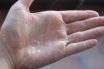
Desquamation
Exfoliation; the process of shedding surface epithelium; the loss of surface epithelial cells. The shedding of the outer layers of the skin. Shedding of the outer layer of skin. The continual process of losing the outer layer of dead skin. Peeling off of the epithelial part of a structure. Normal loss of bits of outer…
-
Desktop optical scanner
A device that uses light/laser to scan and digitize objects (impressions, casts). This device is stationary and cannot be used for intraoral scanning.
-
Design (implant)
The three‐dimensional structure of a dental implant or component, with all the elements and characteristics that compose it: form, shape, configuration, surface macrostructure, and microirregularities.
-
Desensitize
To diminish or abolish sensation of pain or sensitivity, as in dentin. To deprive of or lessen sensitivity by nerve section or blocking.
-
Dermal graft
Tissue graft from a human or animal cadaver, which has undergone a process of deepithelialization and decellularization, leaving an immunologically inert avascular connective tissue. A split-skin or full-thickness skin graft. The graft will grow hair and have active sweat and sebum glands.