Category: H
-
Homozygous
In a diploid organism, a state where both alleles of a given gene are the same. Possessing identical genes from each parent for a particular trait. A genetic characteristic containing either two dominant or two recessive genes. Having two identical versions of a specific gene. Having two identical alleles of a gene at corresponding loci…
-
Homotropic enzyme
An allosteric enzyme whose own substrate functions as an activity modulator.
-
Homologous protein
A protein having identical functions and similar properties in different species. For example, the hemoglobins that perform identical functions in the blood of different species.
-
Hollow fiber separation (of proteins)
The separation of proteins from a mixture by means of”straining” the mixture through hollow, semipermeable fibers (e.g., polysulfone fibers) under pressure. The hollow fibers are constructed in such a way that they have very tiny (molecular size) holes in them. In this way large molecules are retained in the original liquid while smaller molecules, which…
-
Histopathologic
Refers to changes in tissue caused by a disease. For example, certain diseases (e.g., jaundice) cause the skin to turn yellow.
-
High-sucrose soybeans
Another name for low-stachyose soybeans because the soybeans replace the (reduced) stachyose with (additional) sucrose.
-
High-stearate soybeans
Soybean plant varieties which have been genetically engineered so their beans contain more than the (historic average) typical 3% stearic acid content in the soybean oil.
-
High-phytase corn (or high-phytase soybeans, etc.)
Crop plants that have been genetically engineered to contain in their grain/seed high(er) levels of the enzyme phytase (which aids digestion and absorption of phosphate in that grain/seed). High-phytase grains or oil-seeds are particularly useful for the feeding of swine and poultry, since traditional No. 2 yellow com (maize) or traditional soybean varieties, do not…
-
High-oleic oil soybeans
Soybeans from soybean plants which have been genetically engineered to produce soybeans bearing oil that contains more than 80% oleic acid, instead of the typical 24% oleic acid content of soybean oil produced from traditional varieties of soybeans.
-
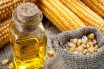
High-oil corn
Conceived in 1896 at the University of Illinois, high-oil com (HOC) is defined to be com possessing a kemel oil content of 5.8% or greater. Traditional No. 2 yellow com tends to contain 3.5% or less oil content.