Category: H
-
Herpetiform
Lesions that resemble herpetic (herpes) lesions.
-
Herpes simplex viruses type I, type II
Herpesviruses are the most ubiquitous, communicable, infectious viruses in humans. They are double‐stranded DNA viruses with icosahedral nucleocapsids. Herpes simplex viruses cause acute infection or latent and recurrent infection of human tissues. Herpes simplex virus type I usually causes oral lesions, while type II usually causes genital lesions.
-

Herpetic gingivostomatitis (H. simplex)
An acute infection of the oral mucosa by the herpes simplex virus (usually Type 1) that is characterized by redness and multiple vesicles that easily rupture to form painful ulcers. It may be accompanied by fever, malaise, and regional lymphadenopathy.
-
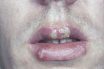
Herpes labialis
A form of HSV‐1 recurrent infection found on the vermillion border of the lips. Commonly called cold sores or fever blisters. A form of herpes simplex that occurs on the lips. The sores or blisters that can occasionally appear around the mouth in connection with the common cold.
-

Herpes
Herpes can affect both men and women but most of the time there are no symptoms. A chronic inflammation of the skin or mucous membrane characterized by the development of vesicles on an inflammatory base. Any inflammatory skin disease caused by a herpesvirus and characterized by the formation of clusters of small vesicles. When used…
-
Hepatitis C
An infection of the liver dependent on the presence of the hepatitis B virus for clinical expression. It may occur as a co‐infection with acute hepatitis B or as a superinfection in a hepatitis B carrier. A form of viral hepatitis that is transmitted by contact with infected blood or other body fluids but is…
-
Hepatitis B (HBV)
An infectious inflammatory disease of the liver caused by the hepatitis B virus. It can be transmitted in the healthcare environment. Has an insidious onset. Features include anorexia, malaise, nausea, vomiting, abdominal pain, and jaundice. A severe form of viral hepatitis that is transmitted by contact with infected blood or other body fluids. Inflammation of…
-
Hepatitis
Inflammation of the liver caused by various disease states, drug reactions, and viruses. Common systemic signs include fever, jaundice, and an enlarged liver. Inflammation of the liver and liver disease involving degenerative or necrotic alterations of hepatocytes. Inflammatory liver disease, characterised by jaundice, abdominal pain, and anorexia. May be due to bacterial or viral infection,…
-
Heparin sulfate
A glycosaminoglycan found on the surface of most mammalian cells and in the extracellular matrix. A sulfurated mucopolysaccharide that accumulates in the connective tissue in abnormal amounts in some mucopolysaccharidoses.
-
Heparin
A glycosaminoglycan that is attached to a core protein found in mast cells; anticoagulant activity; serves as a catalyst for antithrombin attachment to thrombin. A polysaccharide sulfuric acid ester found in liver, lung, and other tissues that prolongs the clotting time of blood by preventing the formation of fibrin. Used in vascular surgery and in…