Category: P
-
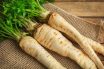
Parsnip
The ancient Romans either had bad-tasting carrots or good-tasting parsnips because their name for the two vegetables was the same: pastinaca. This name derived from an older Latin word, pastinum, the name of a two-pronged garden fork that in turn derived from pastinare, meaning to dig. The similarity between the prongs of the garden fork…
-

Parsley
The ancient Greeks called parsley selinon, a word that became—via Latin, Italian, and then French—the English word celery. This Greek name for the parsley plant may have shifted to the celery plant because—in dim light, from a great distance—the two plants are not dissimilar; scientists, at least, have seen fit to place both celery and…
-
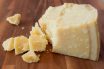
Parmesan
Parmesan takes its name from Parma, a region in northern Italy where this cheese originated. Today, only cheese that is actually made in Parma is allowed by the European Court of Justice to be called parmesan, a restriction that also applies to Parma ham. Parma, in turn, probably acquired its name from parma, meaning shield,…
-
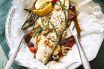
Papillote
Since the mid eighteenth century papillote has referred to a colourful paper frill tied as a decoration to the bone end of a drumstick, lamb chop, or pork chop. The word derives from the French papillon, meaning butterfly, so called because the colourful frills resemble the wings of that insect. In turn, the French papillon…
-
Pap
Pap is any semi-liquid food, such as bread soaked in milk or even the namebrand Pablum, that infants employ to reduce the coefficient of friction that obtains between their palms and the surface of their highchairs. The word apparently originated in the early fifteenth century as a representation of the sound babies make when they…
-
Pantry
Although pantries now contain almost any manner of foodstuff, they originally contained only bread, as is suggested by the origin of the word: the Latin panis, meaning bread. Other words in English, such as companion, impanation, and pannier (originally a bread basket) also derive from the Latin panis, although pan itself, as in frying pan,…
-

Pancake
In England, the original pancake was called afroise, a fried cake of dough that often contained bacon. Froise appeared in the early fourteenth century, and may have derived, through French, from the Latin frigere, meaning to fry. Pancake itself appeared in the early fifteenth century, an obvious compound of pan and cake. Although usually considered…
-
Pablum
Pablum is the trademark name of a gruel fed to infants and other individuals too weak to defend themselves. The brand name was first registered in the United States in 1932 and derives from pabulum, a word meaning nourishment or food, which was borrowed directly from Latin in the early eighteenth century. Much further back,…
-
Pyrophosphate cleavage
The enzymatic removal of two phosphate groups (designated as PP,) from ATP in one piece leaving AMP as another product. This cleavage releases more energy, which can be used in certain reactions that require more of a “push” to get them going.
-
Pyrogen
A substance capable of producing pyrexia (i.e., fever). A substance which causes a fever. Substance (e.g., bacterial toxin) that raises body temperature. An agent, such as bacteria, viruses, or inflammatory disorders, that causes fever. Any substance or agent that tends to cause a rise in body temperature and produces fever. Any agent that causes fever.…