Category: P
-
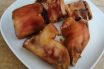
Pettitoe
A cooked pig’s foot is called a pettitoe, a word English acquired from French more than four hundred years ago. Originally, however, the term pettitoe referred not to the foot of a pig but to the innards of a goose, a peculiar shift in meaning that occurred partly because the English people misapprehended a French…
-
Pepper
The green, red, and bell peppers you grow in your garden are not really peppers; they acquired their name by mistake when Columbus, who came upon them in the Caribbean islands, assumed them to be a variety of the real pepper plant, the one that gives us peppercorns. The real pepper plant, which is actually…
-
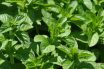
Pennyroyal (Mentha pulegium)
Pennyroyal was once a folk-name for marjoram, much like spuds is still a folkname for potatoes. Far from having anything to do with pennies, the herb’s name essentially means royal flea-killer. Its original Latin name was pulegium, meaning flea-bane, because its minty leaves were used to repel the hopping pests. Pulegium evolved into the French…
-
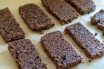
Pemmican
The aboriginal people of North America made pemmican by drying strips of buffalo meat or venison, pounding them with some berries into a powder, mixing the powder with melted fat, and then storing the resulting lump in a little bag made from the skin of the animal. Although early pioneers did not like the taste…
-
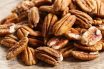
Pecan
The pecan is native to North America and thus its name derives from a Proto-Algonquian source, one that evolved into the Cree, pakan, the Ojibwa pagan, and the Abenaki pagann. From these various but similar names, British settlers derived their name for the nut, pecan, as did the French, who call it pacane, and the…
-

Pear
To the ancient Romans, a pear was a pirum, a name that Old English adopted as peru in the eleventh century (about six hundred years later, Peru was also introduced to English as the name of a South American country, a name that derives not from Latin but from the Guarani word piru, meaning water).…
-
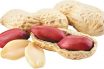
Peanut
Originating in Brazil and subsequently introduced to the rest of the world, the peanut has been known in English by a variety on names. First it was called pinda, a word dating back to the late seventtnth century and deriving from the Congolese mpinda, the name of an African legume resmbling the peanut Next, beginning…
-

Pea
Four hundred years ago, if you had a single pea in your hand, you would have called it a pease. That old form of the word can still be heard in a children’s rhyme: “Pease porridge hot, pease porridge cold, pease porridge in the pot, nine days old.” The reason that pease used to be…
-
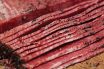
Pastrami
Via Yiddish, pastrami derives from the Romanian pastra, meaning to preserve, an apt name considering the meat is prepared for the marketplace by soaking beef in brine for several weeks, smoking it over sawdust for half a day and finally steaming it for several hours. The word was introduced to English in the mid 1930s…
-
Parties nobles
This French term, pronounced par-tee nobleh and meaning noble parts, refers to the parts of an animal eaten by a hunter immediately after a successful kill. The noble parts of the animal were those thought to embody its courage and vital essence: the brain, the sexual organs, the heart, the liver, and other delectable items…