Category: P
-
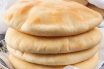
Pita
The importance of a given food to a culture can sometimes be gauged by its name. The whimsically named trifle, for example, is a delicious but ultimately trivial dessert. The flat, round bread known as pita, on the other hand, is a food staple in many Mediterranean and Middle Eastern cultures, as is suggested by…
-
Pint
The name of the liquid measure known as the pint derives from the same source as pinto, as in pinto bean or pinto horse. Both words, pint and pinto, derive from the Latin pictus, meaning painted: the bean and the horse acquired their name because they are both characterized by their dappled colour. The liquid…
-
Pingle
There are many reasons why you might accept an invitation to go out for dinner but not eat your food: you might have the flu; you might have just discovered that ox-tail soup is not just a fanciful name; or you might have recognized the chef from a case-study photo in a recent dermatological journal.…
-
Pimiento
As Classical Latin, the language of ancient Rome, evolved into Medieval Latin, the language of Europe’s scholars during the Middle Ages, it changed in both pronunciation and vocabulary. For example, in Classical Latin the word pigmentum meant paint, and it was with this meaning that English adopted the word as pigment near the end of…
-

Pig-iron
A pig-iron is an iron plate suspended between a fire and the meat cooking over it to prevent the meat from burning. This plate acquired the name pig-iron in the mid eighteenth century, but the term itself goes back to the mid seventeenth century when pig-iron referred to an iron ingot—that is, an iron lump—of…
-
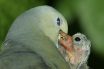
Pigeon’s milk
Whereas most humans regurgitate their food only when they are in gastroin-testinal distress (for example, as the result of stomach flu, salmonella, or a dinner of kahlua and pickled eggs), some animals vomit up their stomach contents in order to provide nourishment for their young. Pigeons do this, or at least they regurgitate the epithelial…
-

Pig
As far as most people are concerned, pig, hog, boar, sow, and swine are different words for the same porky animal; however, to those versed in the niceties of the sty, hog denotes a castrated pig, boar denotes an uncastrated pig, sow denotes a female pig, and swine denotes any piglike creature, whether wild or…
-
Piece de resistance
Today, almost any excellent thing can be a piece de resistance, whether the context is art, architecture, fashion, or literature. Originally, however, this French phrase applied only to the chief dish in a multi-course meal, the one that, along with the roast, defined the third course of the dinner. The phrase literally means piece of…
-
Pie
From the mid thirteenth to the early seventeenth century, the bird now known as the magpie was simply called the pie. English borrowed this ornithological name, pie, from the French, who derived it from the Latin name for the bird, pica, which in turn developed from an Indo-European source meaning pointed, as is the bird’s…
-
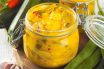
Piccalilli
The name of this pickle, made by preserving minced vegetables in mustard and vinegar sauce, seems to have originated in India in the mid eighteenth century when the British East India Company gained control of the nation. The word, however, does not originate from Hindi or any of India’s 180 other languages but rather is…