Category: P
-
Pithy
With spongy tissue.
-
Pith
Spongy tissue, usually at the centre of stem or branch. The tissue in the middle of a plant’s stem or branch. The central portion of exogenous stems. The center of a hair or the soft material in the stalk of a plant.
-
Pitcher plant (Sarracenia purpurea)
Carniverous plant, with a trapping mechanism of a deep hollow tube-like leaf partially filled with liquid, which eventually dissolves the trapped insects. Fascinating insect-eating plant. Colourful pitcher-like leaves with arching hoods and honey scent attract and trap small insects. North American Indians used an infusion of the rootstock for smallpox. Bog plant.
-
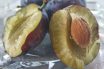
Pit
A small hollow or depression. Hardened covering enclosing seed or seeds in a fruit, as in a peach. A hollow or depression, such as any of the depressions on the surface of an embryo marking the site of future organs. The pit, or hard seed, of a fruit such as a peach or cherry is…
-
Pistillode, pistillodium
A rudimentary sterile pistil.
-
Pistillate
Female; Flower with only female organs. A female flower that has pistils but no stamens. A unisexual (female) flower in which only carpels are present, the stamens being rudimentary or suppressed. Said of a flower having pistils and no stamens. Female flower that lacks functional stamens. Describes a female flower bearing one or more pistils…
-
Pisiform
Shaped like a pea; better to say ‘shaped like a small globe’. One of the eight small carpal bones in the wrist. A small, pea-sized bone located in the wrist.
-
Pioneer
Species colonising new environments (e.g. after clear-cutting, volcanic eruptions or fire) and starting a plant succession. Usually referring to fast growing, soft-wooded trees that are very intolerant of shade, such as Cecropia, Ochroma, and Heliocarpus species. These are early colonizers of open areas such as landslides, forest gaps, or abandoned pastures. Also used for herbs…
-
Pinnule
In a bipinnate leaf, a second-order pinna, the first-order segment of a pinna. A division of a pinna. The ultimate division of a twice-pinnate leaf. A secondary pinna of a bipinnate leaf. A subleaflet of a fern frond or other twice-compound leaf. Botanist’s terms for the leaflet of a pinnate and bipinnate leaf respectively.
-
Pinnipalmate
Mostly with pinnate venation, but with the first pair(s) of veins much more distinctive than the others [uncommon term].