Category: P
-
Perigon
Term used for perianth in Monocots, when there are no clearly differentiated whorls.
-
Periderm
Loosely synonymous with the living bark, the outermost layer of stems and roots (the dead bark is known as rhytidome) consisting of the cork or bark cambium, the phellogen, from which is produced the phellem (from the outer surface) and the phelloderm (from the inner surface). A thin layer of flattened cells forming a transient…
-
Periclinium
(In Compositae/Asteraceae) the involucre surrounding the common receptacle of the capitulum.
-
Periclinal
Parallel to another structure (mainly used in cell division).
-
Pericarp
The wall of the ripened ovary, divisible into epicarp, mesocarp and endocarp when a distinction between the three can be made; Fruit wall, sometimes includes the seed (e.g. Linnaeus’ use of ‘pericarpium’); The fleshy layer (united ectocarp and mesocarp) surrounding the stony endocarp in Commiphora. The plant material surrounding the seed of fruits. The wall…
-
Perianth tube
The lower united part of the perianth.
-
Perianth segment
One of the parts of the two floral whorls, calyx and corolla, used especially when these two whorls are quite similar.
-
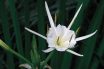
Perianth
Collective term for the calyx and corolla. The outer floral whorl or whorls of a monocotyledonous flower. The floral structure consisting of the calyx and corolla. This term is used mostly when the calyx and corolla are either identical in physical appearance or not readily distinguishable from each other. The floral envelops including both calyx…
-
Pergamaceous, pergamentaceous
(Of endocarp) like parchment or thick paper.
-
Perforate
(Of pollen exine) punctured by numerous holes. Pierced with holes, or having transparent dots giving that appearance. To make a hole through something. To pierce or otherwise make a hole. To puncture or to make holes.