Category: P
-
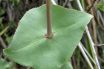
Perfoliate
When the stem passes through the blade of a leaf or through a basally connate pair of leaves. Of a leaf, perforated by the stem. The condition of a sessile leaf when the base completely encircles the stem. Passing through a leaf, or appearing so. A leaf (or a pair of conjoined opposite leaves) forming…
-
Perfect
(Of flowers) with both male and female parts. Having functional stamens and pistil(s) in the same flower. Of a flower, one that has a full complement of male and female parts as well as a floral envelope (peta ls and sepals). A flower with both stamens and carpels, without regard to the state of the…
-
Perennial
Living for several to many years, as opposed to annual or biennial. (Sometimes restricted to nonwoody plants). A plant that lives for three years or more. In botany, the term includes trees and shrubs, while in horticulture it is normally limited to plants that do not produce permanent woody stems, such as irises, peonies or…
-
Perennating
Surviving the most difficult season (e.g. the dry season), lasting the whole year through or from one season to the next.
-
Perennate
Lasting throughout the year or from one season to the next; Self-renewing by lateral shoots from the base.
-
Percurrent
Running through the entire length.
-
Per-
Intensifying prefix in Latin compounds; for example, in persimilis, meaning ‘very alike’.
-
Peponiform
Shaped like a pepo, resembling a pepo.
-
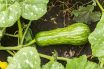
Pepo
(Fruit type) inferior fruit of the Cucurbitaceae, berry-like with a hard rind (exocarp) and parietal placentation. A berry with a leathery rind, derived from an inferior ovary; use is often restricted to the squash family. Berry-like fruit with a thick exocarp and parietal placentation, as in Cucurbitaceae.
-
Pentandrous
With five stamens.