Category: P
-
P value
Probability that an outcome would occur by chance. P values (probability values) range from 1 (absolutely certain) to 0 (absolutely impossible). A P value equal to or less than 0.05 means that the observed outcome is not likely (≤5%) to be the result of chance. The probability that a finding has occurred randomly rather than…
-
Protrusive occlusion
Occlusion of teeth when the mandible is protruded from centric maximum intercuspation.
-
Physiologic occlusion
Occlusion in harmony with the functions of the masticatory system.
-
Primary occlusal trauma
Injury resulting in tissue changes from excessive occlusal forces applied to a tooth or teeth with normal support.
-
Perforation of the maxillary sinus membrane
Iatrogenic perforation or tear of the maxillary sinus membrane during sinus floor elevation; the most common complication of this procedure. Small perforations may not need treatment if the elevation can continue uneventfully; larger perforations may be covered by collagen membranes and/or by a fibrin sealant. Incidence of maxillary sinus membrane perforation does not appear to…
-
Protrusive jaw relation
A jaw relation resulting from an anterior positioning of the mandible.
-
Implant apex
Portion of a root‐form dental mplant that first engages an osteotomy during its insertion. It may incorporate self‐tapping characteristics.
-
Palatal g
A developmental, anomalous groove usually found on the palatal aspect of maxillary central and lateral incisors.
-
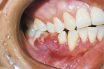
Pyogenic g
A reactive overgrowth of exuberant granulation tissue possibly in response to local irritation or trauma. This vascular mass often is ulcerated and may be smooth or lobulated and pedunculated or sessile.
-
Pregnancy‐associated pyogenic g
A pyogenic granuloma resulting from dental plaque and hormonal changes during pregnancy; often regresses following parturition. Also known as pregnancy tumor.