Category: S
-

School phobia
A term used when a child, usually in the early elementary grades, unexpectedly and strenuously refuses to attend school because of some irrational fear. The underlying psychopathology is believed to be an intense separation anxiety rooted in unresolved dependency ties. May occur in childhood depression. An acute irrational dread of attending school, often accompanied by…
-
Schizoid
Manifested by shyness, oversensitivity, social withdrawal, frequent daydreaming, avoidance of close or competitive relationships and eccentricity. Persons with this disorder often react to disturbing experiences with apparent detachment and are unable to express hostility and ordinary aggressive feelings. Severely introverted; socially isolated; lacking close personal relationships or the ability to form them.
-
Systems engineering
The “glue” that holds projects together.
-
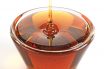
Syrup
Liquid made with sugar and water used as for the canning of fruit. The strength of the syrup is measured on a Brix or Baume scale and it is classified as Extra Heavy meaning 60 to 70% sugar, Heavy syrup containing 40 to 55% sugar, Medium syrup containing from 25 to 30% sugar, and Light…
-
Synthesize
To build up a compound by the union of simpler compounds, that is, sucrose from two simpler sugars-glucose and fructose. To produce a substance by building it from smaller components. Proteins are synthesized in the body from smaller units called amino acids. To produce a substance by combining two or more elements or chemicals.
-
Swell
A can or jar or package of food in which gas production has caused expansion. To become larger, or cause something to become larger.
-
Sweetening agent
A sweet-tasting substance with com- parative ratings, as follows: Fructose = 140-170, Sucrose = 100, Glucose or Dextrose = 70-75, Xylose = 40, Maltose = 30-35, Lactose = 16-35, and synthetic Saccharin at 55,000.
-
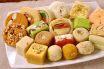
Sweet
A quality of taste sensation of which the taste of sucrose is the typical example. Unless it is utterly bland, a dish of food will either be sweet or savoury. Of these two terms, sweet is the oldest, dating back in English to the ninth century. Since then, not much has happened to the word…
-
Suspended solids
The quantity of solids, both volatile and stable, in suspension which can be filtered out by a standard filter under a specified test procedure.
-

Surimi
Fish protein paste.