Category: S
-
Scanning
Teaching technique of observation; looking for incorrect body alignment and positioning in your class. The act of examining an area with the eyes. The act of examining internal organs of the body with a piece of electronic equipment. A rapid reading technique for finding a piece of information in a larger work, such as an…
-
SAID principle
“Specific adaptations to imposed demand;” training must be relative to the activity for physiological change to take place.
-
Sullivan, Harry Stack (1892-1949)
American psychiatrist and psychoanalyst known for his research in the psychotherapy of schizophrenia and for his view of complex interpersonal relationships as the basis of personality development.
-
Social worker, psychiatric
A skilled professional, usually with a M.S.W., trained in social work who works with psychiatrists usually in an institutional setting. Psychiatric social workers also carry out individual, family, and group psychotherapy.
-
Social adaption
The ability to live and express oneself according to society’s restrictions and cultural demands.
-
Skinner, Burrhus Frederic (1904)
American psychologist noted for his research and writings on operant conditioning. Many of the procedures of behavior therapy are based on laboratory research by Skinner and his students.
-
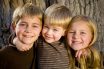
Sibling
A full brother or sister. Genetically, brothers and sisters from the same parents. General term for brothers or sisters who share the same two parents, through birth or adoption. Siblings who share only one parent are called half-brothers and half-sisters; stepbrothers and stepsisters are those who have no relation through biology or adoption except that…
-
Sexual disorders
A DSM-III-R term for psychosexual dysfunction.
-
Serotonin
A neurotransmitter with an indole structure found both in peripheral ganglia and in the central nervous system. Its transmitter functions in the central nervous system are less clearly demonstrable than in the gastrointestinal tract. It is implicated indirectly in the psychobiology of depression. An important neurochemical whose effects upon the human brain include mood elevation.…
-
Scotoma
A figurative blind spot in a person’s psychological awareness. Also, a neurological term indicating a visual defect. A blind or partially blind area in the field of vision. A small area in the field of vision where someone cannot see. A blind spot in the visual field due to a variety of causes such as…