Category: S
-
Smith-lemli-optiz syndrome
A metabolic developmental disorder characterized by distinctive facial features, small head size (micro cephaly), intellectual disability or learning disability, behavioral problems such as self-stimulation and self-injury, and autism spectrum disorders.
-

Sleepwalking disorder
One of the parasomnias, characterized by recurrent episodes of rising from bed during sleep and walking about. The sleepwalking person has a blank, staring face and is relatively unresponsive to attempts by others to awaken him or her. On awakening, either from the sleepwalking episode or the next morning, the person has amnesia for the…
-
Sleep terror disorder
One of the parasomnias, characterized by panic and confusion when abruptly awakening from sleep. This usually begins with a scream and is accompanied by intense anxiety. The person is often confused and disoriented after awakening. No detailed dream is recalled, and there is amnesia for the episode. Sleep terrors typically occur during the first third…
-
Sleep disorders
In dsm-iv-tr, this category includes Primary Sleep disorders (dyssomnias and parasomnias), sleep disorders (insomnia or hypersomnia) related to another mental disorder, and other sleep disorders (including sleep disorders due to a general medical condition or induced by substance intoxication or withdrawal). A host of disorders including insomnia, narcolepsy, restless leg syndrome, parasomnia, and sleep apnea…
-
Sleep apnea
Temporary cessation of breathing while asleep. The disorder is most commonly caused by obstruction of the airway from excessive tissue associated with obesity (i.e., obstructive sleep apnea), but it can also occur when the brain does not send the signal to the muscles to take a breath, resulting in no muscular effort to take a…
-

Sleep
The recurring period of relative physical and psychological disengagement from one’s environment accompanied by characteristic electroencephalogram (EEG) findings and divisible into two categories: non–rapid eye movement (NREM) sleep, also known as orthodox or synchronized (S) sleep; and rapid eye movement (REM) sleep, also referred to as paradoxical or desynchronized (D) sleep. Dreaming sleep is another,…
-
Single photon emission computed tomography (SPECT)
A nuclear medicine tomographic imaging technique using gamma rays that provides true three-dimensional information. SPECT scanning reveals how blood flows to tissues and organs. Studies have shown that it might be more sensitive to brain injury than either magnetic resonance imaging (MRI) or computed tomography (CT) scanning because it can detect reduced blood flow to…
-
Sinequan
Brand name (now discontinued) for the tricyclic antidepressant drug doxepin.
-
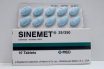
Sinemet
Brand name for the antiparkinsonian medication carbidopalevodopa. The commercial name for a combination of levodopa and carbidopa is co-careldopa, a medication used to treat Parkinson’s disease.
-
Simultanagnosia
Inability to comprehend more than one element of a visual scene at the same time or to integrate the parts into a whole. The failure to perceive simultaneously all the elements of a scene.