Mindblown: a blog about philosophy.
-

Aquavit
The yellowish alcoholic spirit known as aquavit derived its name in the late nineteenth century from the Norwegian akavit, which in turn developed from the Latin aqua vitae, meaning water of life (whiskey likewise derives its name from a Gaelic phrase also meaning water of life). Another beverage—one spiced with cloves, ginger, cardamom, and mace—has…
-

Apron
Back in the fourteenth century, the outer garment that cooks wore to shield their clothes from spatters and dribbles was called a napron. By the fifteenth century, however, the n at the beginning of the word had shifted over to the indefinite article that often preceded the word: that is, a napron became an apron…
-

Apple-pie order
A proper chef always keeps her kitchen in apple-pie order: spoons and forks do not fraternize wildly in the cutlery drawer, lids do not wander from their containers, salt shakers do not plummet into the crevice between oven and wall. Such a compulsion for culinary organization is known as apple-pie order, an idiom that may…
-

Apple
Neither of the two words that the ancient Romans had for apple—malum and pomum—are the source of the English name of this fruit. Instead, apple derives from a Germanic source, one likely related to Avella, the name of a famous fruit-growing region in Italy; however, whether the region was named after the fruit, or the…
-

Andiron
Andirons are metal supports that sit on the floor of a fireplace and hold the logs in place so that they tumble neither forward nor backward while they burn; at one time, pairs of andirons were also used to support a spit, so that meat could be roasted above the fire. Although andirons have always…
-
Anchovy
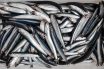
The word anchovy was introduced to English in 1596 by Shakespeare, who made the tiny fish a favourite of his most corpulent character, Falstaff. The word anchovy comes from Basque, a language spoken in parts of Spain and France but related to no other language in the world. The Basque source of anchovy—anchoa, meaning dry—was…
-

Ambrosia
Life was much simpler for the gods of ancient Greece, who had to worry about a mere two food groups, ambrosia and nectar, when trying to satisfy their daily recommended dietary allowance. These two divine substances were not only exceedingly yummy (Ibycus, an ancient Greek poet, wrote that ambrosia was nine times sweeter than honey),…
-
Ambergris
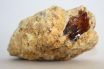
Ambergris is a waxy substance, grey in colour,xsecreted in the intestines of sperm whales and skimmed from the surface of the ocean where it floats after being discharged. The fact that medieval cooks used this substance as a spice in ragouts, custards, and jams says much about their sense of adventure, if not their sense…
-
Almond
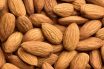
Most people do not pronounce the / in almond and they are right not to do so because the I should not really be there. In Latin, the word was originally spelt amygdala, which in Late Latin became amandula. This Late Latin word slowly worked its way into Romance languages like French, Italian, and Spanish,…
-
Allspice
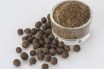
Allspice acquired its name in the early seventeenth century when someone noticed that its flavour and scent resemble a mixture of cloves, nutmeg, and cinnamon—obviously these three do not encompass all 250 spices in existence, but close enough. Another plant whose name derives in part from the word all is allbone, an herb whose spiny,…
Got any book recommendations?